

AiPrise
7 min read
April 21, 2026
The Complete Guide to KYC Automation for Faster, Compliant Onboarding

Key Takeaways

Every customer your compliance team verifies manually is time and money lost to document chasing and follow-up emails. And it adds up faster than most teams expect.
A 2025 study published in the Journal of Economics, Finance and Management Studies, found that a single customer due diligence check costs an average of $69, with estimates ranging from $14 to $136 depending on risk level and complexity. At low volumes, that's manageable. But once you scale the process across thousands of customers in different markets, you’re looking at spending millions of dollars just on verification annually.
But that’s not the worst part. When onboarding is too slow or inefficient, banks, payment platforms, and other businesses lose potential clients. Your prospective customers are walking away before they even finish the Know Your Customer (KYC) verification process.
Automation changes that.
In this guide, we’ll explain how KYC automation works and how you can take advantage of it to save costs while staying compliant.
Key Takeaways
- Manual KYC increases customer abandonment rates and creates the exact inconsistency that regulators penalize.
- KYC automation tools replace repetitive verification tasks with AI-powered workflows that handle identity checks, sanctions screening, risk scoring, and ongoing monitoring at scale.
- Automated KYC moves through five stages: identity capture, document verification, watchlist screening, risk scoring, and continuous monitoring.
- Neobanks, crypto exchanges, payment platforms, and cross-border financial services all use automated KYC because manual processes can't keep up with the increasing volume of onboarding.
- Platforms like AiPrise unify the entire KYC lifecycle into a single platform, enabling compliance teams to scale verification without adding vendors or headcount.
What Is KYC Automation?
KYC is a process that helps businesses verify that a potential customer is legitimate before engaging with them. Financial services companies and other regulated businesses are legally required to verify an individual’s identity before letting them send or receive money. Automating KYC involves using technologies such as artificial intelligence (AI), machine learning, and automated workflows to handle these verification tasks. You’re essentially upgrading from a paper-based assembly line to a digital one while still keeping humans in the process.
Automation handles the repeatable, high-volume work:
- Validating government-issued IDs
- Running watchlist and sanctions checks
- Scoring risk based on customer profiles and geography
- Flagging cases that need a closer look
This frees your compliance team to focus on the cases that genuinely need human judgment. For example, high-risk customers or complex ownership structures.
What Are the Use Cases of KYC Automation?
As you keep scaling your KYC processes, you’ll run into bottlenecks like:
- Managing regulations for multiple jurisdictions
- Higher compliance costs
- Reviewing inconsistencies between customer records
- Increasing errors due to mounting pressure
That’s why the financial services industry, including companies with complex compliance requirements like crypto exchanges and cross-border payment providers, increasingly relies on automated KYC solutions.
Automated KYC is faster and scales without proportional increases in headcount, which is why it has so many use cases.
Customer Onboarding for Banks and Fintech Platforms
Digital banks and fintechs onboard customers at high volumes with strict regulatory requirements in every market they operate in. A clunky, manual KYC process doesn't just slow things down. It actively drives customers away.
Automated KYC solves that by enabling real-time ID verification and liveness checks. You can score risk at scale and convert more applicants faster.
Identity Verification for Cryptocurrency Exchanges
Crypto faces the highest regulatory scrutiny of any financial sector right now. The risk is high enough as it is, but more than that, the rules differ drastically for different jurisdictions.
Automated KYC lets you implement consistent verification processes by handling the variance in regulations while keeping compliance costs low.
Fraud Prevention in Financial Transactions
Every time you miss a fraudulent account, it could result in a financial loss and a potential fine. Automated KYC catches fraudulent identities before they can transact. These platforms can do the following in real-time:
- Flag mismatched data
- Pull out synthetic identities
- Assess high-risk patterns
You need to catch these signals early to reduce the overall risk to your organization.
Compliance Management for Cross-Border Financial Services
Every time you add a new jurisdiction to your processes, you have to navigate different KYC and anti-money laundering (AML) regulations. Some of the most common compliance issues with cross-border payments include sanctions screening failures and not using geo-blocking technology.
Automated KYC solves for this by applying country or district-specific rules across customer records. For instance, platforms like AiPrise operate across 100+ countries, so you can verify records as needed, and even configure a new template as you see fit. AiPrise also has a dedicated AML agent to automate sanctions screening and analyze which cases need human review.
Manual vs. Automated KYC Solutions
Manual verification is cumbersome because your reviewers have to:
- Collect multiple documents
- Cross-reference multiple databases
- Score risk for individual records
- Escalate further if there are issues
In fact, Fenergo estimates a single corporate KYC review costs around $2,397 and can take 61 to 150 days to complete. These estimates apply to corporate banking institutions, but it’s indicative of a broader issue: manual reviews aren’t sustainable.
Also, there’s the inconsistency problem. Two analysts reviewing the same record can reach wildly different conclusions. Over time, that inconsistency is an unnecessary risk that impacts your bottom line. That’s why financial institutions are moving to automated KYC solutions.
How Does an Automated KYC Solution Help Financial Services Companies?
There are several benefits of using KYC automation solutions. Some of them include:
Improves Customer Onboarding
A 2026 Alloy report found that over 22% of financial institutions lost more than $5 million to fraud in 2025. And 86% expect cases to increase this year.
The scale of this issue keeps growing. For example, the FTC reported that consumer fraud losses hit $12.5 billion in 2024, up 25% from 2023, and that the share of victims who actually lost money rose from 27% to 38%.
Manual reviews can’t keep up with the pace of sophisticated scams. Automated KYC solutions cross-reference IDs across government databases and sanctions lists to ensure you only onboard lower-risk profiles.
Tip: You can use a platform like AiPrise, which uses AI-powered risk scoring and document insights to automatically flag suspicious patterns and route high-risk cases to human reviewers.
Ensures Consistent Regulatory Compliance
Global AML fines jumped 417% in the first half of 2025, reaching $1.23 billion. But the failures regulators keep citing come down to:
- Gaps in customer due diligence (CDD)
- Sanctions screening breakdowns
- Inconsistent processes across jurisdictions
Automated workflows remove that variability. They apply the same verification logic, screening rules, database checks, and risk thresholds to every customer, generating an auditable trail that holds up across jurisdictions.
Improves Customer Onboarding
Manual verification is sequential and can stretch onboarding over days or even weeks in some cases. Automated KYC runs document verifications, sanctions screening, and liveness checks in parallel. It compresses the verification timeline to minutes.
And this matters because any friction during onboarding negatively impacts conversion. Platforms like AiPrise complete KYC checks in under 30 seconds through a single API or branded onboarding SDK.
Reduces Operational Costs
Large financial institutions spend up to $30 million a year on KYC onboarding. For fintechs, neobanks, and cross-border payment platforms that run on tighter margins, even a fraction of that could eat into your margins.
So, where does the money go? To your reviewers who are rekeying data across systems and chasing missing documents. It’s better if you involve them for medium and high-risk cases because they can actually make use of their expertise and offer better judgment.
Scales Customer Verification as Transaction Volumes Grow
As your customer volume grows, so does your headcount and subsequent costs. That’s why trying to scale manual KYC is so expensive.
When you’re stretched thin, re-verifications and ongoing monitoring are the first things your team drops. And those are the tasks that create the most regulatory exposure. With KYC automation, you can automate this process and maintain the full compliance lifecycle.
6 Steps To Automate Your KYC Verification Process
Here’s what an automated KYC workflow looks like:
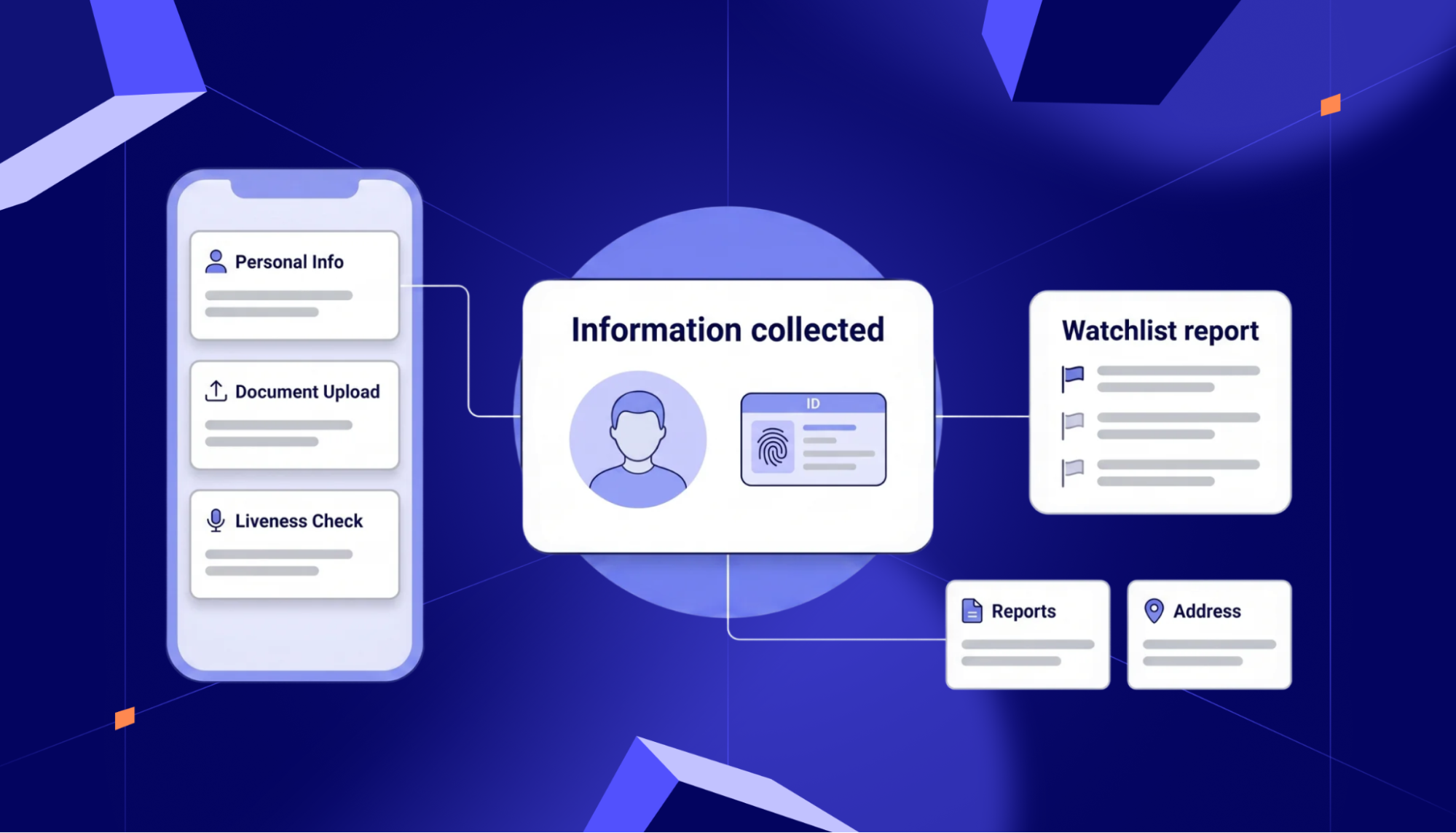
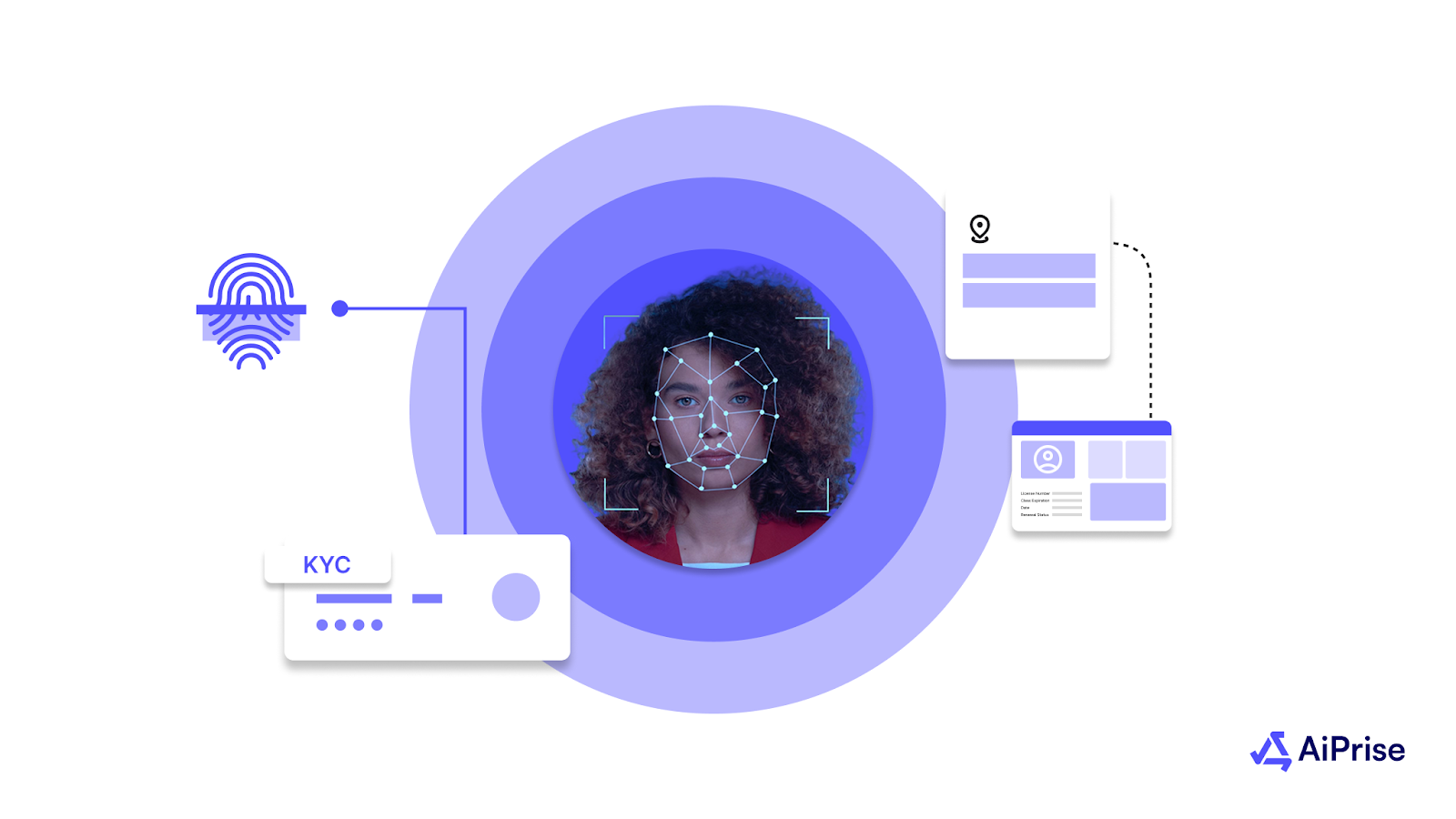
Step 1: Capture and Collect Customer Identity Information Securely
Every KYC journey starts with collecting the basics:
- Full legal name and date of birth
- Residential address
- Government-issued ID (passport, driver's license, national ID)
- A selfie for biometric matching
Automated capture changes the experience entirely. A guided, branded onboarding UI collects exactly what's needed and validates it in real time.
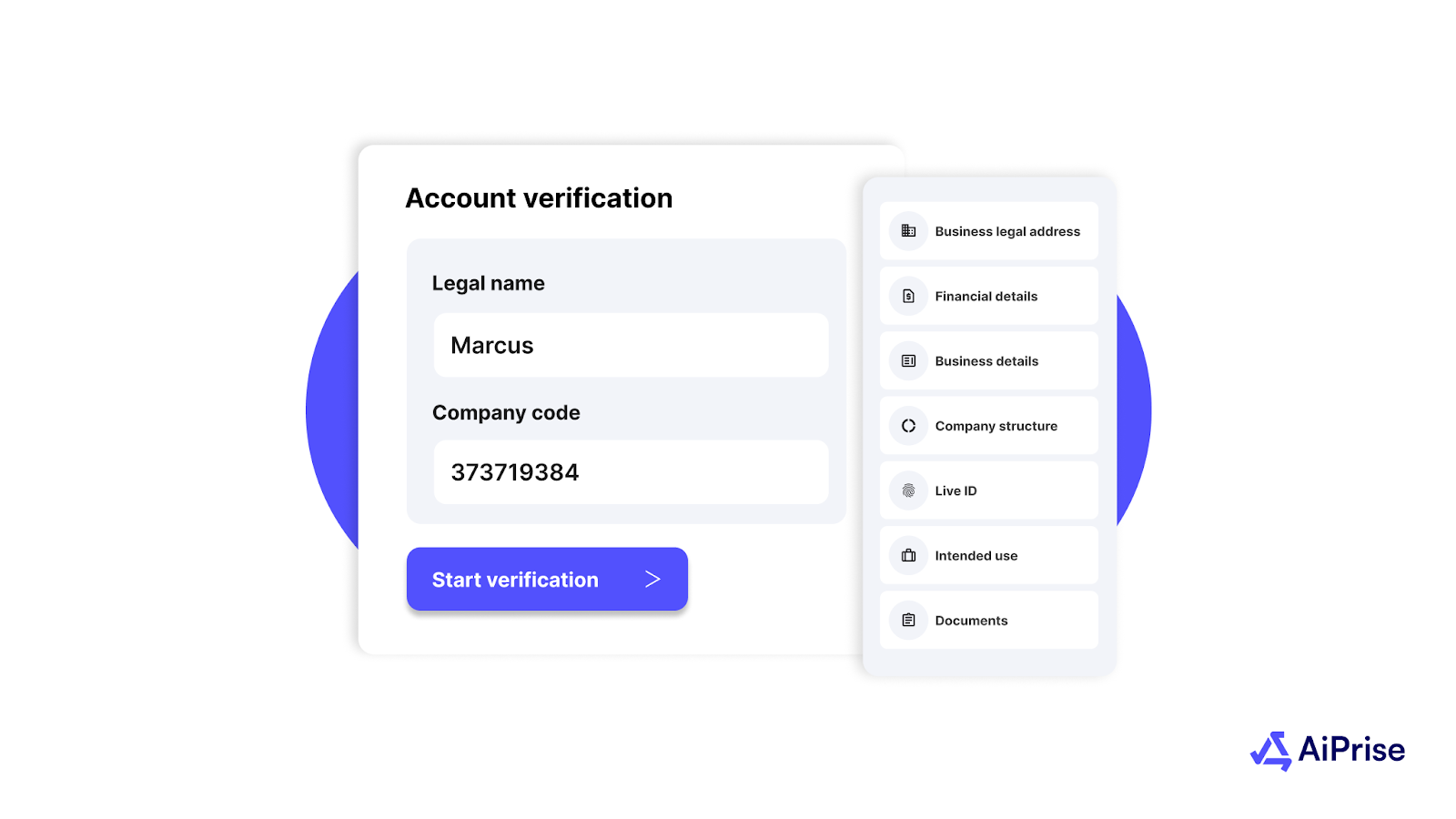
AiPrise’s KYC automation platform does this out of the box. You can either generate session links for customers or connect the API to your tools to get full control.
Step 2: Verify Identity Documents Using Automated Document Verification
Once the customer submits their ID, AI takes over. It extracts data, checks for tampering, matches against registry records, and verifies the customer’s authenticity.
You also get biometric liveness detection that adds another layer of protection. It confirms if the person is physically present using a photo or video captured during verification.
Tip: AiPrise's document insights feature handles all of this within a single verification session.
Step 3: Perform AML, Sanctions, and Watchlist Screening
Every customer needs to be screened against databases like:
- Sanctions lists like those created by OFAC, the EU, and the UN
- PEP databases
- Adverse regional and international media sources
It’s not a one-time check either. Automated screening runs during onboarding and periodically, depending on the timeframe you choose (or are required to use based on the regulations you follow). AiPrise has built these steps into the KYC workflow.
Step 4: Assess Customer Risk Through Automated Risk Scoring
Risk scoring assigns each customer a level based on their profile, geography, transaction patterns, employment history, and screening results.
Automation makes this objective. Every customer gets evaluated against the same criteria. While high-risk cases get routed to human reviewers, low-risk ones are approved automatically.
You can use AiPrise's risk-scoring feature to achieve this through configurable workflows that cut review time by 70%.
Step 5: Continuously Monitor Customers' Records for Suspicious Activity
KYC doesn't end at onboarding. For instance, a customer who was clean at signup may appear on a sanctions list six months later. Regulators expect you to catch these signals as soon as they show up to reduce risk.
That’s why AiPrise has a reverification feature that automates re-checks and keeps monitoring running continuously. It updates risk scores in the background, and your team is only pulled in when the score changes enough to warrant a human review.
Orchestrate the Entire KYC Workflow Using a Unified Platform
You can either stitch in multiple tools to automate your KYC workflow. Or use a unified platform to get the job done. The latter reduces vendor sprawl and data duplication across platforms.
AiPrise gives you three ways to verify KYC:
- A dashboard for one-off verifications
- A branded onboarding SDK for customer-facing flows
- Full API integration for end-to-end automation
Why It's Time to Move to an Automated KYC Solution
The pressures that make manual KYC unsustainable aren't easing. Your customers expect fast onboarding, and your costs per review keep climbing. But regulators still expect consistency for every record you verify.
That’s why you need to consider automating your workflows. KYC automation software gives your compliance team the tools to work faster and scale across every market you operate in. But more importantly, they can breathe easy with more accurate and consistent verification processes that won’t increase costs.
If you’re ready to make the move, AiPrise is the right platform for you. It brings in the entire KYC workflow into a single platform and reduces fragmentation. Book a demo to see how it works.
FAQs
What are the 5 stages of KYC?
The five core stages are: customer identification (CIP), customer due diligence (CDD), enhanced due diligence (EDD) for high-risk customers, ongoing monitoring, and periodic review or re-verification. Every stage builds on the previous one, so you can go from basic identity confirmation to deeper risk assessment.
What should you look for in an automated KYC solution?
Look for global coverage with country-specific regulatory workflows, real-time sanctions and PEP screening, and continuous monitoring. Your platform should also have high security standards (SOC 2 Type 2 certification) with clear data retention policies.
What is the AI in the KYC process?
AI in KYC refers to the use of artificial intelligence, machine learning, and automation technologies to handle KYC verification tasks. For instance, AI agents can automatically extract data from identity documents, match customer information against watchlists, score risk based on multiple signals, and flag cases that need human review. The goal is to reduce manual workload and improve consistency without removing human oversight from high-risk decisions.
You might want to read these...






AiPrise
6 min read
KYB Compliance: 2026 Regulations You Should Know About
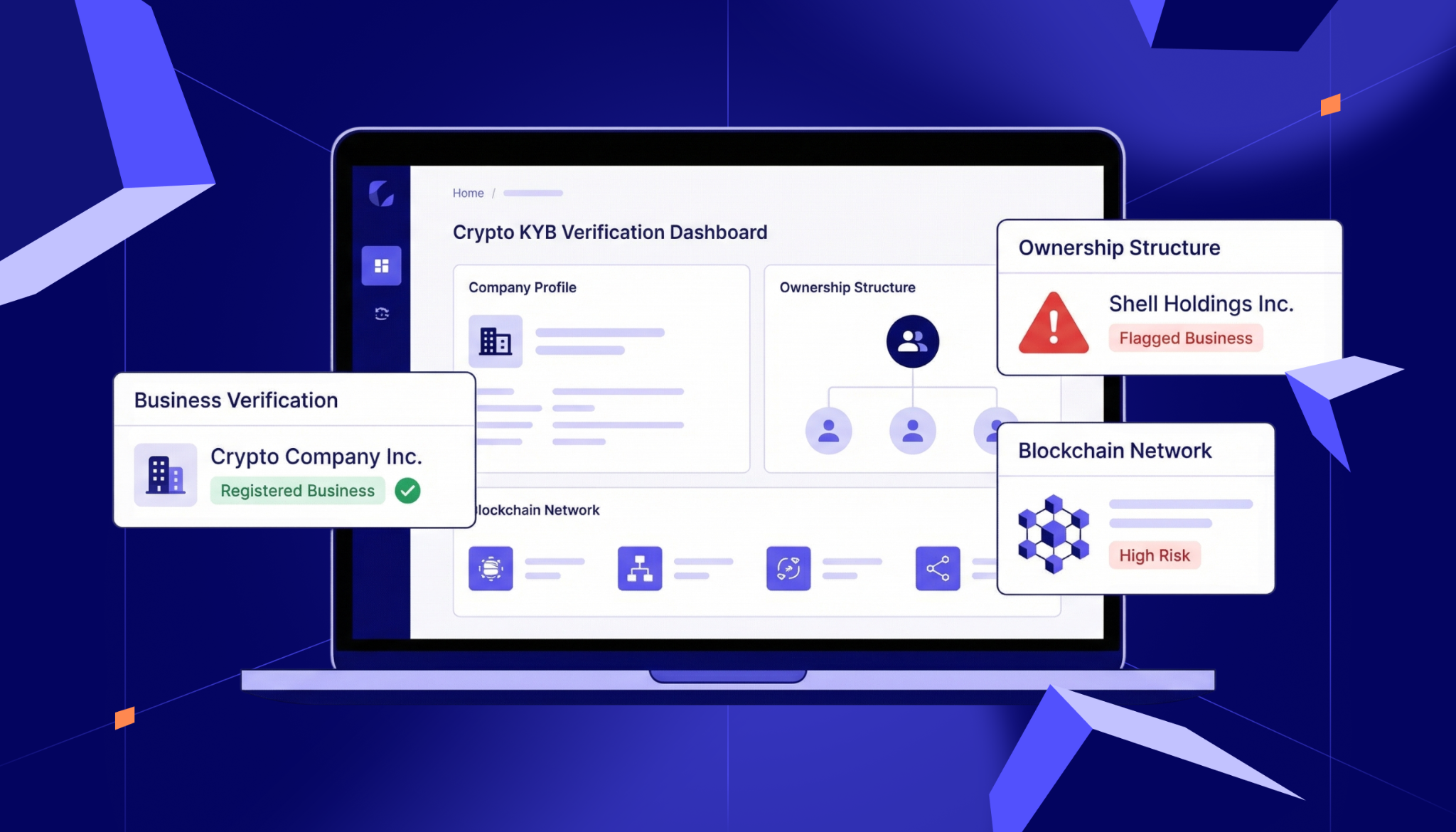
As organizations expand globally and face tighter regulations, adherence to Know Your Business (KYB) standards has become one of the most critical compliance layers for fintech, online marketplaces, and other companies that need to verify business customers before letting them perform financial transactions.









.png)

.jpg)

















.png)








.png)
.png)
.png)
















.png)

AiPrise’s data coverage and AI agents were the deciding factors for us. They’ve made our onboarding 80% faster. It is also a very intuitive platform.

Head of Operations



See your full compliance picture in one place
Use AI agents and global data to review businesses and users faster and more accurately
