

AiPrise
16 min read
April 21, 2026
Top 7 KYC Solutions in 2026 for Faster, Compliant Onboarding

Key Takeaways

Identity verification and compliance checks can be a bottleneck for companies that want to onboard customers at scale. The problem is that when compliance teams rely on manual identity reviews, the onboarding process is slow and error-prone. It’s also difficult to detect some of the more sophisticated fraud tactics, like synthetic IDs, without using technology with advanced verification processes built in. Additionally, regulators expect detailed audit trails and ongoing monitoring. All this can keep teams under constant pressure.
But verifying customer identities has never been more critical. In 2024, the Consumer Sentinel Network received 2.6 million fraud reports and 1.1 million identity theft cases, highlighting the increasing need for stronger identity verification and risk controls.
Know Your Customer (KYC) solution providers help companies address these risks. But with so many KYC options available today, choosing the right partner can feel complex. The decision comes down to selecting a platform you can trust to handle risk, support compliance teams, and grow with your business over time.
This guide reviews seven leading KYC solutions. We’ll look at their fraud prevention and verification features and how to find software that can support your business as it scales.
Quick Overview
- KYC providers in 2026 are expected to deliver fast onboarding while meeting strict US and global compliance requirements.
- Modern KYC platforms combine document checks, biometrics, AML screening, and ongoing monitoring to reduce fraud and manual reviews.
- AiPrise stands out for regulated, high-growth businesses by combining risk-based verification, AI agents, and continuous compliance in one solution.
What Do KYC Solutions Offer?
A KYC platform helps businesses verify customer identities securely and accurately using software.
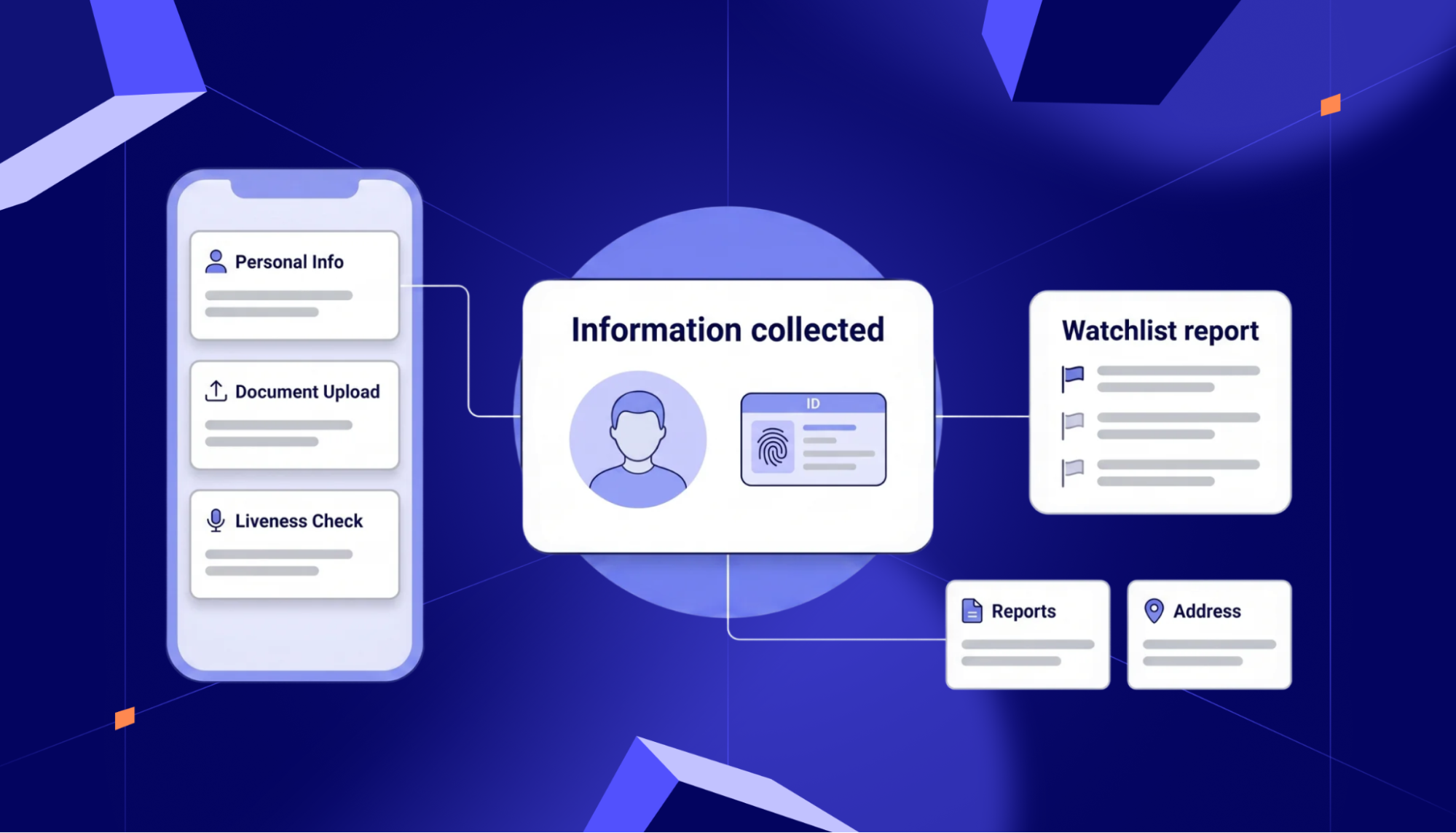
Unlike manual identity checks, which rely on human review and fragmented processes, KYC software automates verification. These platforms combine document verification, biometric checks, and AML screening to meet strict regulatory compliance requirements.
Choosing the right KYC technology protects you from fraud, penalties, and onboarding friction.
Key Features in KYC Software Solutions
Most modern KYC solutions include the following features:
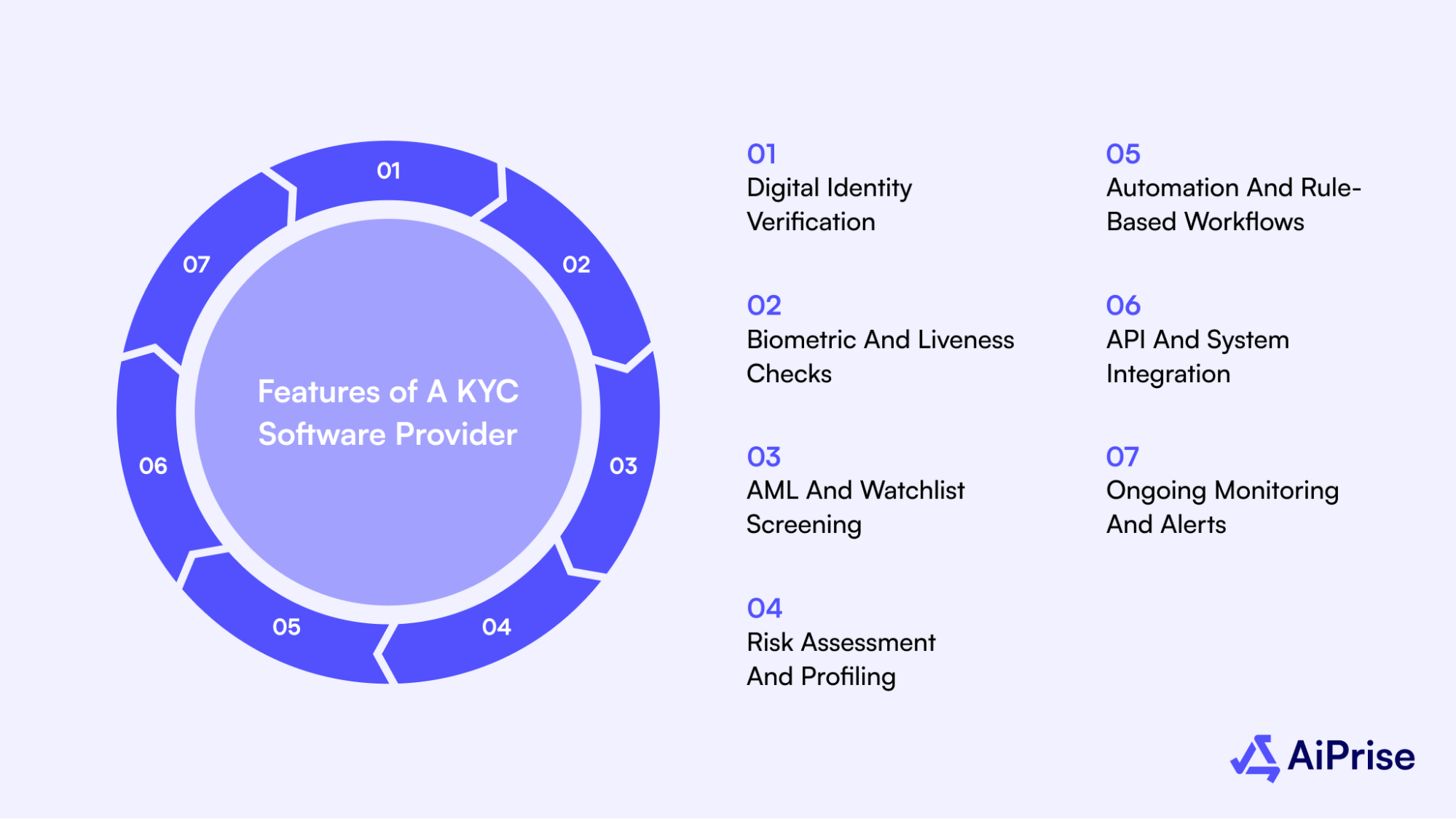
Digital Identity Verification
KYC solutions verify customer identities using government-issued documents such as passports, driver’s licences, or national IDs.
Key checks include:
- Confirming document authenticity
- Detecting tampering or forgery
- Extracting data accurately for onboarding
Biometric and Liveness Checks
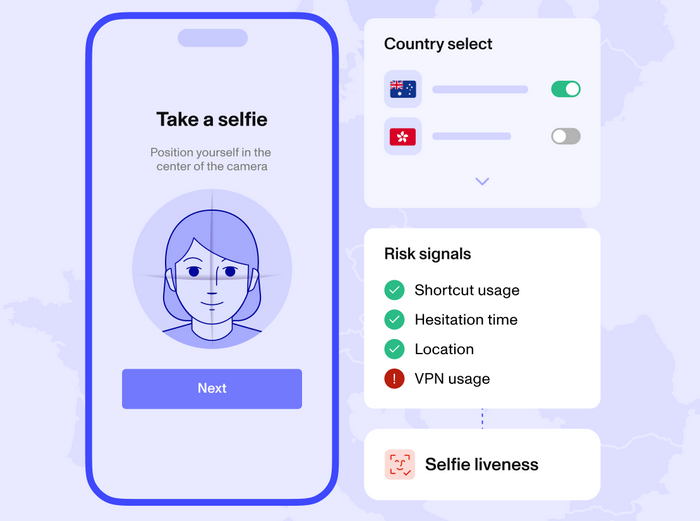
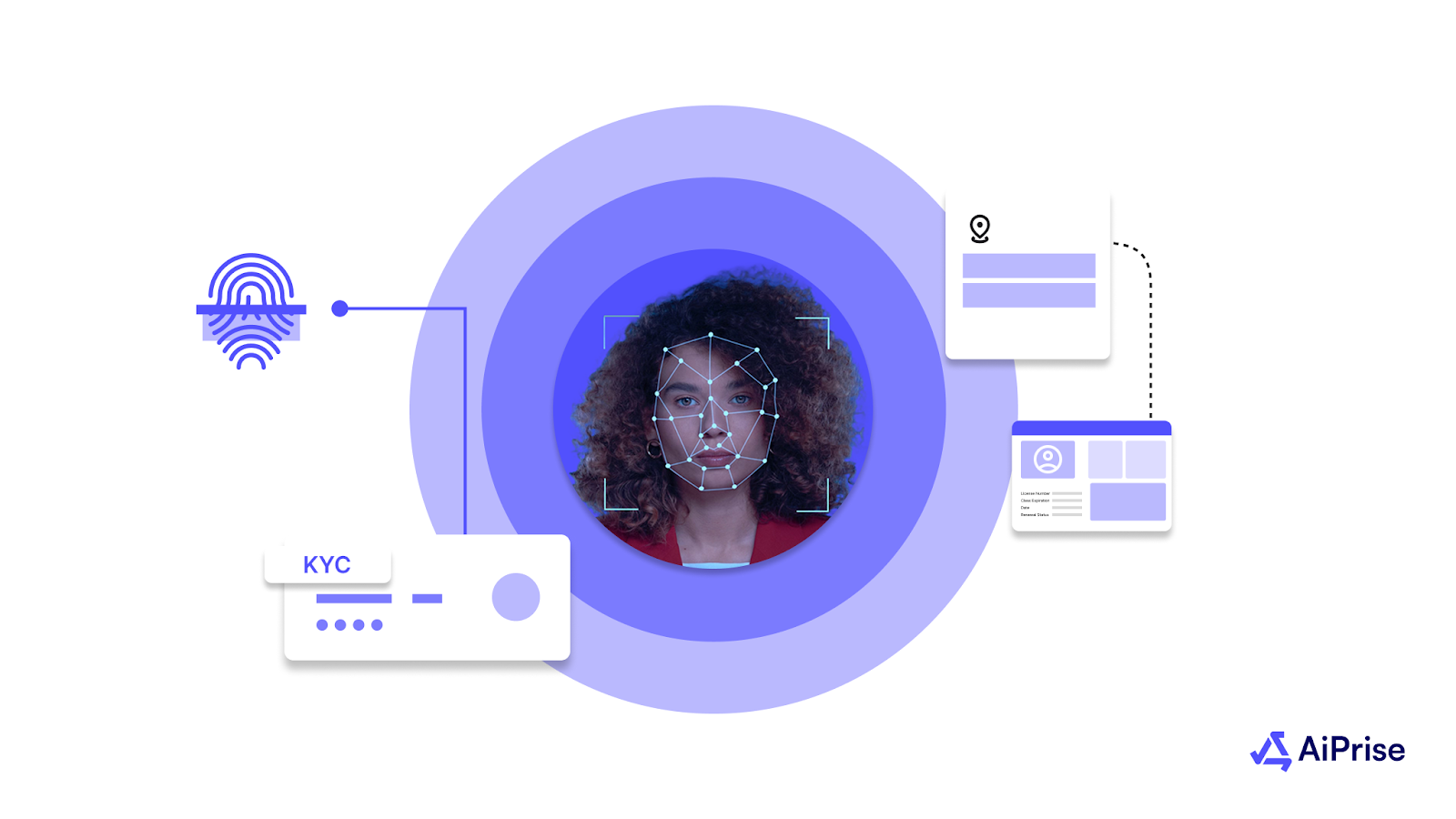
Biometric verification compares a user’s selfie or video with their ID photo, while liveness detection confirms a real person is present during verification.
This layer helps by:
- Matching the user to the identity document
- Preventing spoofing using photos or recordings
- Reducing risks from stolen identities
AML and Watchlist Screening
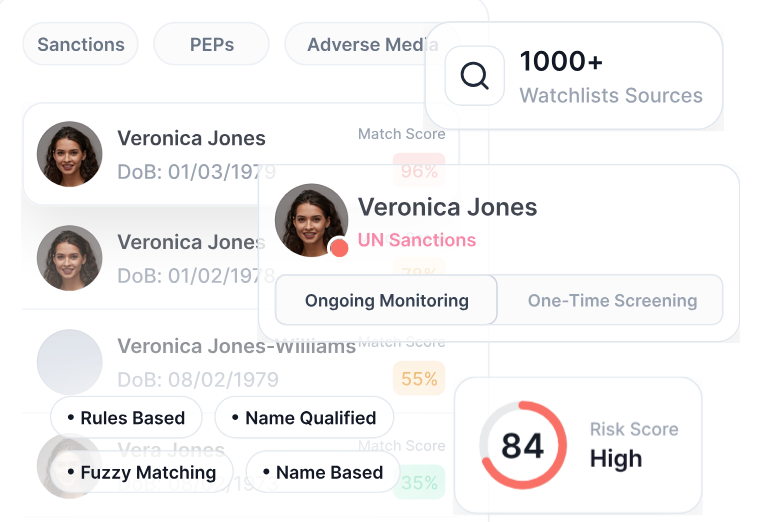
KYC platforms screen customer details against sanctions lists, watchlists, and politically exposed person (PEP) databases.
It supports compliance by:
- Identifying restricted or high-risk individuals
- Supporting AML obligations
Risk Assessment and Profiling
KYC platforms review verification results and customer information to understand how risky a new user may be.
This helps teams with:
- Spotting higher-risk customers early
- Adding extra checks only when needed
- Making safer onboarding decisions
Automation and Rule-Based Workflows
Automated workflows run verification checks using predefined rules instead of manual review. For example, if a customer signs up from a low-risk country with a valid ID, approval can happen instantly. If details don’t match or the location looks risky, the system automatically asks for additional verification.
Key benefits include:
- Faster customer onboarding
- Consistent verification decisions at scale
API And System Integration
Flexible APIs allow identity verification to fit directly into existing apps and onboarding journeys.
Integration allows businesses to:
- Embed KYC into customer flows
- Maintain a consistent experience
Ongoing Monitoring And Alerts
Verification continues after onboarding through continuous monitoring that tracks changes in customer risk status.
Ongoing monitoring helps teams with:
- Detecting new risks over time
- Staying compliant beyond signup
- Responding quickly to emerging threats
Also read: Difference Between AML and Sanctions Screening.
Top 7 KYC Solution Providers In 2026
Most modern providers offer similar core capabilities, including document verification, risk scoring, and regulatory screening. However, not all solutions deliver the same depth of verification, flexibility, or operational control. Some platforms scale better across regions, some provide stronger ongoing monitoring, and others offer more transparency for compliance teams that need visibility into decisions and audit processes.
The next section covers the best KYC solutions, focusing on ideal use cases and core strengths.
1. AiPrise
AiPrise is an AI-powered identity verification platform designed to help businesses onboard users quickly while maintaining strong compliance and fraud protection. It combines KYC, KYB, and agentic AI capabilities.
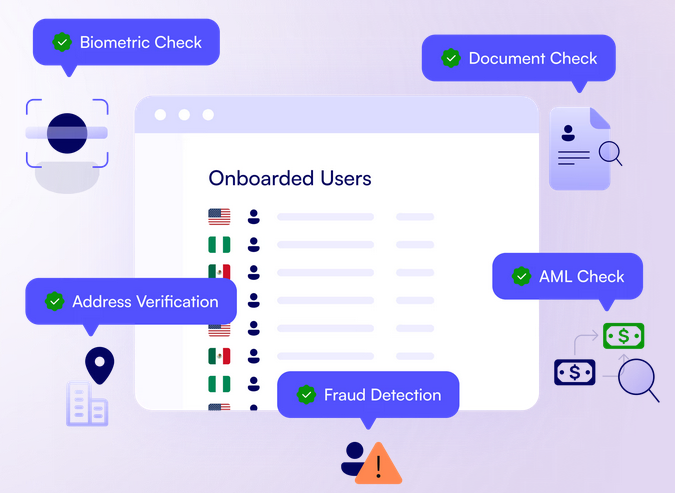
The platform supports a global footprint with 5B+ verifiable users and 500M+ businesses across 200+ countries, powered by 100+ data sources. By consolidating multiple verification layers into one platform, AiPrise can also help reduce verification costs by up to 30%.
Key features:
- Workflow-based verification: Customizable risk-based workflows that automate approvals, reviews, and escalations.
- Fraud detection: Deepfake detection, manipulated document identification, and protection against identity fraud attempts.
- Watchlist and sanctions screening: Real-time AML and watchlist screening, including sanctions, PEP, and adverse media checks.
- One-click KYC execution: Faster repeat onboarding for returning users through single-click verification.
- Proof of address verification: Validation using trusted data sources and automatic rejection of documents older than three months.
- Continuous compliance monitoring: Reverification and ongoing monitoring to support continuous compliance.
- Onboarding SDK: Branded onboarding experiences for low-friction verification.
- Document insights: Document Insights for fast data extraction (save up to 40 hours) that includes template matching and tamper detection, reducing manual effort.
- AI case prioritization: AI-powered verification agents that prioritize cases and reduce manual review time by up to 70–80%.
How AiPrise helped a growing fintech streamline compliance with AI-powered KYC
A fast-growing fintech previously managed KYC through an internal dashboard that was repetitive, time-consuming, and prone to errors. The company adopted AiPrise to automate identity verification and introduce real-time fraud checks.
The platform automatically extracted data from identity documents, performed biometric face matching, and screened users against sanctions and duplicate profiles. Risk-based decisioning allowed the compliance team to focus on complex cases instead of reviewing every application.
As a result, the company doubled conversion rates while freeing up internal resources. The fintech also valued AiPrise’s technical maturity, responsiveness, and collaborative approach, viewing the platform as a trusted partner built to support fast-growing teams.
2. Entrust
Entrust is an AI-powered identity verification (IDV) platform for highly regulated industries to automate KYC and AML compliance. It balances high-assurance security with a frictionless digital onboarding experience.

Key features:
- Digital identity verification: Identity checks combine document verification and biometric validation.
- Identity and access management integration: Businesses can use verified identities to securely log users into systems and control access across platforms.
- Electronic and digital signing: Secure digital signatures support identity-backed transactions and agreements.
- Cryptographic security support: Strong cryptographic controls protect identity data.
- Enterprise-grade compliance readiness: Identity-centric security frameworks support audits, regulatory reviews, and long-term compliance obligations.
- Workflow Studio (No-Code Orchestration): A drag-and-drop interface lets teams design and customize onboarding journeys without writing code.
- Global document coverage: The platform supports more than 2,500 document types across 195 countries and uses regional technologies such as barcodes and NFC checks to improve verification accuracy.
- Deep fraud analytics (Fraud Lab): AI models analyze verification data to detect subtle fraud patterns that are difficult for manual reviews to spot.
3. Jumio
Jumio is a KYC provider that applies identity intelligence and biometric technology to help you verify customers beyond one-time checks. Continuous risk detection makes it suitable for businesses facing sophisticated fraud and high onboarding volumes.

Key features:
- Ongoing identity checks: The platform analyzes identity data points across customer activity, helping you spot repeat fraud attempts that one-time checks can miss.
- Scalable onboarding: Jumio can handle high verification requests, up to 120 transactions per second, without slowing down.
- Global document breadth: Provides support for 5,000+ ID types across 200 countries and territories.
- Suitable for high-risk industries: Fintech, crypto, gaming, and digital platforms often use Jumio.
Also read: 10 KYC Onboarding Challenges and Best Practices to Fix Them.
4. Persona
Persona is a configurable identity verification provider. It lets you tailor identity flows to different risk levels, regions, and use cases, allowing you to meet multiple compliance requirements with ease.
This KYC solution helps high-growth or fraud-sensitive businesses that require deeper checks on occasion.
Key features:
- Deep control over personal data handling: Granular PII management supports regional data protection laws, such as CCPA/CPRA and GDPR frameworks.
- Unified identity operations: Identity data, verification outcomes, and reviews are centralized, giving you better visibility.
- Advanced fraud detection capabilities: Behavioral signals, device intelligence, and link analysis help you identify coordinated fraud and repeat offenders.
- Partner integrations: Integrates with tools you already use, like Coinbase, Okta, auth0, and more, for smarter decisions and efficiency.
- Scales across industries and growth stages: The platform supports fintech, payments, crypto, marketplaces, and enterprises expanding into new markets.
5. Socure
Socure is a US-focused KYC provider that uses AI trained on 40+ billion historical outcomes and hundreds of billions of data points to improve identity decision accuracy. It is designed for businesses that need to approve legitimate users faster while stopping fraud across the entire customer lifecycle.

Key features:
- Strong performance against fraud: Sigma Synthetic Fraud and Sigma First-Party Fraud. Also offers a 360° view of digital identity, helps detect fabricated identity, and reduces early payment defaults and costly chargebacks.
- Real-time KYC and authentication decisions: Identity verification occurs instantly, allowing you to reduce onboarding delays without compromising compliance with RiskOS.
- Lifecycle-based identity trust: Identity profiles strengthen over time, helping you make better decisions during onboarding, login, and account changes.
- Widely trusted by large US enterprises: Adoption across banks, fintechs, and government entities signals strong reliability at scale.
- Compliance tools: Portfolio Scrub, which reviews existing customer accounts for fraud and compliance risks, and eCBSV, which confirms name, date of birth, and Social Security Number matches with US government records.
6. Sumsub
Sumsub’s KYC platform helps businesses achieve high pass rates, meaning more legitimate users successfully complete verification, and it can verify users from any country within 30 seconds.

You can create workflows for various risk levels and requirements (for example, AML) while also handling all standard KYC processes.
Key features:
- Global document verification: 14,000+ documents from 220+ countries and territories where OCR can extract scripts like Hindi, Cyrillic, and Hieroglyphics.
- Local data expertise: Local data processing and access to credible regional databases.
- Flexible integrations: Unilink lets you add a QR code to your website for verification, alongside web and mobile SDKs and APIs.
- Compliance standards coverage: Compliance with PCI DSS, GDPR, and ISO 27001.
- Video-based verification: Trained in-house agents verify high-risk users through video calls.
- NFC document authentication: Chip scanning on documents for additional authenticity verification.
7. Identomat
Identomat is an AI-powered KYC and ID verification tool with no-code workflows. It covers 1000s of ID types, screens individuals against sanctions, PEP, and adverse media lists, and offers active, passive, and adaptive selfie checks.
Key features:
- Document liveness: Screen, photocopy, and edge detection, as well as physical ID detection via scene segmentation.
- Advanced data checks: Validation for data consistency between MRZ, VIZ, barcode, and CHIP, and also between front and back.
- Video KYC: In-person onboarding for high-risk users and when jurisdictions demand agent-led sessions for KYC onboarding; includes face match and liveness detection to prevent spoofing.
- KYC/CDD questionnaire: Web and mobile forms to confirm identity for in-depth customer profiling for customer due diligence (CDD) and enhanced due diligence (EDD).
Comparison Of The Top 7 KYC Providers In 2026
Leading KYC solutions in 2026 differ widely in how they balance onboarding speed, compliance depth, and fraud prevention maturity. To make the differences easier to evaluate, the comparison below focuses on fit, strengths, and operational impact, helping you identify which provider aligns best with growth-focused, regulated businesses.
Also read: Automated KYC Verification vs. Manual Process Explained.
With these differences in mind, the next step is deciding which factors matter most for your specific business model and risk tolerance.
How To Choose The Right KYC Provider For Your Business In 2026?
To choose the right KYC provider, consider the following factors that directly impact onboarding performance, compliance readiness, and long-term scalability.

- Alignment with regulatory expectations: A strong provider should support KYC, AML, and ongoing monitoring requirements without forcing frequent process changes.
- Ability to balance speed and compliance: Faster onboarding should not come at the cost of weak identity checks or increased fraud exposure.
- Risk-based verification capabilities: Adaptive decisioning helps you apply deeper checks only where risk justifies it, improving efficiency and customer experience.
- Operational simplicity for compliance teams: Centralized workflows and automation reduce manual reviews, helping teams manage scale without added complexity.
- Support for evolving fraud techniques: Modern KYC providers should detect impersonation, synthetic identities, and repeat fraud patterns as threats evolve.
- Flexibility across industries and growth stages: The solution should adapt easily as you expand into new markets, products, or customer segments.
Adopt a KYC Solution That Gives Your Business an Edge
Choosing the right KYC software ultimately depends on your business needs, regulatory environment, and the level of fraud risk you manage. Evaluating providers based on compliance capabilities, automation, and risk management can help you find a solution that supports both security and growth.
This is where AiPrise helps you turn identity verification into a competitive advantage by combining intelligent automation with strong compliance foundations. AiPrise lets you customize workflows, automate identity analysis with AI agents, verify customers in seconds, and more.
Book a demo to see how a modern KYC solution can help you onboard faster, reduce risk, and stay ahead of regulatory expectations.
FAQs
How long does KYC verification usually take with modern providers?
KYC verification timelines vary, but modern KYC providers can complete checks within seconds or minutes using automated workflows. Faster verification depends on factors like document quality, risk level, and whether you require enhanced due diligence.
Are KYC providers mandatory for fintech and financial businesses?
KYC providers are not legally mandatory, but most US and global regulations require businesses to be KYC compliant. Most regulated businesses rely on specialized KYC providers to meet these obligations accurately and at scale.
What documents are typically required for KYC verification?
Commonly required documents include government-issued photo IDs such as passports or driver’s licenses, proof of address documents, and sometimes biometric verification like a selfie or liveness check.
Can KYC providers help reduce customer onboarding drop-offs?
Yes, the right KYC provider can significantly reduce drop-offs by automating checks, minimizing manual reviews, and offering user-friendly verification flows that reduce friction during onboarding.
How do KYC providers handle ongoing compliance after onboarding?
Many KYC providers support continuous monitoring, reverification, and watchlist screening to ensure customer data stays compliant as risk profiles or regulations change.
You might want to read these...




AiPrise
KYB Compliance: 2026 Regulations You Should Know About
As organizations expand globally and face tighter regulations, adherence to Know Your Business (KYB) standards has become one of the most critical compliance layers for fintech, online marketplaces, and other companies that need to verify business customers before letting them perform financial transactions.










.png)

.jpg)
















.png)








.png)
.png)
.png)












.png)
.png)

AiPrise’s data coverage and AI agents were the deciding factors for us. They’ve made our onboarding 80% faster. It is also a very intuitive platform.

Head of Operations



See your full compliance picture in one place
Use AI agents and global data to review businesses and users faster and more accurately
