

AiPrise
10 min read
March 4, 2026
Top 10 AML and Identity Verification APIs for Compliance in 2026

Key Takeaways

In 2026, the cost of letting fraud slip through your onboarding or AML processes isn’t just a theoretical risk; it’s a material drag on your business performance and compliance posture. As threat actors become more sophisticated and digital transactions continue to scale, legacy manual checks and siloed systems increasingly fail to keep up with real-world fraud trends.
In 2025, the FBI’s Internet Crime Complaint Center (IC3) received over 5,100 complaints about account takeover fraud, with losses exceeding $262 million, highlighting how digital identity attacks are a growing reality for U.S. businesses and consumers alike. By understanding how modern AML and identity verification APIs automate risk assessment, you can stop threats earlier, reduce false positives, and strengthen compliance confidence without slowing your customer experience.
This deep dive into the top 10 AML and Identity Verification APIs for Compliance in 2026 will help you cut through hype and choose solutions that align with your compliance needs and risk tolerance. Armed with this insight, you’ll be better equipped to protect your operations, preserve trust, and support sustainable growth.
Quick Overview
- AML and identity verification APIs help you meet U.S. compliance requirements while reducing fraud, false positives, and manual review effort.
- Identity verification APIs handle onboarding checks, while AML APIs focus on ongoing monitoring, sanctions screening, and suspicious activity detection.
- Choosing the right API depends on regulatory coverage, fraud accuracy, scalability, global reach, and audit-ready reporting.
- AiPrise brings KYC, KYB, AML, fraud risk scoring, workflows, and compliance automation together through a single API-built platform.
What Is an Identity Verification API?
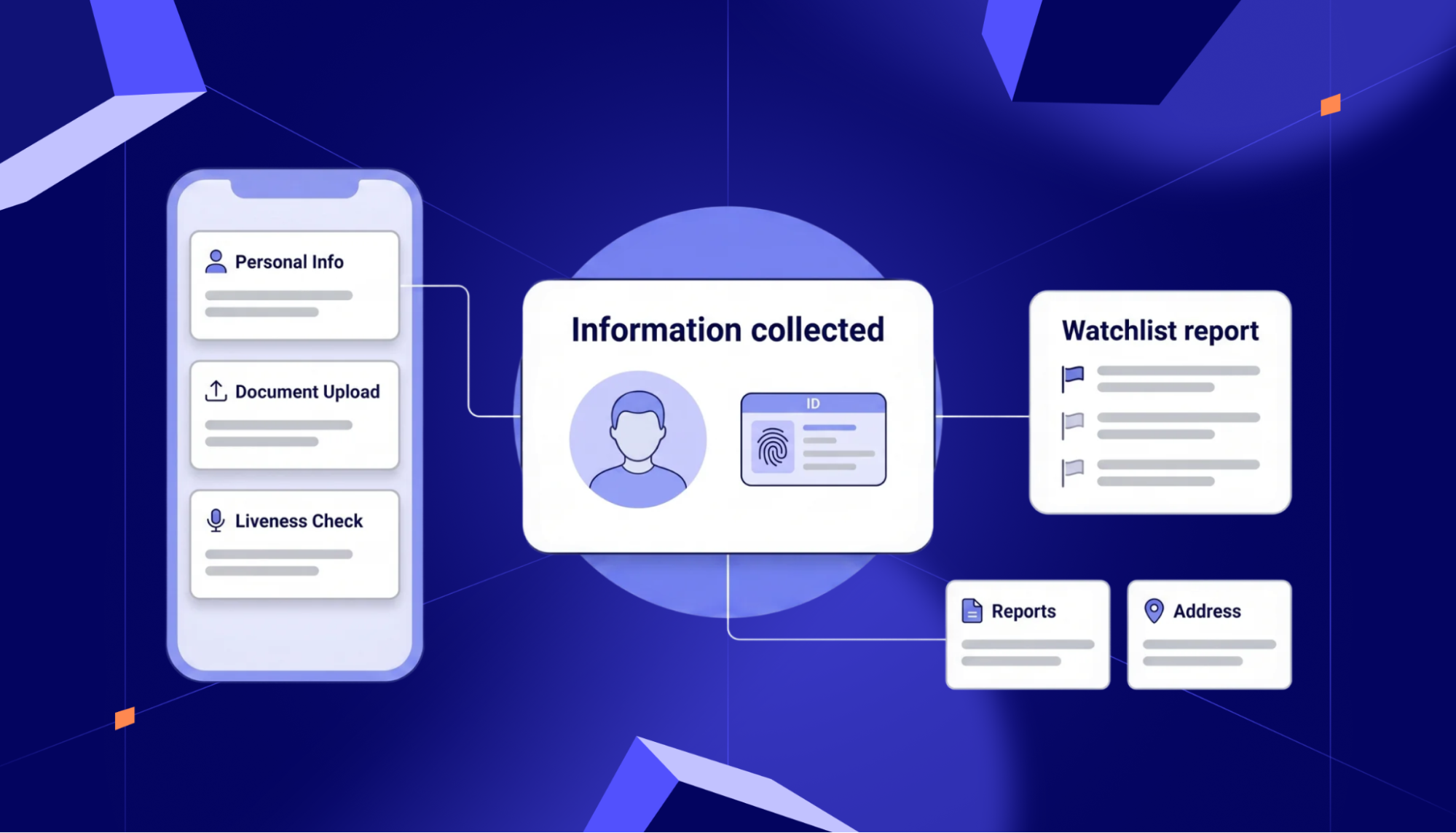
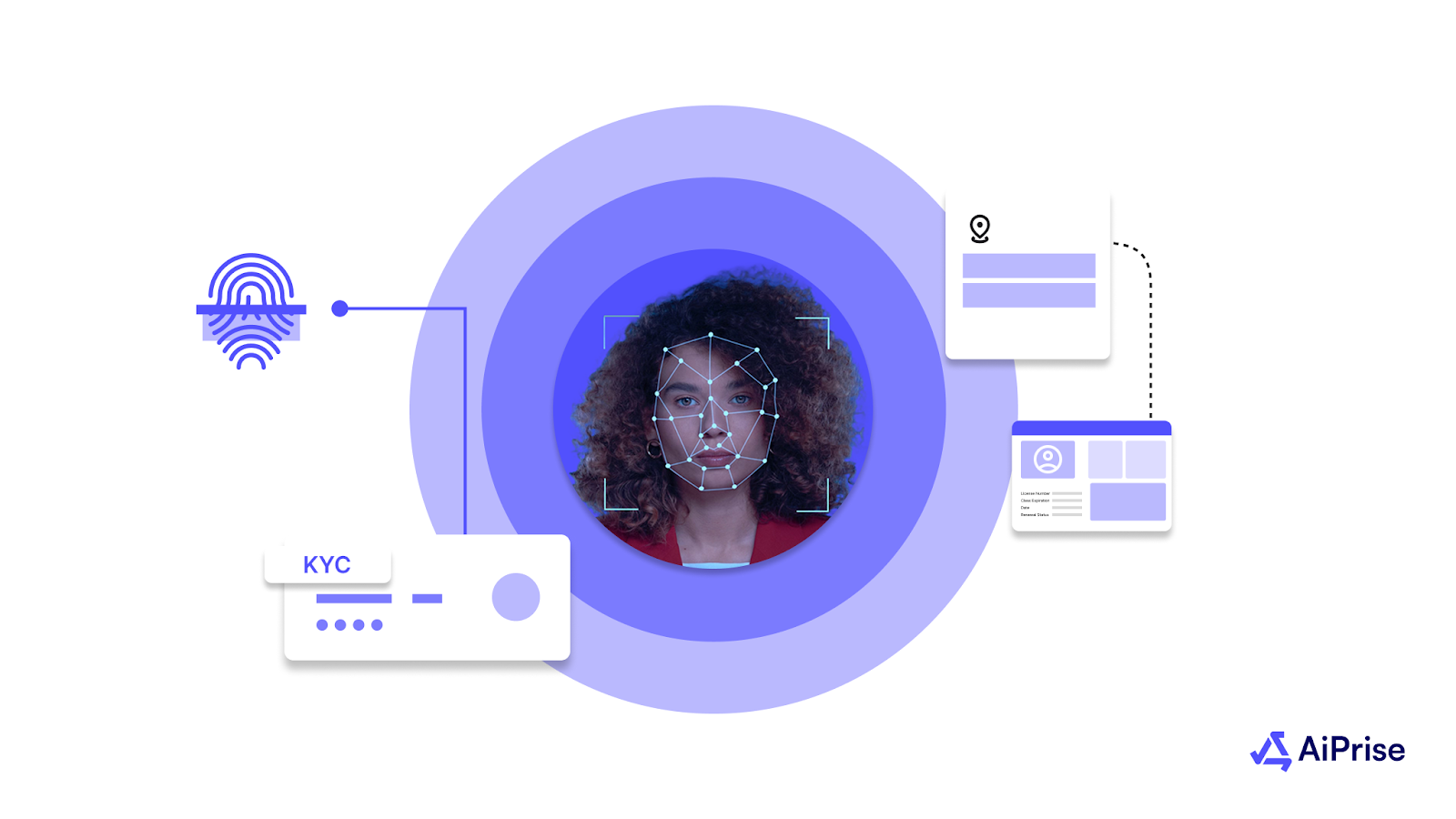
An identity verification API is a technology interface that allows your systems to automatically verify a person’s or business’s identity during onboarding. It checks government-issued IDs, biometric data, and authoritative databases to confirm authenticity and ownership. This helps you meet U.S. regulatory requirements like FinCEN’s Customer Identification Program while reducing manual review effort.
Why are AML and Identity Verification APIs Important in 2026?
In 2026, AML and identity verification APIs directly determine whether regulated businesses can meet U.S. compliance obligations at scale.
Here are the specific regulatory and operational reasons these APIs are now critical for fintech, payments, banking, and crypto platforms.
- U.S. regulators expect compliance with the Bank Secrecy Act, requiring continuous customer due diligence beyond initial KYC verification.
- Fintech compliance teams must screen customers against OFAC sanctions lists at onboarding and throughout the customer lifecycle.
- Payment processors rely on identity verification APIs to meet FinCEN Customer Identification Program requirements without delaying transaction approvals.
- Crypto platforms use AML APIs to monitor wallet activity and flag suspicious behavior under FinCEN virtual asset guidance.
- KYB APIs help verify beneficial ownership to satisfy FinCEN’s Customer Due Diligence Rule for U.S.-registered businesses.
- API-based automation supports audit-ready reporting demanded during FDIC, OCC, or state-level regulatory examinations.
Also read: 6 Key AML Use Cases Powered by AI in 2026
Knowing why these APIs matter raises another practical question: how AML APIs and identity verification APIs differ in day-to-day compliance work.
AML APIs vs Identity Verification APIs
AML APIs and identity verification APIs address different regulatory obligations and operate at different stages of the compliance lifecycle.
Here’s a concise, operational comparison showing exactly where each API is used and why both are required.
Once the distinction is clear, the next step is identifying which platforms currently lead the market in addressing these requirements.
Top 10 AML and Identity Verification APIs for Compliance in 2026
AML and identity verification APIs enable regulated businesses to verify customers, detect financial crime, and maintain compliance as transaction volumes increase.
Below are the leading APIs that compliance, risk, and product teams commonly evaluate when modernizing verification and AML infrastructure.
1. AiPrise
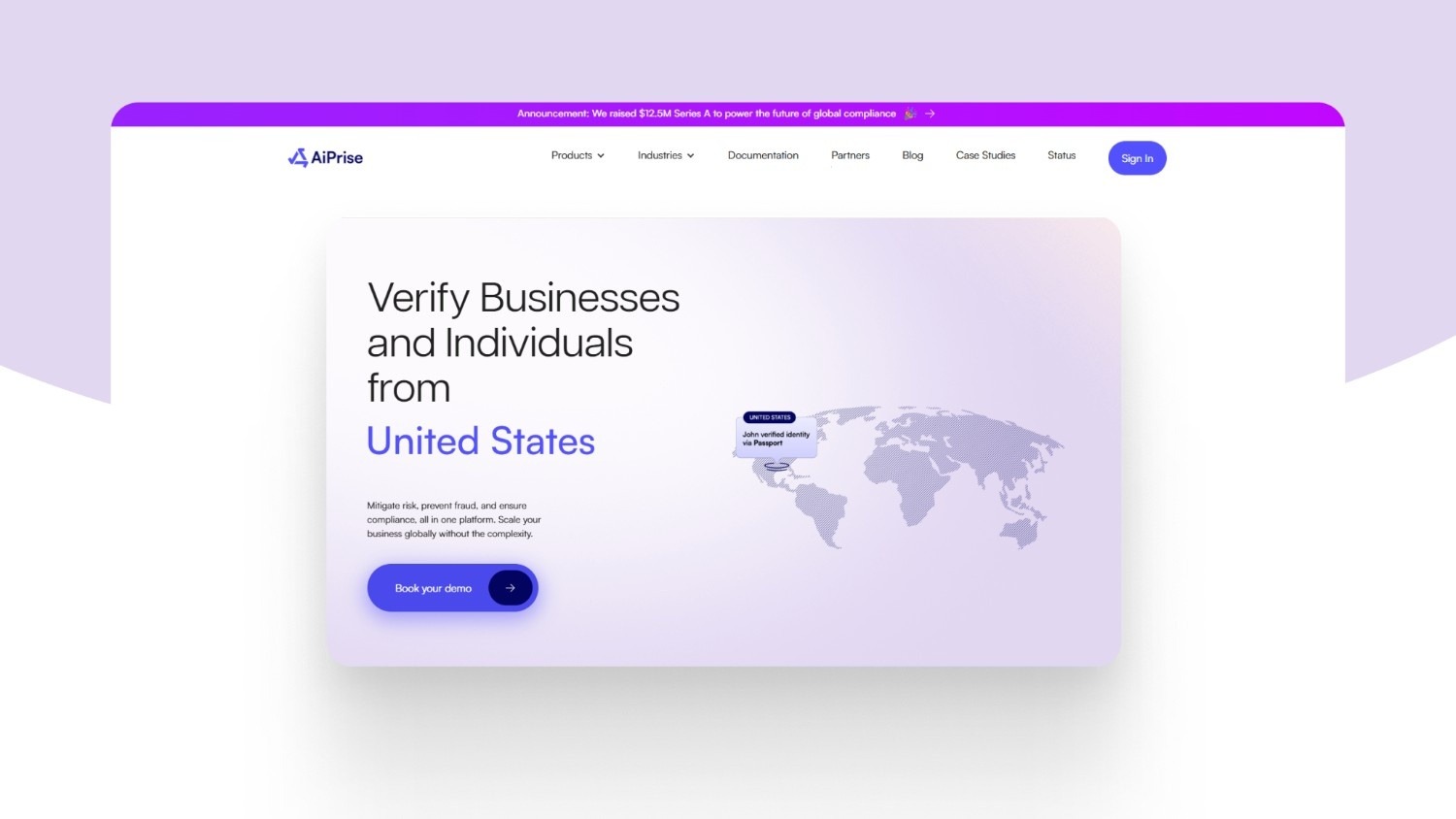
AiPrise is an AI-driven verification platform that helps you verify individuals and businesses, reduce fraud exposure, and meet global compliance requirements through a single API. It allows you to scale across regions without managing multiple vendors or fragmented compliance workflows.
What the API is best suited for
- Centralizing KYC, KYB, AML, and fraud risk management within a unified, API-first compliance infrastructure
Core products and strengths
- Business Verification (KYB) enabling global registry checks, UBO verification, and ongoing business monitoring
- User Verification (KYC) supporting global document verification, biometric checks, proof of address, and reverification
- Fraud & Risk Scoring using dynamic, rule-based decisioning across identity, device, behavioral, and transactional signals
- Compliance Co-Pilot leveraging AI to accelerate case reviews, EDD report generation, and document analysis
- Onboarding SDK & Workflows allowing fully customizable, branded onboarding flows with fallback vendors and audit trails
Ideal use cases
- Fintech and neobanks onboarding individuals and SMEs
- Payment providers handling high-volume customer verification
- Crypto and stablecoin platforms verifying users, businesses, and beneficial owners
- Lending, marketplaces, and cross-border payment platforms
Limitations or considerations
- Designed for teams seeking a platform-led compliance approach rather than isolated verification tools
- An initial configuration effort is required to tailor risk rules and workflows to internal policies
2. ComplyAdvantage
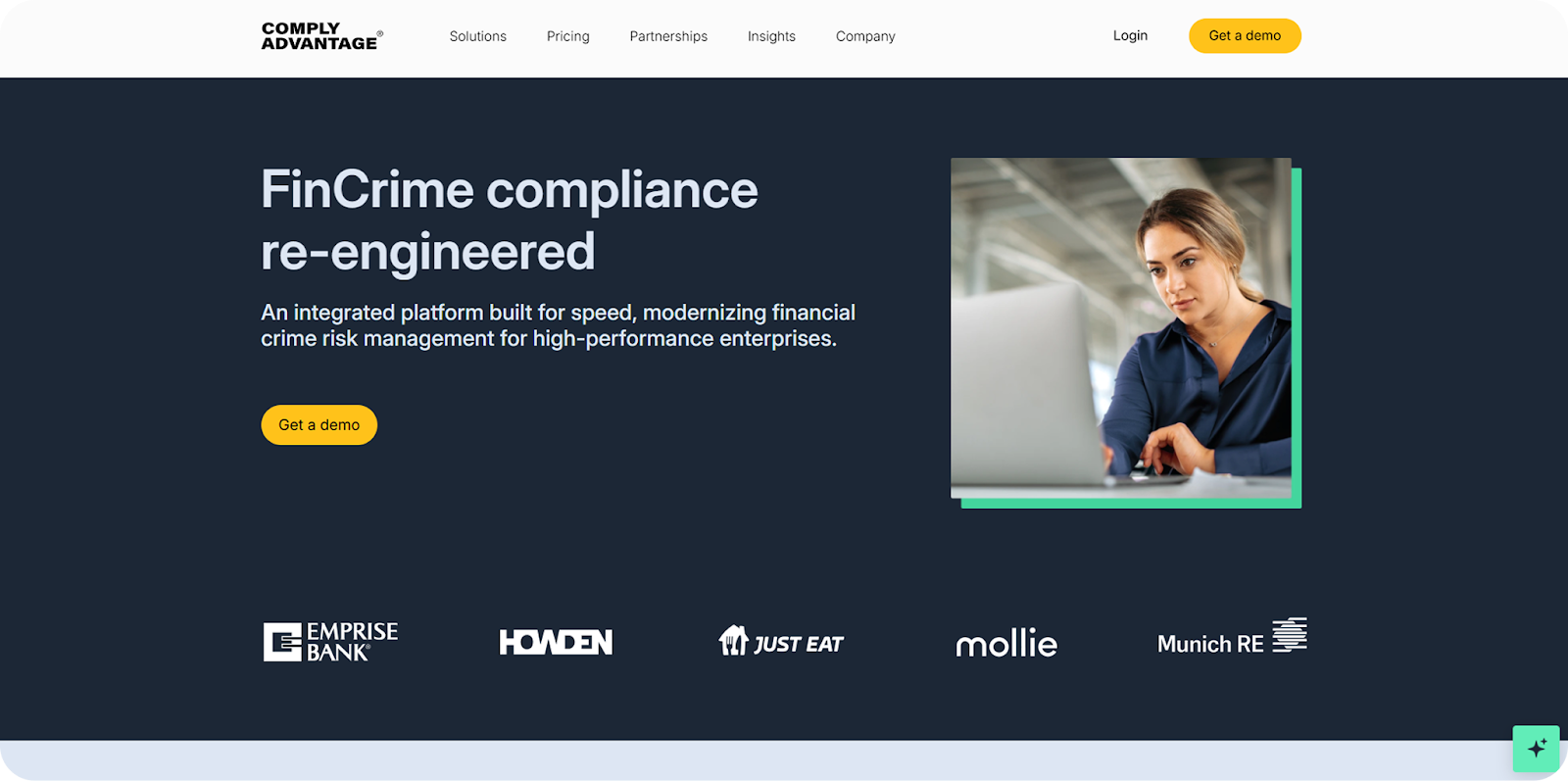
ComplyAdvantage offers AML-focused APIs that help you detect financial crime risks using real-time risk intelligence and machine learning. The platform is primarily designed to support ongoing AML monitoring rather than full customer onboarding.
What the API is best suited for
- Sanctions screening, adverse media monitoring, and continuous AML risk detection
Core strengths
- Frequently updated sanctions, watchlist, and PEP datasets
- Strong adverse media coverage with automated risk classification
- API-first architecture that integrates easily into existing compliance systems
Limitations or considerations
- Does not provide native identity verification or document verification capabilities
- Requires separate KYC solutions to satisfy FinCEN Customer Identification Program requirements
- Limited support for onboarding workflows, case management, and KYB verification
- Best suited as a data layer rather than a standalone compliance platform
3. Sumsub
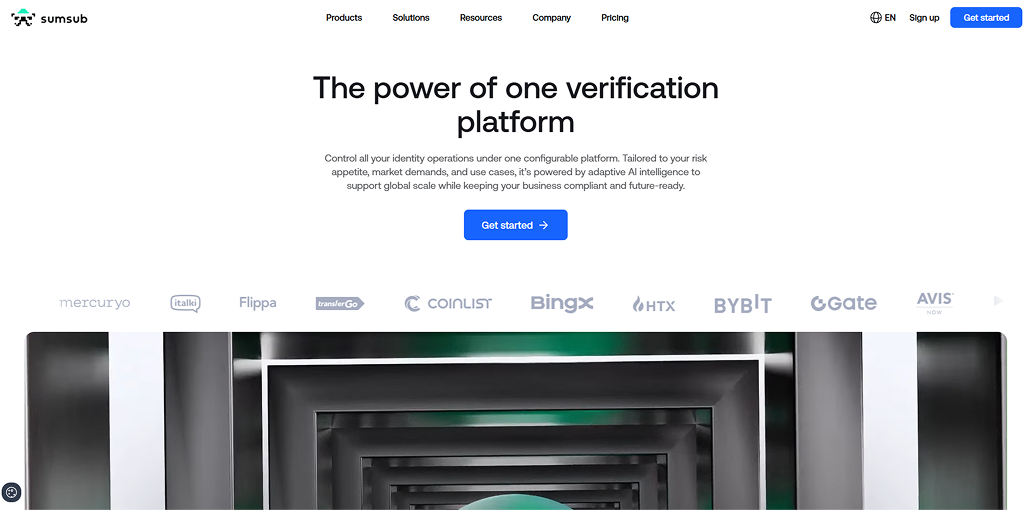
Sumsub provides identity verification and compliance APIs that help you verify users globally and reduce fraud during digital onboarding. The platform focuses on combining document verification, biometrics, and basic AML checks into a single verification flow.
What the API is best suited for
- Digital identity verification and onboarding-focused KYC workflows
Core strengths
- Broad global document coverage supporting passports, ID cards, and driver’s licenses
- Integrated biometric checks, including face matching and liveness detection
- Pre-built onboarding flows that speed up implementation for product teams
Limitations or considerations
- AML monitoring capabilities are less advanced compared to specialized AML data providers
- Limited flexibility for complex KYB and beneficial ownership verification
- Custom risk logic and rule configuration can be restrictive for highly regulated use cases
4. Trulioo
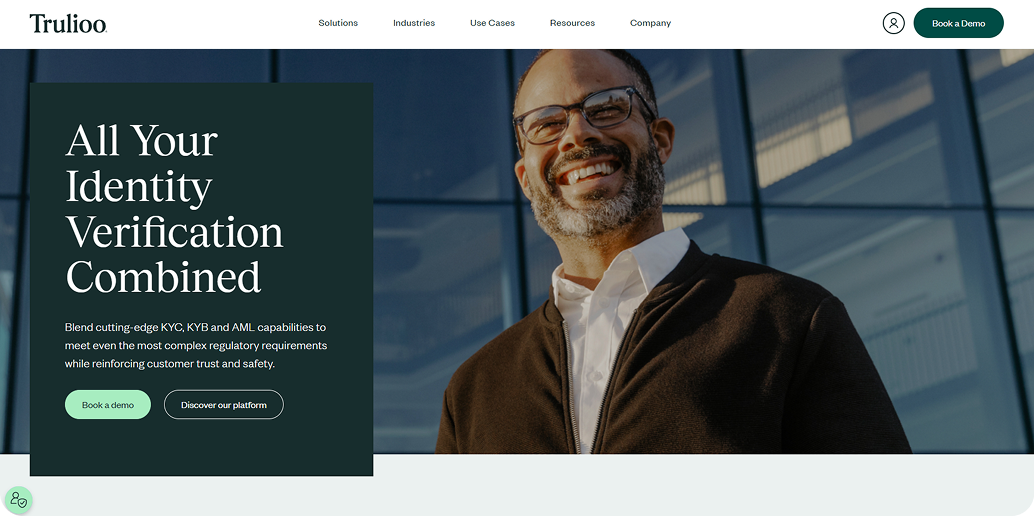
Trulioo provides identity verification APIs that allow you to verify individuals and businesses using global data sources during onboarding. The platform is widely used for meeting KYC and KYB requirements across multiple jurisdictions.
What the API is best suited for
- Global identity and business verification during customer onboarding
Core strengths
- Extensive coverage across government and authoritative data sources worldwide
- Strong support for both KYC and KYB verification use cases
- API-first model that integrates into existing onboarding and compliance systems
Limitations or considerations
- Limited native AML transaction monitoring compared to dedicated AML platforms
- Advanced fraud detection and risk scoring often require third-party integrations
- Ongoing monitoring capabilities are not as comprehensive as onboarding checks
5. Jumio
Jumio provides identity verification APIs focused on verifying individuals through document authentication and biometric validation. The platform is commonly used for digital onboarding, where strong identity assurance is required at the point of entry.
What the API is best suited for
- High-assurance identity verification during customer onboarding
Core strengths
- Advanced document verification with anti-tampering and authenticity checks
- Biometric face matching and liveness detection to prevent impersonation
- Strong compliance alignment with regulated onboarding requirements
Limitations or considerations
- Limited support for KYB and beneficial ownership verification
- AML capabilities are largely restricted to screening rather than ongoing monitoring
- Less flexibility for highly customized onboarding workflows compared to API-first platforms
Also read: Deepfake Detection vs. Liveness Checks in Modern Security
6. Socure
Socure offers identity verification and fraud prevention APIs that use machine learning to assess digital identity risk in real time. The platform is primarily focused on identity confidence scoring rather than full compliance workflow management.
What the API is best suited for
- Real-time identity risk assessment and fraud prevention during digital onboarding
Core strengths
- Predictive identity scoring using large-scale U.S. identity data
- Strong performance in detecting synthetic and stolen identities
- Low-friction verification designed to minimize customer drop-off
Limitations or considerations
- Primarily U.S.-centric, with limited global identity and KYB coverage
- Does not provide end-to-end AML monitoring or regulatory case management
- Often requires complementary tools for document verification and ongoing compliance
7. Persona
Persona provides identity verification APIs that let you build customizable verification flows for individuals and businesses. The platform emphasizes flexibility, allowing teams to design verification experiences aligned with internal risk policies.
What the API is best suited for
- Custom-built KYC and KYB verification flows tailored to specific risk and product requirements
Core strengths
- Highly configurable verification workflows without heavy engineering effort
- Support for multiple verification methods, including documents, biometrics, and databases
- Developer-friendly APIs that integrate cleanly into modern product stacks
Limitations or considerations
- AML monitoring and sanctions screening capabilities are not as deep asthose of specialized AML providers
- Ongoing monitoring, alerting, and regulatory reporting often require external tools
- Greater flexibility can introduce operational complexity without strong compliance governance
8. Veriff
Veriff provides identity verification APIs that focus on document authentication and biometric verification to confirm user identities during onboarding. The platform emphasizes fraud prevention at the point of account creation using automated decisioning.
What the API is best suited for
- Digital identity verification during onboarding with a strong focus on fraud detection
Core strengths
- Global document verification coverage across passports, ID cards, and driver’s licenses
- Automated decisioning combined with AI-assisted fraud detection
- Fast verification workflows designed to reduce onboarding friction
Limitations or considerations
- Limited KYB and beneficial ownership verification capabilities
- AML functionality is primarily limited to screening rather than continuous monitoring
- Advanced compliance workflows and reporting often require external systems
9. iDenfy
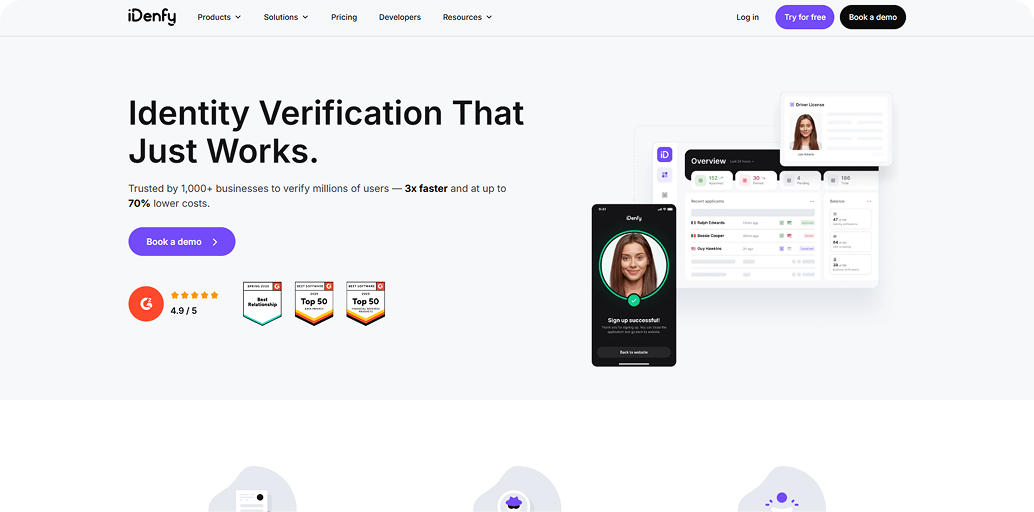
iDenfy provides identity verification APIs designed to help you verify users and detect fraud during digital onboarding. The platform focuses on combining document checks, biometrics, and basic fraud signals in a streamlined verification flow.
What the API is best suited for
- User identity verification and fraud detection at the onboarding stage
Core strengths
- Document verification with authenticity and tamper-detection checks
- Biometric face matching and liveness detection to prevent impersonation
- Built-in fraud signals such as device, IP, and behavioral indicators
Limitations or considerations
- AML capabilities are limited and often require external screening or monitoring tools
- KYB and beneficial ownership verification support is minimal
- Less suited for complex, multi-jurisdiction compliance programs requiring ongoing monitoring
10. AU10TIX

AU10TIX offers identity verification APIs focused on high-accuracy document authentication and biometric validation for digital onboarding. The platform is known for combining automation with human-in-the-loop review for higher assurance use cases.
What the API is best suited for
- High-risk or regulated onboarding requiring strong identity proofing and document assurance
Core strengths
- Advanced document authentication with deep fraud and tamper-detection capabilities
- Biometric face matching and liveness checks to prevent impersonation attempts
- Hybrid automation and expert review model for improved verification accuracy
Limitations or considerations
- AML capabilities are limited and typically require integration with third-party AML monitoring tools
- KYB and beneficial ownership verification support is minimal compared to platform-led solutions
- Human review components can increase verification time and operational costs at scale
Also read: Online Identity Verification Methods: 7 Different Types
Seeing each provider in isolation is useful, but side-by-side comparison makes the differences clearer.
How Leading AML and Identity Verification APIs Compare in 2026?
Choosing the right API depends on how well it supports onboarding, ongoing compliance, fraud prevention, and global scale together.
Here’s a concise, side-by-side comparison of the most evaluated AML and identity verification APIs in 2026, highlighting where each one fits operationally.
Comparison highlights capability gaps, but selecting the right vendor still depends on how those capabilities map to your internal needs.
How Businesses Choose the Right Identity Verification Vendor?
Businesses evaluate identity verification vendors based on how well the solution aligns with regulatory obligations, operational scale, and risk exposure.
Here are the key factors compliance, risk, and product teams consider when selecting the right identity verification vendor.
- Ability to meet U.S. regulatory requirements, including FinCEN Customer Identification Program and ongoing due diligence expectations.
- Coverage for both individual and business verification, including beneficial ownership and control verification requirements.
- Support for continuous monitoring to detect changes in customer risk profiles after onboarding.
- Flexibility to customize verification flows based on geography, customer type, and risk appetite.
- Accuracy in fraud detection without increasing customer friction or false positive rates.
- Scalability to handle high onboarding volumes without increasing manual review workload.
- Availability of audit trails, reporting, and case management for regulatory examinations.
- AiPrise stands out by combining KYC, KYB, AML, fraud risk scoring, customizable workflows, and AI-assisted compliance reviews within a single API-driven platform.
Once the selection criteria are clear, the final step is understanding how these decisions shape long-term compliance outcomes.
Wrapping Up
As compliance expectations tighten and fraud techniques evolve, choosing the right AML and identity verification APIs becomes a critical business decision in 2026. The right solution helps you balance regulatory compliance, fraud prevention, and seamless onboarding without slowing growth. AiPrise helps you unify KYC, KYB, AML, fraud risk scoring, and compliance automation into a single API-led platform built for scale.
If you’re evaluating APIs to future-proof compliance and reduce operational risk, now is the time to Book A Demo and see how modern verification should work.
FAQs
1. What is the difference between AML APIs and identity verification APIs?
Identity verification APIs confirm who a user or business is during onboarding, while AML APIs monitor behavior and transactions to detect financial crime over time.
2. Are identity verification APIs mandatory for compliance in the U.S.?
While APIs themselves are not mandatory, U.S. regulations require customer identification, which APIs help automate and scale efficiently.
3. What types of IDs are required for identity verification?
Most identity verification processes require government-issued IDs such as passports, driver’s licenses, or national ID cards, depending on geography.
4. Can AML APIs support ongoing monitoring after onboarding?
Yes, AML APIs are designed to continuously monitor customers, transactions, sanctions lists, and risk signals throughout the customer lifecycle.
5. How do businesses choose the best identity verification vendor?
Businesses evaluate vendors based on regulatory coverage, fraud detection accuracy, scalability, global support, and integration flexibility.
You might want to read these...




AiPrise
6 min read
KYB Compliance: 2026 Regulations You Should Know About
As organizations expand globally and face tighter regulations, adherence to Know Your Business (KYB) standards has become one of the most critical compliance layers for fintech, online marketplaces, and other companies that need to verify business customers before letting them perform financial transactions.










.png)

.jpg)

















.png)








.png)
.png)
.png)













.png)

AiPrise’s data coverage and AI agents were the deciding factors for us. They’ve made our onboarding 80% faster. It is also a very intuitive platform.

Head of Operations



See your full compliance picture in one place
Use AI agents and global data to review businesses and users faster and more accurately
