

AiPrise
19 mins read
August 6, 2025
Top Fraud Detection Companies and Tools: A 2025 Guide for Businesses

Key Takeaways

Fraud is a growing concern for businesses, and staying ahead of it is a constant battle. With more than 70% of business leaders expecting deepfakes and AI-generated scams to become major challenges by 2026, the risks are real and rising. Many businesses like yours struggle to keep up with these evolving threats.
But the right fraud detection solution can help you stay one step ahead. In this article, you’ll discover the best fraud detection companies, giving you the tools to protect your business and your customers better.
Key Takeaways:
- As fraud risks grow, early detection is crucial. The first section highlighted the increasing challenges businesses face with fraud and the need for robust solutions.
- AiPrise offers a comprehensive fraud detection system with AI-driven document verification, biometric checks, and real-time data cross-referencing to keep businesses secure.
- When selecting a fraud detection system, focus on real-time monitoring, customizable fraud rules, and scalability to meet your business needs.
- AiPrise streamlines fraud prevention with automated identity verification and AI-powered risk assessments, ensuring your business stays secure and compliant.
Understanding Fraud Detection Solutions
You’re an e-commerce business owner, and you’ve just processed a large order. A few days later, you discover the payment was fraudulent. Not only have you lost the product, but your reputation with the customer has taken a hit. Now, you’re scrambling to figure out how this happened and how to prevent it in the future.
This is where fraud detection comes in. It involves using technologies like machine learning, behavioral analytics, and real-time transaction monitoring to identify suspicious activities and prevent financial losses and reputational damage.
Let’s take a closer look at how traditional methods stack up against modern AI-powered solutions in combating today’s complex fraud challenges.
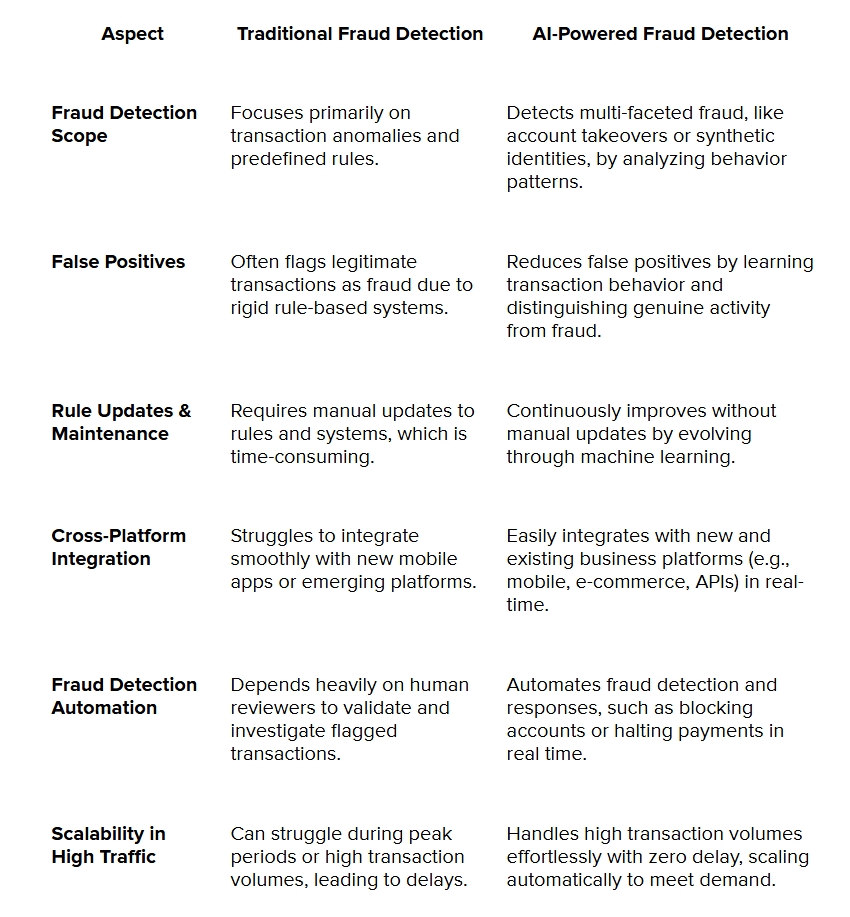
Now that you have a clear understanding of how fraud detection has evolved, let’s dive into the best fraud detection companies that can help you protect your business.
Top 8 Fraud Detection Solutions
Fraud remains a persistent threat that businesses must actively address, particularly as fraudulent tactics grow more sophisticated. For example, the right fraud detection solution could flag and block a suspicious transaction in real time, based on unusual spending patterns, without interrupting legitimate customer activity.
As a business, you need reliable, efficient tools to protect your revenue and maintain trust with your customers. Below are some of the best fraud detection companies:
1. AiPrise
AiPrise offers an AI-powered fraud detection solution focused on verifying identities and ensuring compliance in real time. The platform helps businesses quickly validate customer identities and prevent fraud across a wide range of industries.
With its focus on seamless integration and fast setup, AiPrise ensures businesses can implement robust fraud detection strategies without disrupting their current systems.
Here are some of the standout features:
- AI-Driven Identity Verification: Verifies identities in real-time using advanced AI technology, including document scanning and security feature checks.
- Global Compliance: Integrates with extensive data sources, ensuring compliance with global KYC and KYB regulations.
- Customizable Risk Engine: Allows businesses to tailor onboarding flows and set risk thresholds, automating low-risk approvals and flagging high-risk cases for review.
- Real-Time Fraud Detection: Monitors transactions and behaviors in real time, preventing fraudulent activities before they occur.
- Fast, Flexible Setup: Quickly integrates into your existing systems with white-label UI, API, and SDK support, ensuring minimal disruption.
- Multi-Language Support: AiPrise supports various languages, making it easy to expand fraud prevention efforts across global markets.
Types of Fraud Addressed:
- identity theft: Prevents fraudulent account creations and access by verifying user identities quickly.
- Synthetic Identity Fraud: Detects fake identities made from a mix of real and fabricated information.
- Account Takeovers: Identifies unauthorized attempts to access accounts, ensuring that only legitimate users can log in.
- Money Laundering: Cross-references against global sanctions and credit lists, preventing illegal financial activities.
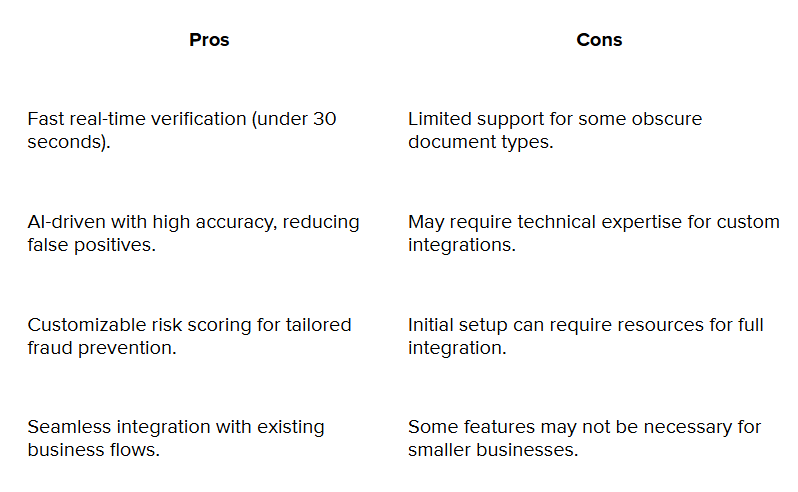
Pros and Cons:
2. SEON
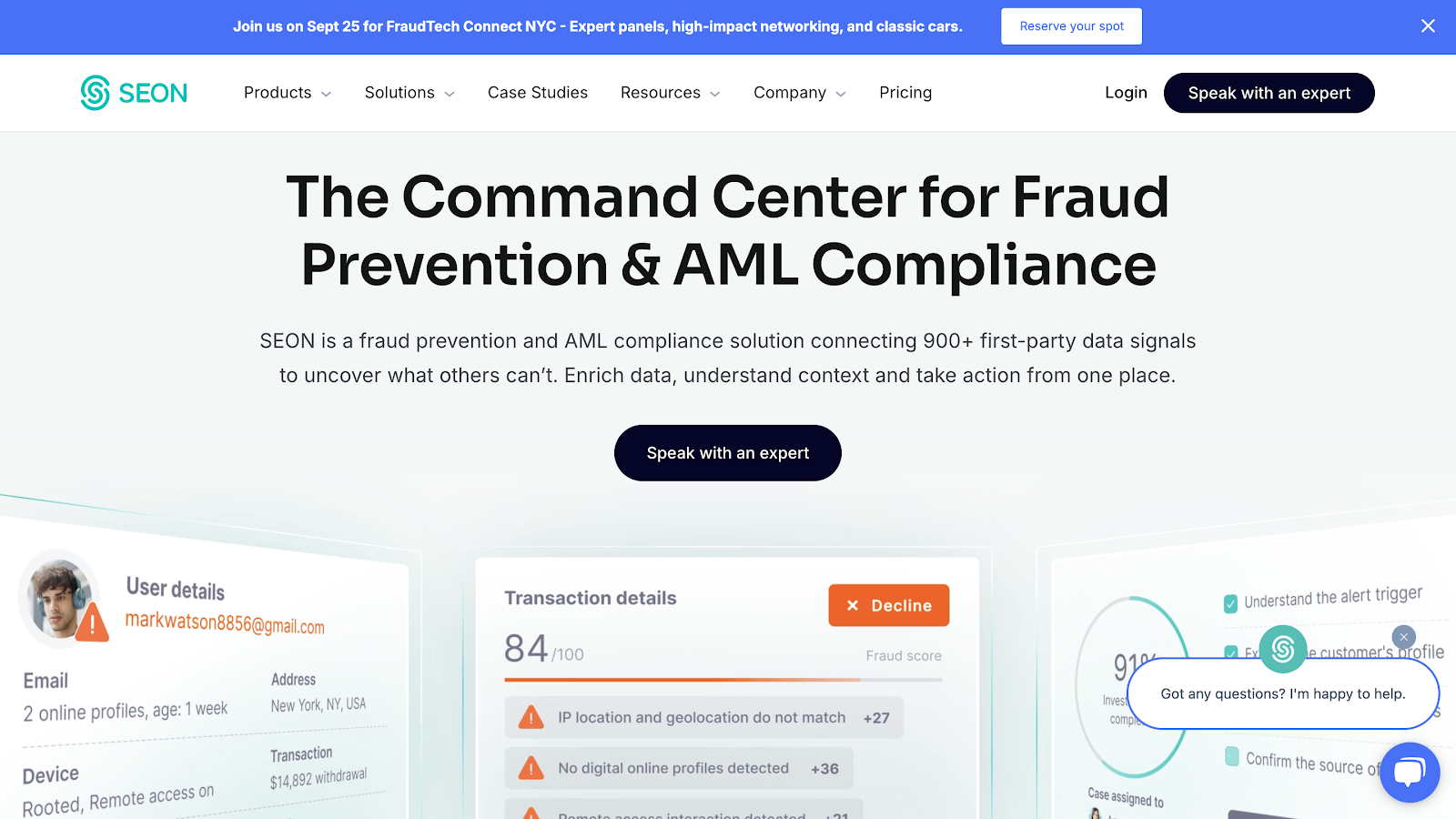
SEON offers a powerful, AI-driven fraud detection platform that focuses on real-time monitoring and prevention of fraud across various industries. The solution uses a combination of machine learning and data intelligence to help businesses identify suspicious activity and reduce fraud risks.
Here are some of the standout features:
- Real-Time Fraud Detection: SEON uses real-time data analytics to identify fraud patterns, stopping fraudulent activities as they happen.
- Device Fingerprinting: Tracks and identifies devices across multiple sessions, helping detect repeat fraudsters or suspicious behaviors.
- Behavioral Analytics: Monitors user behavior in real-time, analyzing patterns to detect unusual activity and flag potential fraud.
- Customizable Rules Engine: Offers businesses the ability to tailor their fraud detection rules, balancing security with customer experience.
- Global Coverage: Provides worldwide fraud detection by integrating multiple data sources, including device data, IP geolocation, and social media analysis.
Types of Fraud Addressed:
- Account Takeovers: Detects unauthorized logins or account breaches by analyzing device and behavioral patterns.
- Payment Fraud: Identifies and prevents fraudulent transactions through real-time monitoring and data analysis.
- Synthetic Identity Fraud: Helps prevent fraudsters from creating fake identities using a blend of real and fake data.
- Chargeback Fraud: Identifies patterns that lead to chargeback fraud, enabling early detection and prevention.
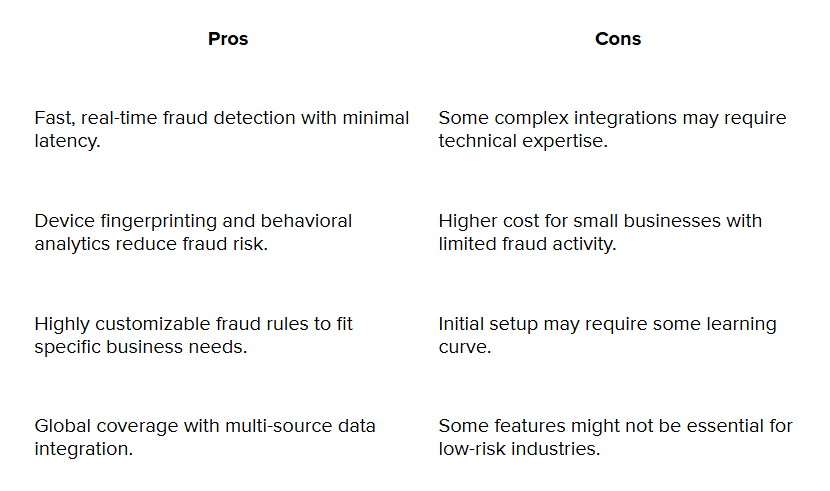
Pros and Cons
3. ComplyAdvantage

ComplyAdvantage offers a real-time anti-money laundering (AML) and fraud detection solution designed to help businesses identify, manage, and prevent financial crime. The platform uses advanced machine learning models and global data sets to assess risk and monitor transactions for signs of suspicious activity.
Here are some of the standout features:
- Real-Time Transaction Monitoring: Continuously monitors transactions to detect suspicious activity as it happens, with instant alerts.
- AI-Powered Risk Assessment: Uses machine learning to score and assess risks, providing actionable insights into potential fraudulent activity.
- Global Data Integration: Accesses over 100 global data sources to cross-check against sanctions, PEP lists, and adverse media, ensuring compliance with KYC and AML regulations.
- Customizable Screening: Tailor screening processes to your specific business needs, adjusting risk thresholds and investigation workflows.
- Comprehensive Sanctions Lists: Automatically cross-references transactions against updated global sanctions and watch lists.
Types of Fraud Addressed:
- Money Laundering: Detects suspicious financial activity that could indicate money laundering, helping businesses stay compliant.
- Sanctions Screening: Flags transactions involving individuals or entities on global sanctions lists, reducing the risk of regulatory violations.
- KYC & KYB Compliance: Ensures businesses meet Know Your Customer (KYC) and Know Your Business (KYB) standards, preventing fraudulent account activity.
- Fraudulent Transactions: Identifies signs of fraudulent activity in real-time, allowing businesses to act quickly to stop unauthorized transactions.
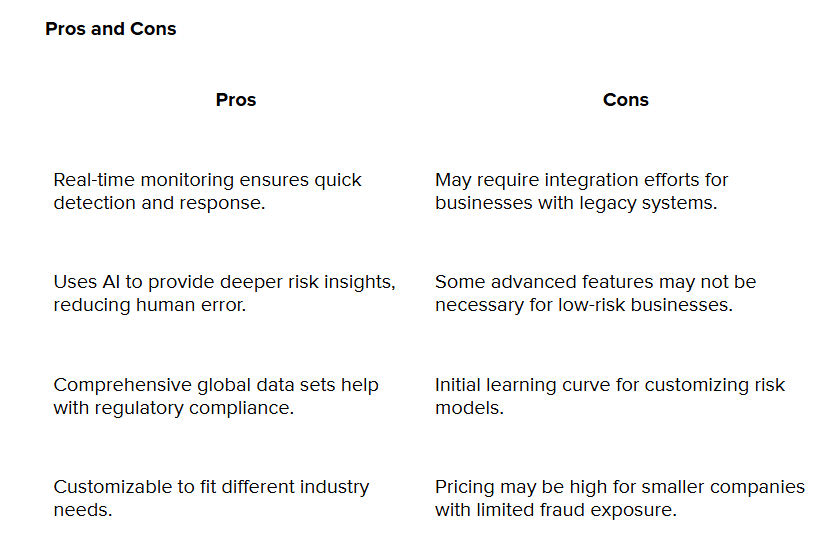
Pros and Cons
4. F5
F5 provides a comprehensive fraud detection and prevention solution that focuses on securing online transactions and applications. With a strong emphasis on adaptive security, F5 combines traditional fraud detection with AI and machine learning to help businesses identify threats.
Here are some of the standout features:
- Adaptive Authentication: Utilizes behavioral biometrics and multi-factor authentication (MFA) to dynamically adjust security levels based on user behavior and transaction context.
- Real-Time Threat Intelligence: F5 integrates real-time data feeds from global threat intelligence networks to detect emerging fraud threats.
- Bot Mitigation: Protects websites and applications from bot-driven attacks, including credential stuffing and automated fraud attempts.
- Customizable Security Policies: Tailors security policies to specific risk profiles and business requirements, offering flexible fraud prevention measures.
- Cloud-Native Architecture: Provides scalability with a cloud-first design, ensuring high performance and protection even during traffic spikes.
Types of Fraud Addressed:
- Credential Stuffing: Protects against automated attacks where fraudsters use stolen usernames and passwords to access accounts.
- Transaction Fraud: Detects and blocks unauthorized transactions in real-time, reducing chargebacks and fraud-related losses.
- Bot Attacks: Identifies and mitigates bot-driven attacks, such as scraping and fraud attempts via automated scripts.
- Account Takeovers: Prevents unauthorized access to customer accounts by analyzing user behavior and session patterns.
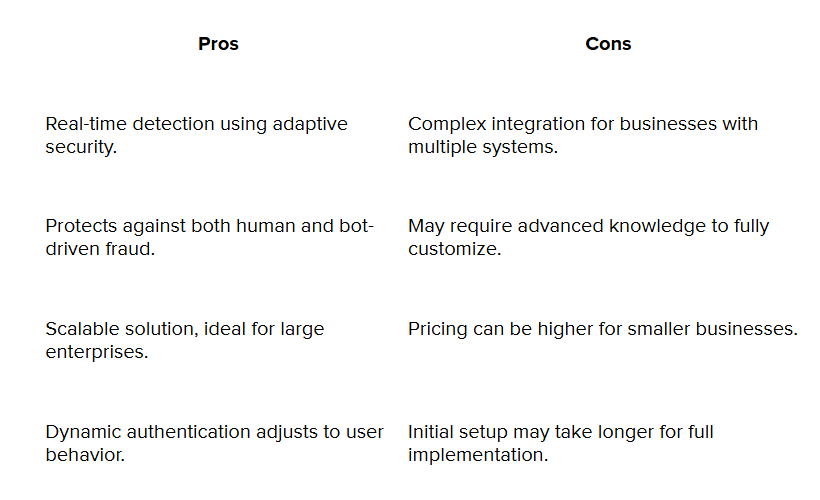
Pros and Cons
5. Fingerprint

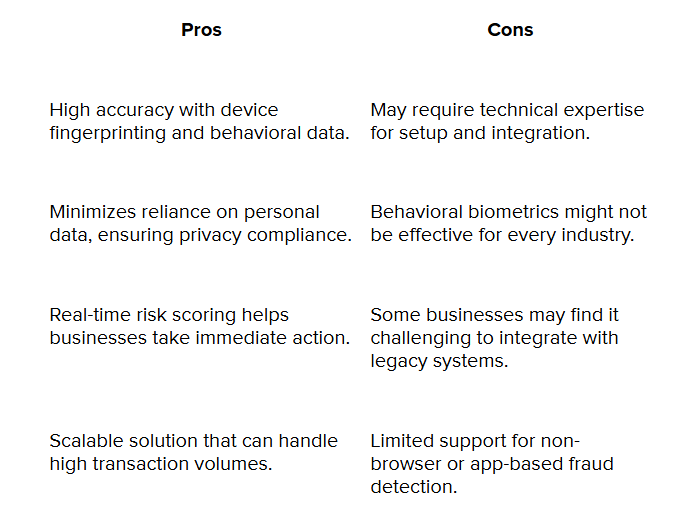
Fingerprint offers an advanced fraud detection solution that focuses on device fingerprinting and behavioral biometrics to detect and prevent online fraud. Fingerprint tracks user behavior and device attributes, allowing businesses to identify suspicious activity without relying on cookies or personal data.
Here are some of the standout features:
- Device Fingerprinting: Identifies and tracks devices across sessions, enabling detection of repeated fraudsters even if they use different accounts or payment methods.
- Behavioral Biometrics: Monitors user behavior, such as typing speed, mouse movements, and touch gestures, to assess the legitimacy of actions in real time.
- Real-Time Risk Scoring: Assigns a risk score to each session based on device and behavioral analysis, helping businesses make immediate decisions on whether to approve or flag a transaction.
- Privacy-First Approach: Focuses on device data and behavior, minimizing the use of personal information, which helps ensure compliance with privacy regulations like GDPR.
- Integration with Existing Systems: Offers easy integration through APIs and SDKs, allowing businesses to incorporate fingerprinting into their existing fraud prevention workflows.
Types of Fraud Addressed:
- Account Takeovers: Detects unauthorized attempts to access user accounts by analyzing device and behavioral patterns.
- Payment Fraud: Identifies suspicious transactions, reducing fraud and chargebacks by flagging risky payments in real time.
- Synthetic Identity Fraud: Spots fraudulent accounts created using a combination of legitimate and fake information.
- Carding and Credential Stuffing: Prevents automated fraud attempts by identifying repeating devices and abnormal transaction patterns.
Pros and Cons
6. TransUnion
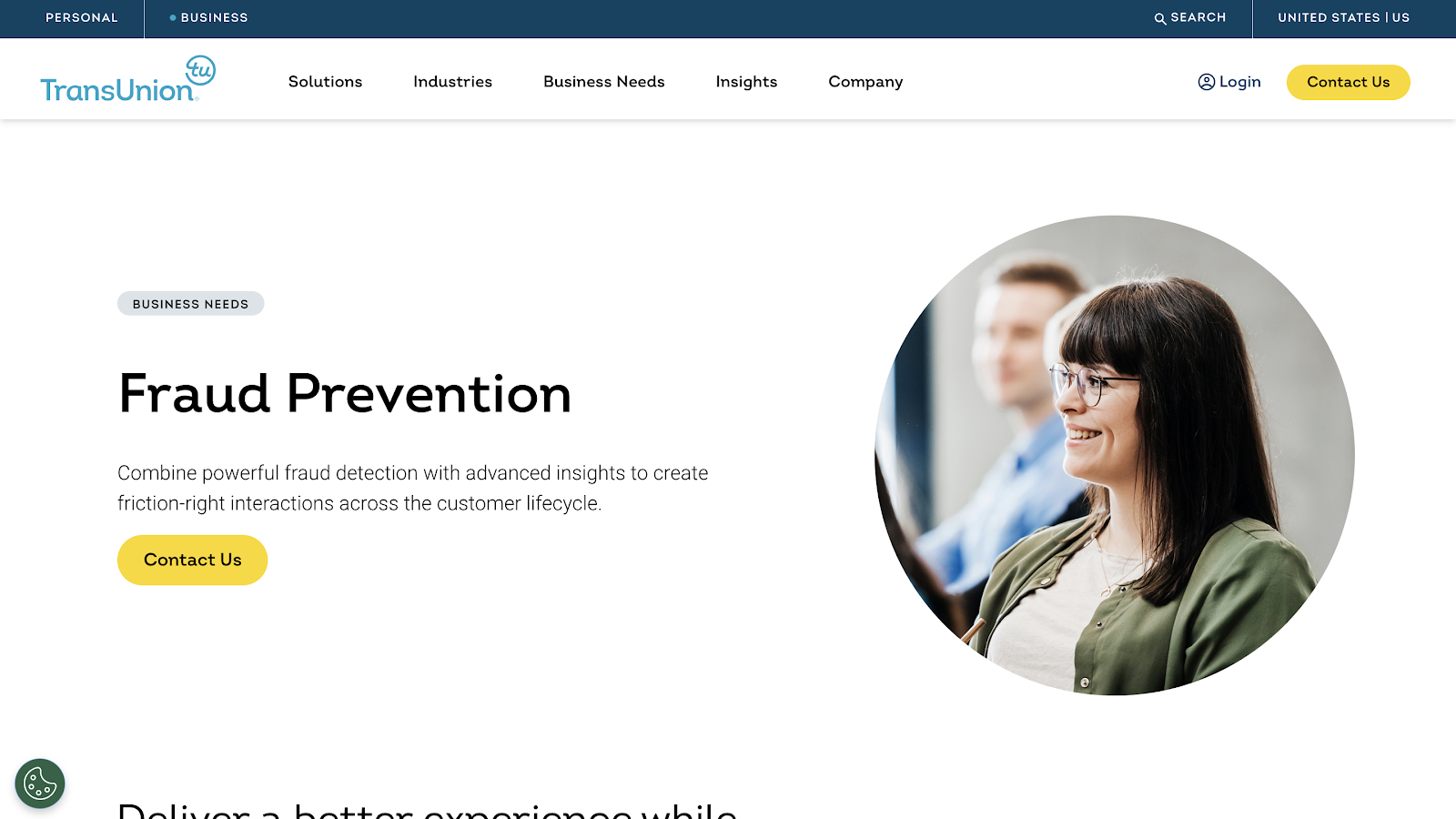
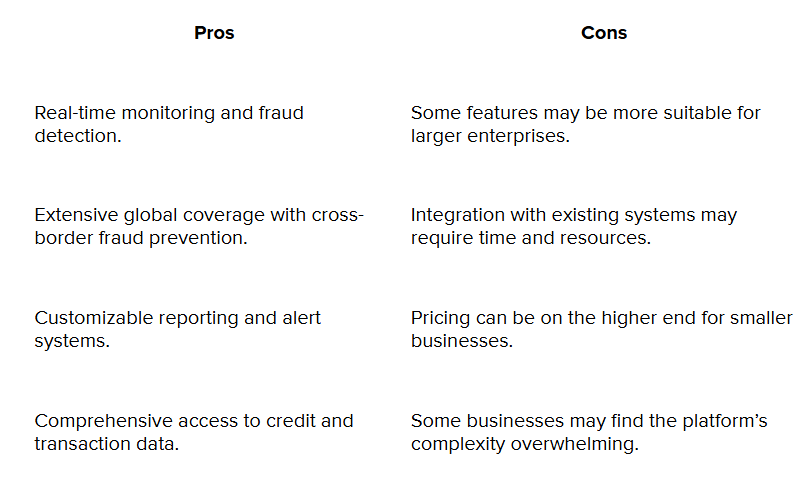
TransUnion offers a comprehensive fraud detection and credit risk management solution designed to help businesses prevent fraud and make informed decisions.
Here are some of the standout features:
- Identity Verification: Uses advanced identity validation tools to verify consumer identities quickly and accurately across multiple data sources.
- Real-Time Fraud Detection: Provides real-time monitoring of transactions and account activity to identify and block fraudulent actions as they occur.
- Credit and Risk Scoring: Accesses vast credit and transaction data to assess the financial risk of individuals or businesses, helping businesses make informed decisions.
- Global Coverage: Leverages data from over 30 countries, enabling businesses to manage fraud risks in international markets.
- Customizable Alerts and Reporting: Tailor alert thresholds and reporting formats to suit specific business needs, ensuring a proactive fraud response.
Types of Fraud Addressed:
- Identity Theft: Verifies identities and flags fraudulent accounts created using stolen personal data.
- Payment Fraud: Monitors transactions in real time, identifying and blocking unauthorized payments.
- Synthetic Identity Fraud: Detects and prevents the creation of synthetic identities combining real and fake information.
- Account Takeovers: Identifies suspicious activity that indicates unauthorized access to customer accounts.
Pros and Cons
7. LexisNexis Risk Solutions
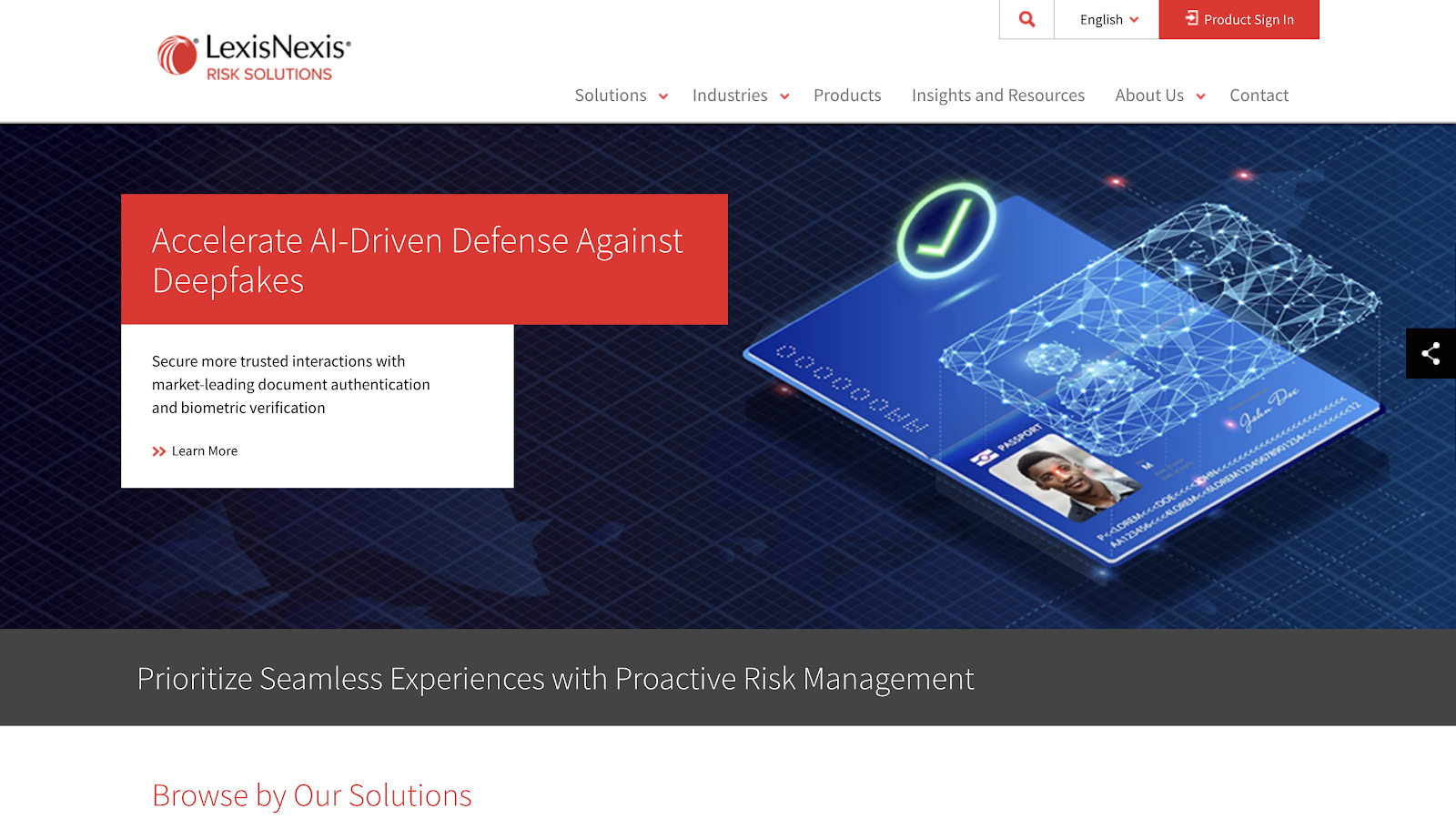
LexisNexis Risk Solutions offers a powerful fraud detection and risk management platform designed to help businesses identify and prevent fraudulent activities in real time.
Here are some of the standout features:
- Comprehensive Data Access: Integrates with over 33 billion data points, including identity, transaction, and behavioral data, to ensure accurate fraud detection.
- AI-Driven Fraud Detection: Uses machine learning and AI to detect suspicious patterns and prevent fraud in real time.
- Identity Verification: Verifies identities with multiple data sources, ensuring accurate and secure customer onboarding.
- Global Compliance: Helps businesses comply with KYC, AML, and other global regulatory standards by cross-referencing with global watchlists and sanctions databases.
- Customizable Risk Scoring: Provides a flexible risk scoring engine, allowing businesses to tailor fraud prevention measures to their specific needs.
Types of Fraud Addressed:
- Identity Theft: Identifies fraudulent account creation and unauthorized account access using comprehensive identity verification.
- Transaction Fraud: Detects unauthorized transactions and flags suspicious activity in real time.
- Synthetic Identity Fraud: Spots synthetic identities created by combining real and fake data, preventing fraudulent accounts from being set up.
- Account Takeovers: Identifies signs of account takeovers by analyzing behavioral patterns and unusual login activity.
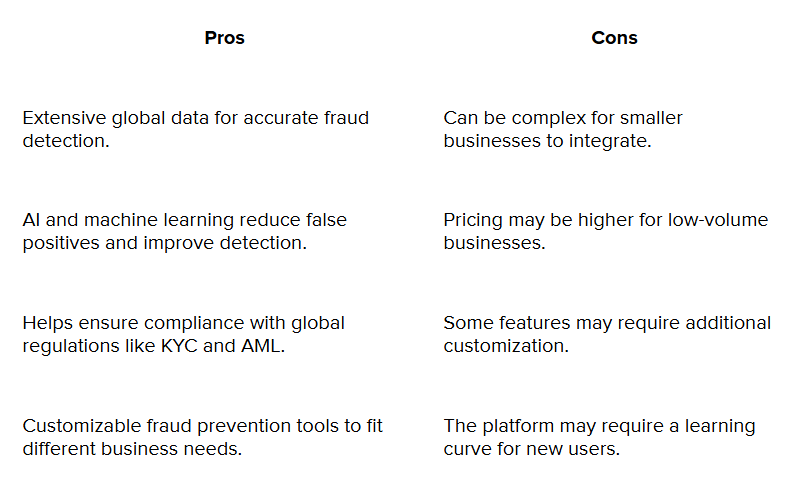
Pros and Cons
8. Fiserv
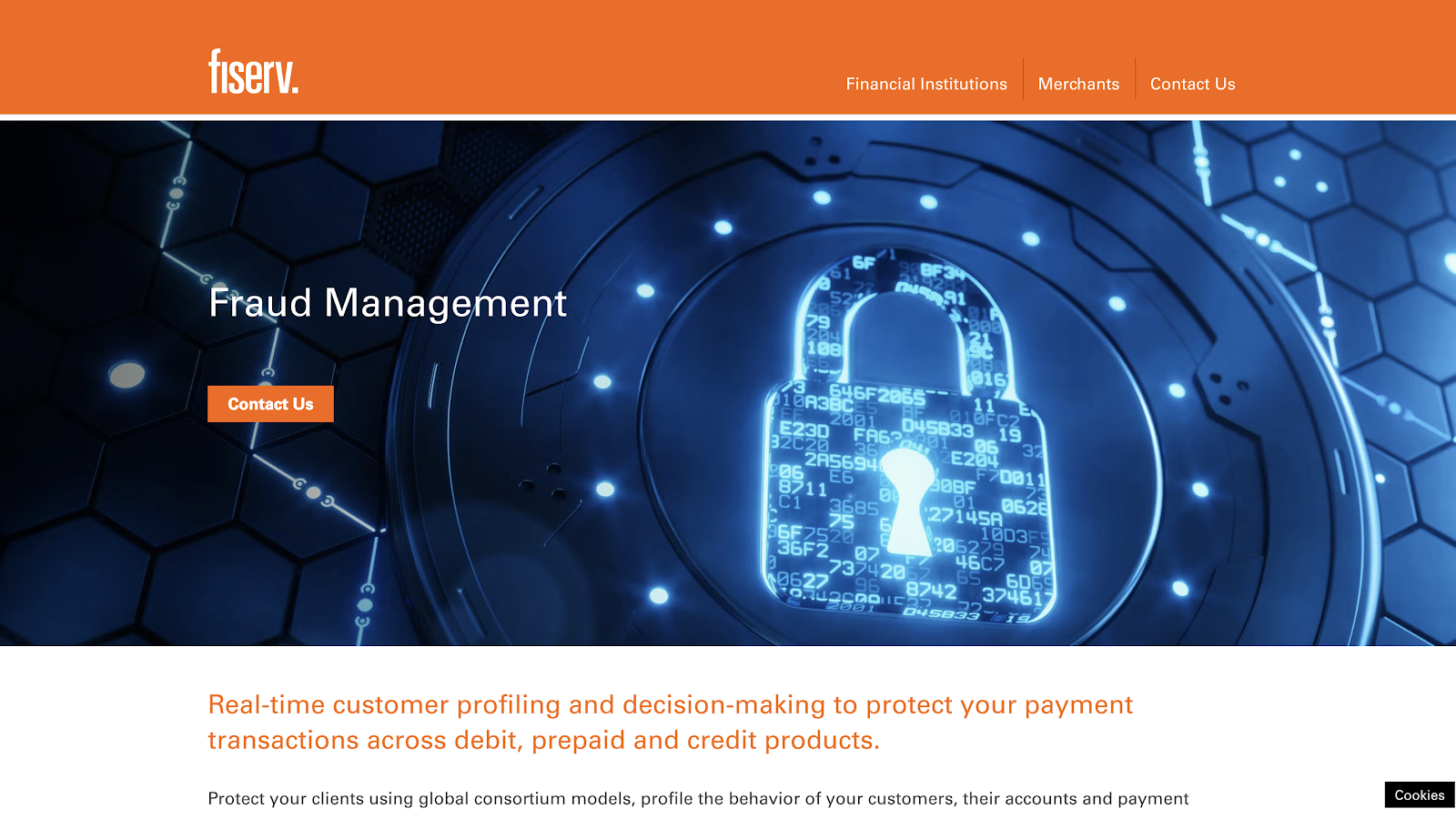
Fiserv provides a comprehensive suite of fraud detection and prevention solutions tailored for financial institutions and merchants.
Here are some of the standout features:
- Real-Time Fraud Detection: Monitors transactions in real-time to identify and prevent fraudulent activities before they occur.
- Advanced Risk Scoring: Utilizes machine learning and predictive analytics to assess the risk level of each transaction, enabling more accurate decision-making.
- Cross-Channel Monitoring: Provides visibility across multiple payment channels, including ACH, wires, checks, and card transactions, to detect fraud across all touchpoints.
- Customizable Rules Engine: Allows businesses to tailor fraud detection rules to their specific needs and risk tolerance, enhancing the effectiveness of the solution.
- Integrated Case Management: Streamlines the process of investigating and resolving fraud incidents with built-in case management tools.
- Compliance Support: Assists businesses in meeting regulatory requirements by providing tools for monitoring and reporting suspicious activities.
Types of Fraud Addressed:
- Account Takeovers: Detects unauthorized access to customer accounts through abnormal login patterns or behavior.
- Payment Fraud: Identifies fraudulent transactions across various payment methods, including ACH, wire transfers, and card payments.
- Check Fraud: Monitors check transactions for signs of fraud, such as altered or counterfeit checks.
- Identity Theft: Flags activities that may indicate stolen or synthetic identities being used to commit fraud.
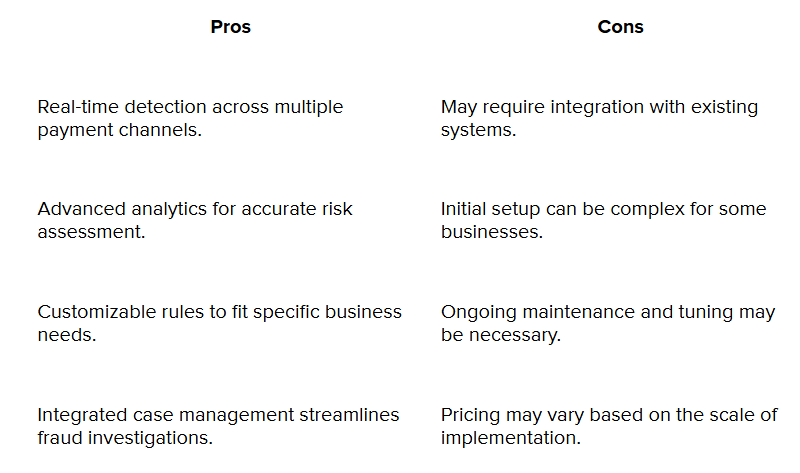
Pros and Cons
With so many best fraud detection companies available, it’s crucial to understand which one aligns best with your business needs.
How to Choose the Right Fraud Detection Solution for Your Business
The solution you choose should not only address your current fraud risks but also scale with your business as it grows. For example, a small e-commerce store may start with basic payment fraud prevention.
As it grows, it will need more advanced tools like real-time transaction monitoring and global compliance checks to manage higher volume and complexity.
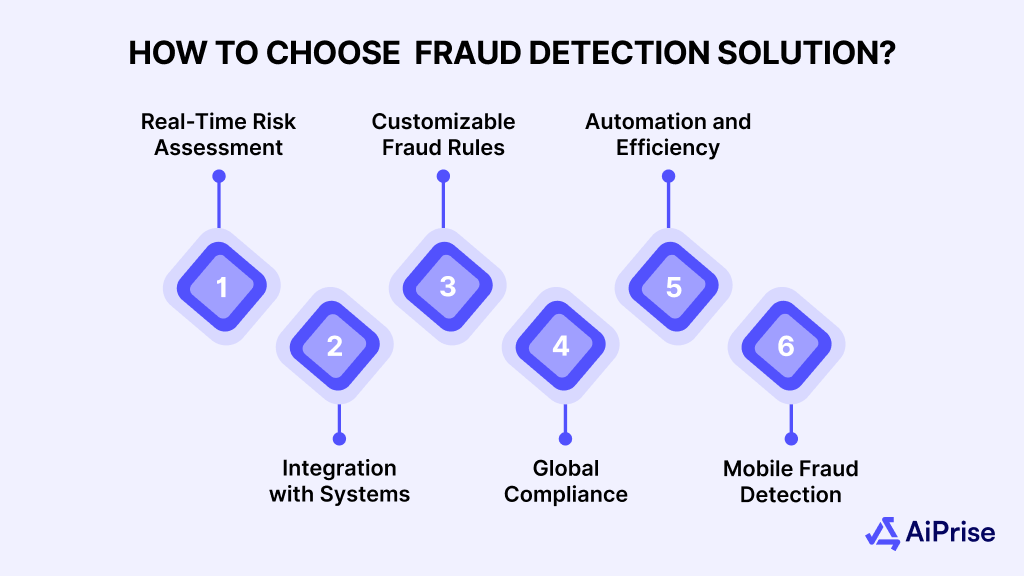
Here are key factors to consider when choosing the best fraud detection companies for your business.
1. Real-Time Risk Assessment
Choose a solution that provides instant fraud risk scoring for each transaction, reducing reliance on manual checks. For example, if you operate in e-commerce, a solution that can flag high-risk transactions based on behavior patterns, like a user purchasing in a location far from their usual IP, can instantly stop fraud before it happens.
It enables instant identification of suspicious transactions, reducing fraud losses.
2. Integration with Existing Systems
The solution should seamlessly integrate with your current infrastructure, such as your payment gateway, CRM, and ERP systems. For example, a payment processing business that already uses Stripe may want a fraud detection system that integrates directly into their workflow, ensuring minimal disruption and faster deployment.
3. Customizable Fraud Rules
A one-size-fits-all solution won't suffice as your business grows. Look for a solution with a customizable rule engine that can be adjusted to your specific fraud risks.
For instance, if you're in subscription-based services, you might want the system to flag multiple failed billing attempts or trial account abuse as high risk.
4. Global Compliance and Data Privacy
Fraud detection solutions must comply with regional regulations like GDPR, PCI DSS, and AML/KYC requirements. A global marketplace seller must ensure their solution complies with country-specific rules, especially when processing payments in multiple currencies and regions.
For instance, if you're expanding into Europe, the solution must align with GDPR's strict data privacy standards.
5. Automation and Efficiency
Look for solutions that automate the fraud detection process to reduce the reliance on manual intervention. For example, an online service provider might prefer a system that automatically approves low-risk transactions. This would escalate high-risk cases for manual review, significantly reducing operational costs and response times.
Automation streamlines reviews by automatically approving low-risk cases and escalating high-risk ones, enhancing operational efficiency.
6. Support for Device and Mobile Fraud Detection
As mobile transactions become more common, ensuring that the fraud detection solution supports mobile and device-based fraud prevention is crucial. For example, a ride-sharing service may require a solution that identifies fraudulent activity based on device fingerprinting.
This ensures fraudulent users are detected even when they use different accounts or payment methods.
Choose customizable, AI-driven systems that integrate with your tools, support global compliance, and automate low-risk transactions for efficiency. Regularly test and adjust the system to stay ahead of emerging fraud trends.
Conclusion
Strong fraud detection helps you stop fraudulent activities before they start. With the right tools, you can identify suspicious transactions, meet regulatory requirements, and protect your business without causing delays.
It’s not just about compliance, it’s about staying one step ahead of evolving fraud tactics.
Want to strengthen your fraud detection and reduce risks? Book A Demo with AiPrise to see how the platform fits into your workflow and helps you stay secure and compliant.
FAQs
1. What is fraud detection in business?
Fraud detection refers to the process of identifying and preventing fraudulent activities within transactions, accounts, and business operations. It involves using advanced tools to spot suspicious activities in real-time and mitigate financial risks.
2. How do fraudsters target businesses?
Fraudsters use a variety of methods such as phishing, account takeovers, synthetic identities, and payment fraud to exploit businesses. They often target weak points like unsecured payment systems, insufficient identity verification, or outdated fraud prevention measures.
3. What kind of fraud can businesses prevent with fraud detection solutions?
Businesses can prevent various types of fraud, including payment fraud, account takeovers, identity theft, chargeback fraud, and synthetic identity fraud, all of which can result in financial losses and damage to brand reputation.
4. How does fraud detection protect customer data?
Fraud detection systems help secure sensitive customer data by monitoring for unusual patterns, flagging suspicious activities, and ensuring that only legitimate transactions are processed. These solutions enhance data protection and reduce the risk of breaches.
5. Can fraud detection systems adapt to new fraud techniques?
Yes, advanced fraud detection solutions like AiPrise use machine learning and AI to continuously learn from new fraud patterns, adapting to emerging threats and improving accuracy over time.
6. How can AiPrise help businesses with fraud prevention?
AiPrise provides businesses with AI-driven fraud detection tools that verify identities, monitor transactions in real-time, and cross-check data against over 800 sources. This helps businesses prevent fraud, meet compliance standards, and ensure secure customer onboarding.
You might want to read these...

AiPrise’s data coverage and AI agents were the deciding factors for us. They’ve made our onboarding 80% faster. It is also a very intuitive platform.

Head of Operations



See your full compliance picture in one place
Use AI agents and global data to review businesses and users faster and more accurately
