

AiPrise
9 min read
January 8, 2026
What Is a PEP Review? Screening Process, Challenges and Best Practices

Key Takeaways

Weak controls around politically exposed persons are no longer viewed as minor compliance gaps. Regulators are actively penalizing firms that fail to assess customer risk properly and apply enhanced scrutiny where required.
In a recent enforcement action, the UK Financial Conduct Authority fined Guaranty Trust Bank (UK) Limited £7.67 million for serious weaknesses in its anti-money-laundering systems and controls. The regulator cited repeated failures in customer risk assessment, monitoring, and documentation. These are areas where inadequate PEP identification and review frequently surface.
The case sent a clear message: poor risk classification and weak ongoing oversight can expose firms to significant regulatory and financial crime risk.
As global AML expectations rise, PEP reviews have become a critical control point.
This guide explains how PEP screening works, key risk factors, and best practices for managing political exposure effectively.
At a glance:
- PEP reviews are a mandatory AML control used to assess elevated corruption and bribery risk linked to individuals with political influence.
- Effective PEP screening requires contextual risk assessment, not just database matches, including role, geography, duration of influence, and expected activity.
- Regulators expect risk-based enhanced due diligence for higher-risk PEPs, supported by clear documentation and defensible audit trails.
- Scalable PEP programs depend on structured workflows and ongoing monitoring to manage false positives, maintain consistency, and capture changes in political exposure over time.
- Platforms like AiPrise help teams scale PEP reviews by combining global identity data, risk-based decisioning, continuous monitoring, and centralized case management into a single, auditable workflow.
What Is a PEP Review?
A PEP (Politically Exposed Person) review is the process of identifying and assessing individuals who hold, or have held, prominent public positions and may pose an increased risk of corruption, bribery, or abuse of power.
Regulators expect businesses to apply additional scrutiny to PEPs because their influence and access to public resources can increase exposure to financial crime. This review is a core requirement within KYC, AML, and ongoing monitoring programs.
A proper PEP review helps organizations decide whether to onboard a customer, apply enhanced controls, or reject the relationship based on risk.
Who Is Considered a Politically Exposed Person?
Politically exposed persons are individuals entrusted with prominent public functions who may present a higher risk due to their position or influence. Depending on jurisdiction and regulatory expectations, this classification can apply to both current and former office holders.
Common categories include:
- Heads of state, government officials, and senior politicians
- Senior executives of state-owned enterprises
- Judicial officials and high-ranking military officers
- Senior officials of international organizations
- Immediate family members and close associates
Because definitions vary across regulators and regions, organizations must apply jurisdiction-specific rules while maintaining a conservative, well-documented risk posture.

The Role of PEP Screening in Compliance Programs
PEP screening acts as a risk classification control within AML and compliance frameworks. Its role is to identify political exposure early and determine whether enhanced scrutiny is required before a customer relationship proceeds.
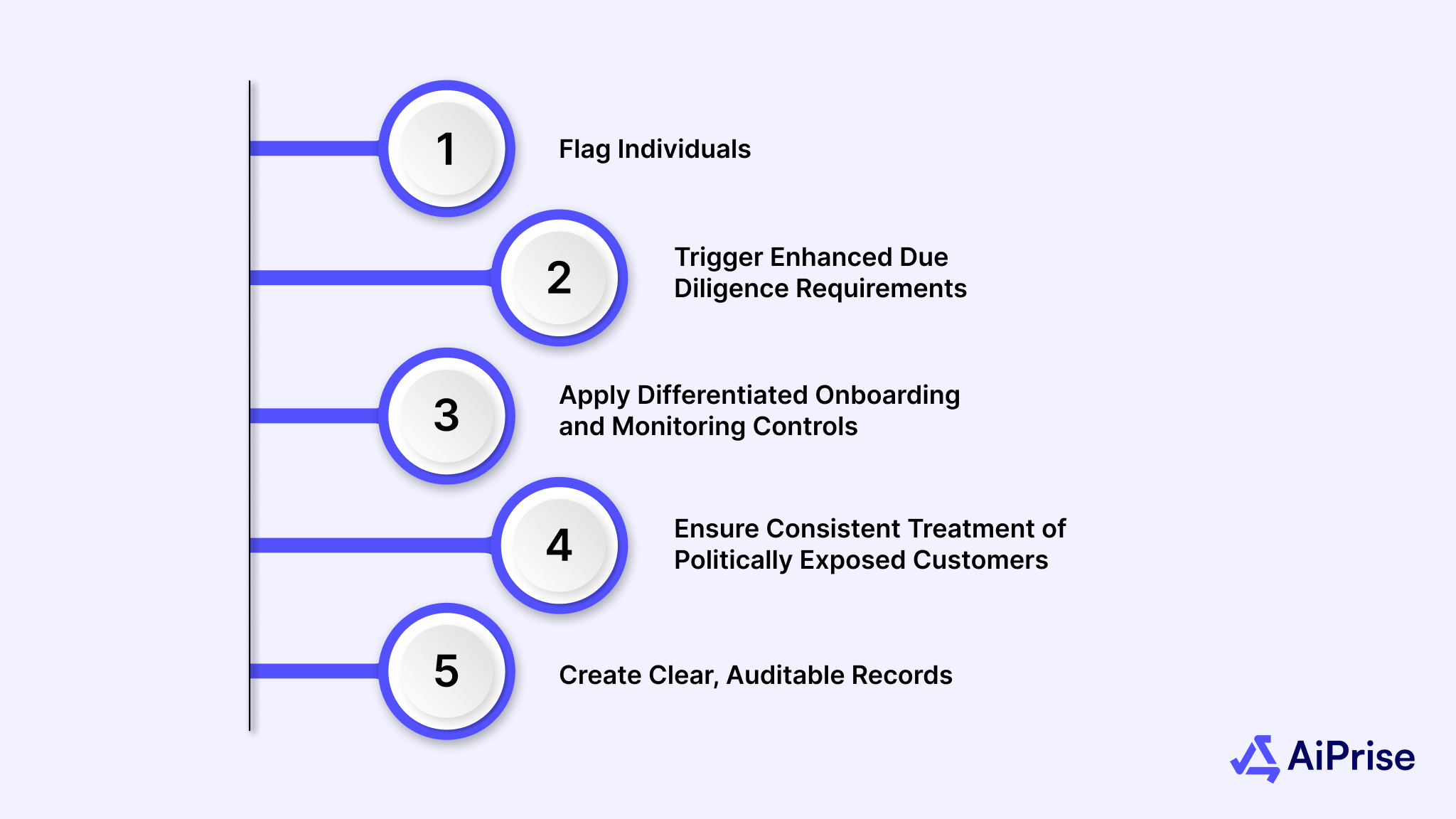
Within a compliance program, PEP screening is used to:
- Flag individuals whose political exposure introduces higher corruption or bribery risk, even when no sanctions or adverse media are present.
- Trigger enhanced due diligence requirements, including a deeper review of the source of funds, the source of wealth, and expected account activity.
- Apply differentiated onboarding and monitoring controls so higher-risk PEPs receive closer oversight without delaying lower-risk customers.
- Ensure consistent treatment of politically exposed customers across teams, regions, and business lines, reducing subjective or uneven risk decisions.
- Create clear, auditable records that explain how political exposure was identified, assessed, and managed in line with regulatory expectations.
These requirements did not emerge overnight. Today’s approach reflects how PEP screening developed as regulators responded to growing political and financial crime risk.
Also read: Understanding Politically Exposed Persons (PEP) in AML Compliance
The Evolution of PEP Screening in Modern Compliance
PEP screening was not always a standard requirement within compliance programs. Early AML frameworks focused primarily on sanctions enforcement and basic identity verification, with limited attention paid to political exposure unless it was directly linked to known criminal activity.
Several regulatory and industry developments shaped the modern approach to PEP reviews:
Formal Definition of PEPs by Global Regulators
Guidance from the Financial Action Task Force (FATF) formally defined politically exposed persons and introduced expectations for enhanced due diligence under Recommendations 12 and 22, expanding coverage to both foreign and domestic political roles.
Exposure of Corruption Through Global Scandals
High-profile global corruption cases exposed how public office was used to conceal illicit funds through intermediaries, shell entities, and complex ownership structures, increasing regulatory focus on political exposure risk.
Shift Toward Risk-Based Due Diligence
AML regulations evolved to require risk-based customer due diligence, making enhanced review mandatory for higher-risk individuals rather than applying uniform controls across all customers.
Expanded Focus on Family Members and Close Associates
Regulators expanded scrutiny to include family members and close associates after repeated findings that political influence and financial risk often extend beyond the office holder themselves.
Together, these changes reshaped PEP screening from a narrow check into a structured compliance requirement. The next step is understanding how this screening is applied in practice.
How the PEP Review Screening Process Works
A structured PEP review screening process helps organizations make consistent risk decisions and maintain defensible audit trails. Rather than relying on ad hoc judgment, the process ensures political exposure is identified, assessed, and managed in a repeatable way.
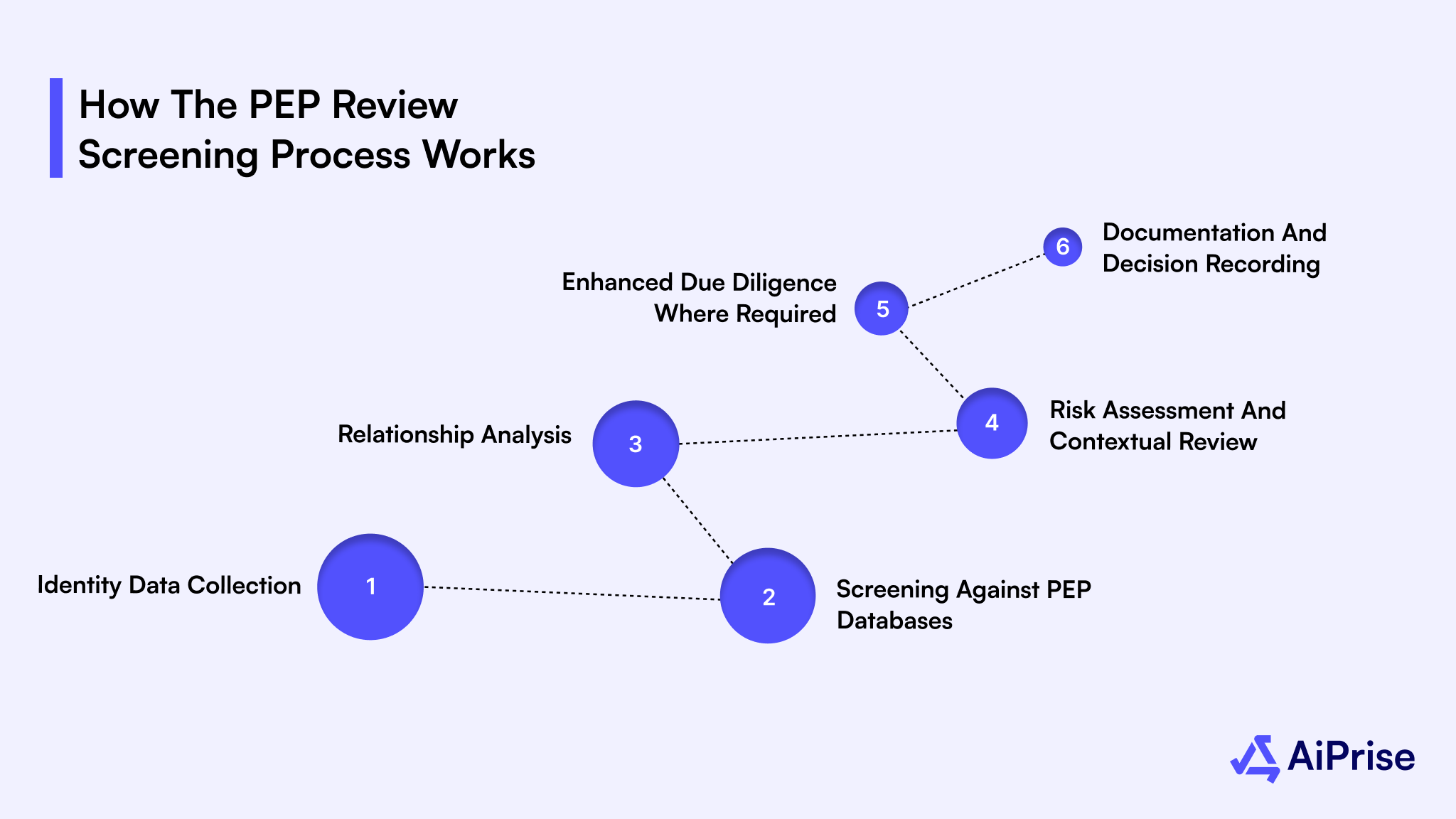
Key stages in the PEP screening process include:
1. Identity Data Collection
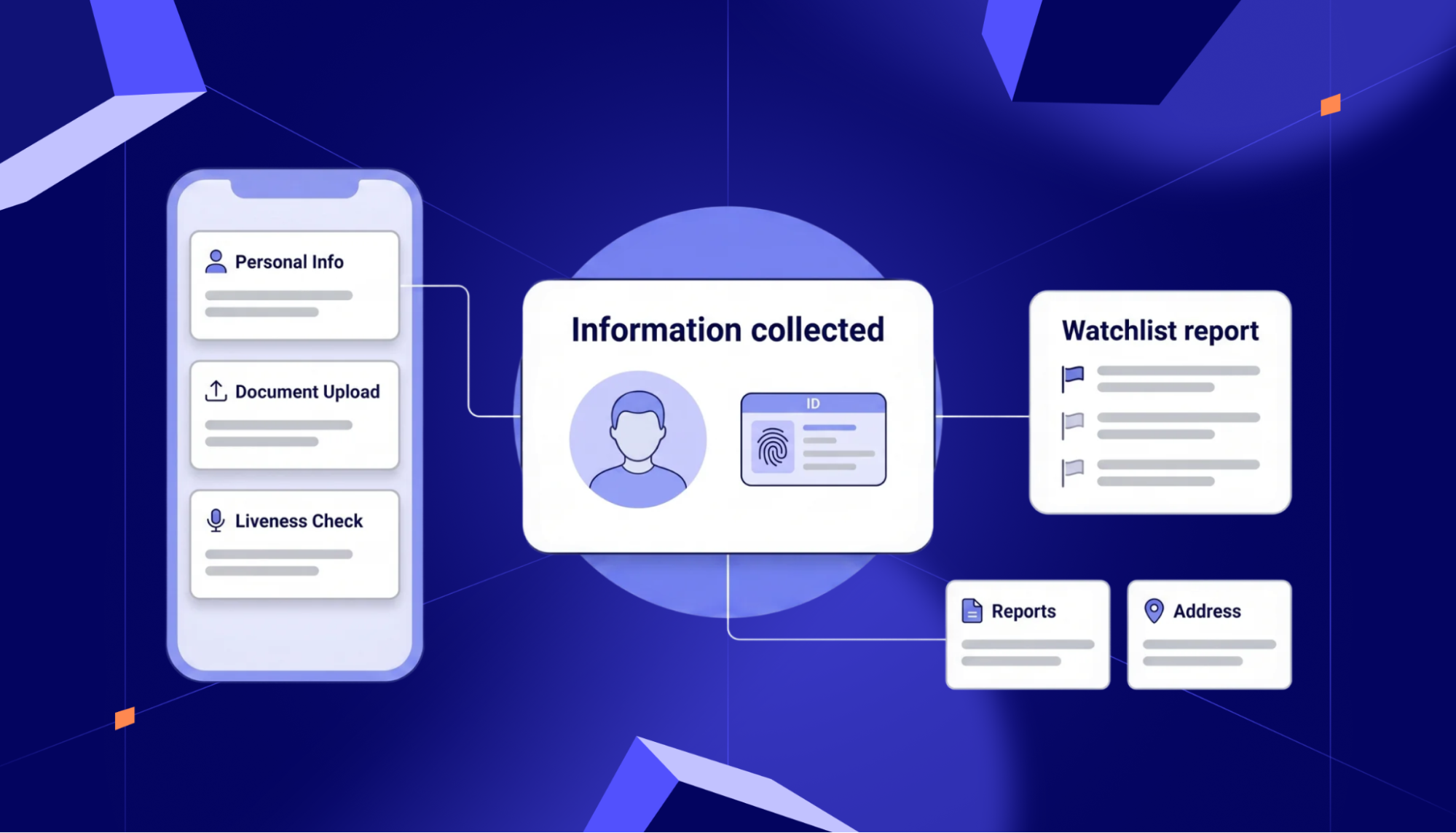
Accurate and complete identity information is gathered upfront to reduce false matches and provide context. This typically includes full name, date of birth, nationality, government-issued identification, and address details, which form the foundation for reliable screening.
2. Screening Against PEP Databases
Customer details are screened against global and regional PEP lists to identify current or former political exposure. These databases capture public roles across jurisdictions and help surface matches that may not be immediately obvious.
3. Relationship Analysis
Screening extends beyond the individual to identify immediate family members and close associates. This step is critical because political influence and risk often flow through personal or business relationships rather than appearing directly on the customer profile.
4. Risk Assessment and Contextual Review
Identified PEPs are assessed based on factors such as the nature of their role, geographic exposure, duration of political influence, expected account activity, and transaction behavior. This helps distinguish higher-risk relationships from those with limited exposure.
5. Enhanced Due Diligence Where Required
When elevated risk is identified, enhanced due diligence is applied. This may include a deeper review of the source of funds, source of wealth, business relationships, and intended use of services to ensure risks are clearly understood and managed.
6. Documentation and Decision Recording
All findings, risk assessments, and decisions are documented with clear rationale. This creates a complete audit trail that supports internal reviews, regulatory examinations, and future reassessments.
This structured approach ensures PEP risk is identified early, assessed consistently, and documented clearly for audit and regulatory review.
AiPrise supports this end-to-end PEP screening workflow by combining global identity verification, comprehensive PEP and relationship screening, risk-based decisioning, and centralized case management. This allows compliance teams to run consistent PEP reviews, reduce false positives, and maintain audit-ready documentation without slowing down onboarding.
Challenges Compliance Teams Face When Screening PEPs
PEP screening introduces complexity that many compliance programs struggle to manage consistently. Gaps in data, process, or oversight can quickly increase regulatory and operational risk.
Common challenges include:
- High False Positives: Common names and spelling variations trigger unnecessary alerts, increasing review volume without improving risk outcomes.
- Poor or Incomplete Identity Data: Missing or outdated customer details reduce match accuracy and make it harder to confirm or clear potential PEP hits.
- Hidden Family and Associate Links: Political exposure often flows through relatives or close associates, which are difficult to identify without clear relationship data.
- Inconsistent Risk Decisions: Similar PEP profiles may be treated differently across teams or regions, creating audit risk and uneven controls.
- Manual Review Bottlenecks: Enhanced due diligence reviews take time when handled manually, slowing onboarding and increasing analyst workload.
- Limited Ongoing Monitoring: One-time screening misses changes in political roles or influence that occur after onboarding.
- Weak Audit Trails: Incomplete documentation makes it difficult to justify decisions during regulatory reviews.
These issues are common, but they are not unavoidable. Strong operational practices can significantly reduce friction while improving compliance outcomes.
Also read: Understanding AML Watchlist Screening Practices
Operational Best Practices for Managing PEP Risk
Strong PEP screening programs balance regulatory expectations with operational efficiency. The goal is not to apply maximum scrutiny in every case, but to identify genuine political risk early and manage it consistently over time.
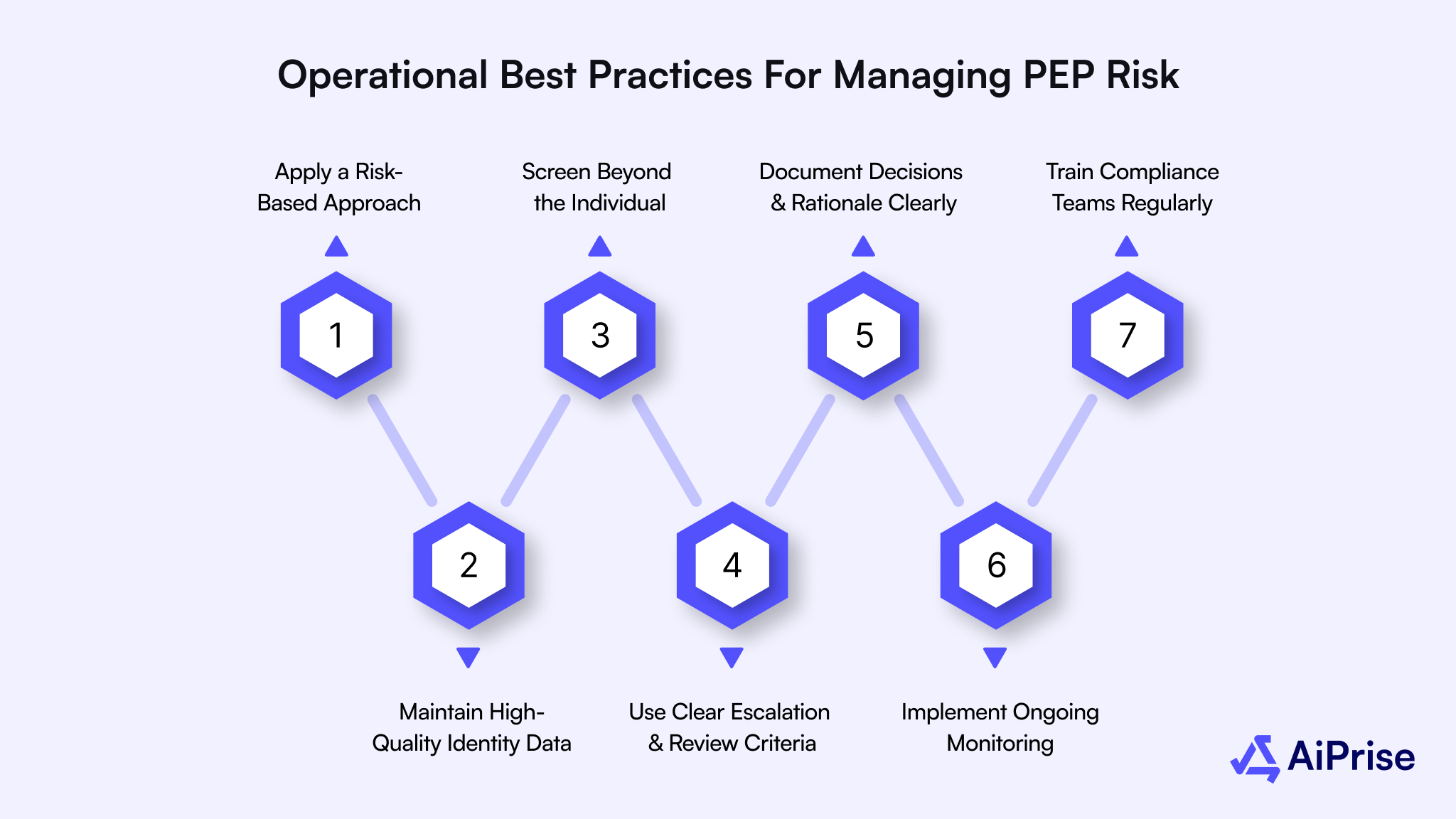
Effective PEP screening programs follow these best practices:
Apply a Risk-Based Approach
Not all PEPs carry the same level of risk. Assess political exposure based on role, geography, duration of influence, and transaction behavior rather than treating all PEPs uniformly.
Collect and Maintain High-Quality Identity Data
Accurate and complete customer information reduces false positives and improves screening outcomes. Regularly refresh identity data to reflect changes in address, nationality, or employment.
Screen Beyond the Individual
Include immediate family members and close associates in the screening scope to capture indirect exposure that may not appear on the primary customer profile.
Use Clear Escalation and Review Criteria
Define when enhanced due diligence is required and what additional checks must be completed. This ensures consistent decisions and avoids reliance on individual judgment alone.
Document Decisions and Rationale Clearly
Maintain clear records explaining how political exposure was assessed, what controls were applied, and why decisions were made. Strong documentation is critical for audits and regulatory reviews.
Implement Ongoing Monitoring
Political exposure can change over time. Periodic re-screening and event-based reviews help ensure risk assessments remain current rather than relying on one-time onboarding checks.
Train Compliance Teams Regularly
Ensure reviewers understand PEP definitions, risk factors, and escalation requirements. Consistent training reduces errors and improves decision quality across teams.
Following these practices helps organizations manage politically exposed risk more effectively while maintaining smooth onboarding and defensible compliance outcomes.
How AiPrise Supports PEP Reviews
Managing PEP risk at scale requires reliable identity data, global coverage, and ongoing monitoring. AiPrise brings these elements together in a single compliance platform designed to support consistent PEP screening across onboarding and ongoing reviews.
AiPrise helps compliance teams by:
- Supporting Global KYC and KYB Verification: Verify individuals and businesses using global and local data sources, enabling accurate assessment of political exposure across jurisdictions.
- Enabling Risk-Based Decisioning: Apply customizable rules to assess risk using multiple data points, allowing teams to align PEP reviews with their internal risk tolerance.
- Providing Ongoing Monitoring: Run automated checks at regular intervals so changes in political exposure or risk signals are identified over time, not just at onboarding.
- Centralizing Case Management and Audit Trails: Review cases, track decisions, and maintain clear audit logs through a unified dashboard, supporting regulatory reviews and internal oversight.
AiPrise brings identity verification, risk-based decisioning, and ongoing monitoring into one platform to help teams manage PEP risk consistently and efficiently.
Wrapping Up
PEP reviews are a critical control for managing corruption, bribery, and regulatory risk. They help compliance teams identify political exposure early, apply appropriate scrutiny, and maintain oversight as risk profiles change.
As regulatory expectations rise, one-time PEP checks at onboarding are no longer enough. Effective programs rely on risk-based assessment, accurate identity data, consistent decision-making, and clear documentation that stands up to audits. When these elements are missing, teams face delays, false positives, and increased scrutiny.
AiPrise supports PEP review by combining global verification, risk-based decisioning, and ongoing monitoring in a single platform.
Book A Demo to see how AiPrise helps compliance teams manage politically exposed risk with greater consistency and control.
FAQs
Q. What is a PEP review?
A PEP review is the process of identifying and assessing individuals with political exposure to determine whether they present elevated risk. It helps organizations decide if enhanced due diligence or additional controls are required before onboarding or continuing a customer relationship.
Q. What is a PEP evaluation?
A PEP evaluation refers to the risk assessment that follows the identification of political exposure. It considers factors such as the individual’s role, geography, duration of influence, and expected activity to determine the appropriate level of scrutiny.
Q. What does PEP stand for?
PEP stands for Politically Exposed Person. It includes individuals who hold, or have held, prominent public positions, as well as their immediate family members and close associates, depending on regulatory requirements.
Q. Can I trust PEP screening results?
PEP screening results should be treated as a risk indicator, not a final decision. Reliable outcomes depend on data quality, context, and proper review. Screening must be supported by human assessment, documentation, and ongoing monitoring to meet regulatory expectations.
You might want to read these...








AiPrise
KYB Compliance: 2026 Regulations You Should Know About
As organizations expand globally and face tighter regulations, adherence to Know Your Business (KYB) standards has become one of the most critical compliance layers for fintech, online marketplaces, and other companies that need to verify business customers before letting them perform financial transactions.










.png)

.jpg)
















.png)








.png)
.png)
.png)















.png)

.png)


AiPrise’s data coverage and AI agents were the deciding factors for us. They’ve made our onboarding 80% faster. It is also a very intuitive platform.

Head of Operations



See your full compliance picture in one place
Use AI agents and global data to review businesses and users faster and more accurately
