

AiPrise
9 min read
December 2, 2025
Compliance in Business in Singapore: What’s Changing

Key Takeaways

Running a business in Singapore today means managing tighter compliance boundaries that can directly impact how you operate, onboard clients, and build trust. The recent launch of the Corporate Service Providers Act 2024 (effective 9 June 2025) has pushed previously informal corporate-service arrangements into full regulatory scope, with mandatory registration and fines of up to S$100,000. These changes are forcing companies to reassess their verification workflows, documentation standards, and vendor partnerships before enforcement begins. Understanding these updates helps you stay compliant, avoid legal risks, and keep your business operations smooth and future-ready in Singapore’s fast-evolving regulatory environment.
Key Takeaways
- The CSP Act 2024 and CSP Regulations 2025 have reshaped business compliance in Singapore, requiring all corporate service providers to register with ACRA and meet stricter due diligence standards.
- Non-compliance can result in fines of up to S$100,000, making proper verification, documentation, and AML/CFT monitoring essential for every business operating in Singapore.
- Companies must prepare core documents like director IDs, UBO declarations, business registration certificates, and AML policies to stay audit-ready and compliant.
- Early preparation, through policy updates, partner checks, and digital verification tools, ensures compliance isn’t a disruption but a safeguard for sustainable business in Singapore.
Singapore’s New Compliance Framework Explained
If you operate a business in Singapore, you’re now expected to meet tighter compliance standards that leave little room for error. These rules are designed to make business activities more transparent, prevent misuse of corporate structures, and protect your company from regulatory penalties. Here are the key laws and guidelines you need to know to keep your operations compliant and risk-free:
- Corporate Service Providers Act (CSP Act 2024): This Act regulates anyone offering corporate services such as company incorporation or nominee directorships. You must register, pass a “fit and proper” test, and maintain high compliance standards—or risk fines of up to S$100,000.
- Corporate Service Providers Regulations 2025: These regulations spell out your ongoing responsibilities once registered. You’ll need to maintain records, conduct due diligence checks, and regularly review your AML/CFT policies to stay in line with ACRA’s expectations.
- Companies Act (Singapore): The latest amendments ensure you maintain accurate beneficial ownership records and strengthen your governance practices. It’s meant to help you prove credibility and accountability in every corporate transaction.
- ACRA Guidelines for Registered CSPs: These guidelines show you exactly how to apply, what to document, and how to implement internal controls. They serve as your roadmap for meeting the CSP Act’s requirements in daily operations.
- CSP Act Implementation Guidance (2025): This guide helps you transition smoothly if you’re already providing corporate services. It outlines application deadlines, document formats, and how to renew or update your registration in time.
With these frameworks in place, the focus naturally shifts to what’s actually changing under the CSP Act, and how those updates alter the way compliance needs to be managed in practice.

What’s Changing Under the CSP Act & Regulations?
The compliance landscape for businesses in Singapore is undergoing one of its most significant transformations, driven by tighter rules that demand accountability and transparency at every level. To stay ahead, it’s essential to understand where these changes are coming from and what they mean for your operations.
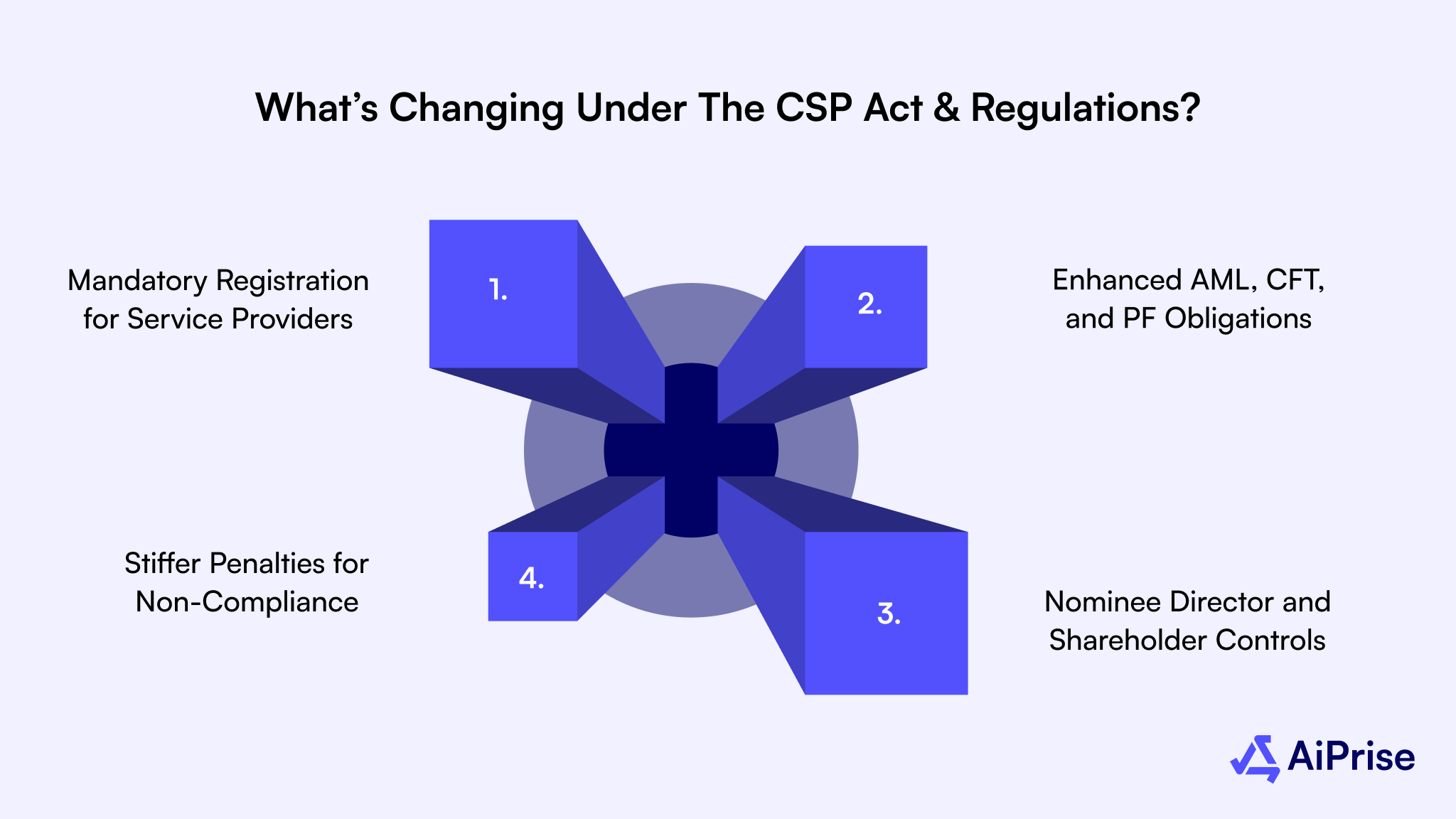
1. Mandatory Registration for Corporate Service Providers
Registration under the Corporate Service Providers Act (CSP Act 2024) is now compulsory for any entity offering corporate services such as company formation or nominee directorships. This shift brings previously informal providers into a formal regulatory net, ensuring that every service partner you engage meets ACRA’s fit-and-proper criteria before handling your business interests.
2. Enhanced AML, CFT, and PF Obligations
The new regime expands Anti-Money Laundering (AML), Countering the Financing of Terrorism (CFT), and Proliferation Financing (PF) obligations to include stronger customer due diligence and ongoing monitoring. Businesses are now expected to maintain auditable records and implement proactive screening systems that can detect risks early and reduce exposure to regulatory penalties.
3. Nominee Director and Shareholder Controls
Nominee appointments are now restricted to registered CSPs that have passed ACRA’s qualification requirements. The change ensures that individuals involved in company management are credible, traceable, and compliant — protecting businesses from unknowingly engaging with entities linked to fraud or misconduct.
4. Stiffer Penalties for Non-Compliance
Penalties have increased substantially, with fines reaching up to S$100,000 per breach for CSPs or associated entities that fail to meet the standards. The framework also grants ACRA authority to suspend operations, revoke registrations, or impose daily fines, making proactive compliance a vital part of doing business in Singapore.
Also read: How to Spot a Fake Singapore Company
Since compliance begins with documentation, the next step is knowing what paperwork regulators expect and how those records keep your business audit-ready.
Documents Required for Compliance in Singapore
Meeting compliance expectations under the CSP Act and Companies Act in Singapore starts with having the right documents ready. Clear documentation not only speeds up onboarding with corporate service providers but also prevents costly verification delays. Here are the key documents typically required for smooth compliance:
- Identity proof of directors and shareholders: Valid Singapore NRIC, passport, or government-issued ID for each director, shareholder, and beneficial owner.
- Proof of address: Recent utility bill, tenancy agreement, or bank statement showing the registered business or residential address.
- Business registration certificate: Official certificate issued by ACRA confirming incorporation or business registration details.
- Constitution or Memorandum of Association: The company’s governing document outlining ownership, structure, and operating principles.
- Ultimate Beneficial Ownership (UBO) declaration: A signed declaration identifying individuals who hold direct or indirect control over the company.
- Bank reference letter or statement: Document verifying the company’s operational account, often used for KYC and risk profiling.
- Supporting compliance documents: Any AML/CFT policy, due diligence record, or prior verification report required for regulatory review.
Once documentation is in order, the bigger question becomes, why do these regulatory shifts matter so much for businesses operating in Singapore’s corporate environment?
Why These Changes Matter for Businesses in Singapore?
The new rules reshape how compliance is managed, affecting corporate-service providers and any company that depends on them for operational or regulatory support. Understanding the implications helps businesses reduce risk, protect credibility, and stay aligned with Singapore’s evolving financial ecosystem.
Here are the key reasons these reforms matter:
- The CSP framework raises the bar for due diligence, forcing every business to verify its partners more thoroughly before collaboration.
- Compliance now extends beyond paperwork to include data integrity, beneficial-ownership verification, and continuous monitoring.
- Financial institutions and fintechs are under greater scrutiny, meaning any lapse by service providers can directly affect client trust and investment potential.
- Non-compliance risks include not just penalties but also loss of access to regulatory systems, impacting the ability to conduct basic corporate actions.
Understanding the “why” is only half the story; the next challenge is knowing what these changes mean for day-to-day business operations in Singapore.
Implications for Business Operations
The ripple effect of these updates touches nearly every aspect of business in Singapore, from vendor management to internal documentation. Adapting early helps preserve efficiency and credibility across your corporate activities.
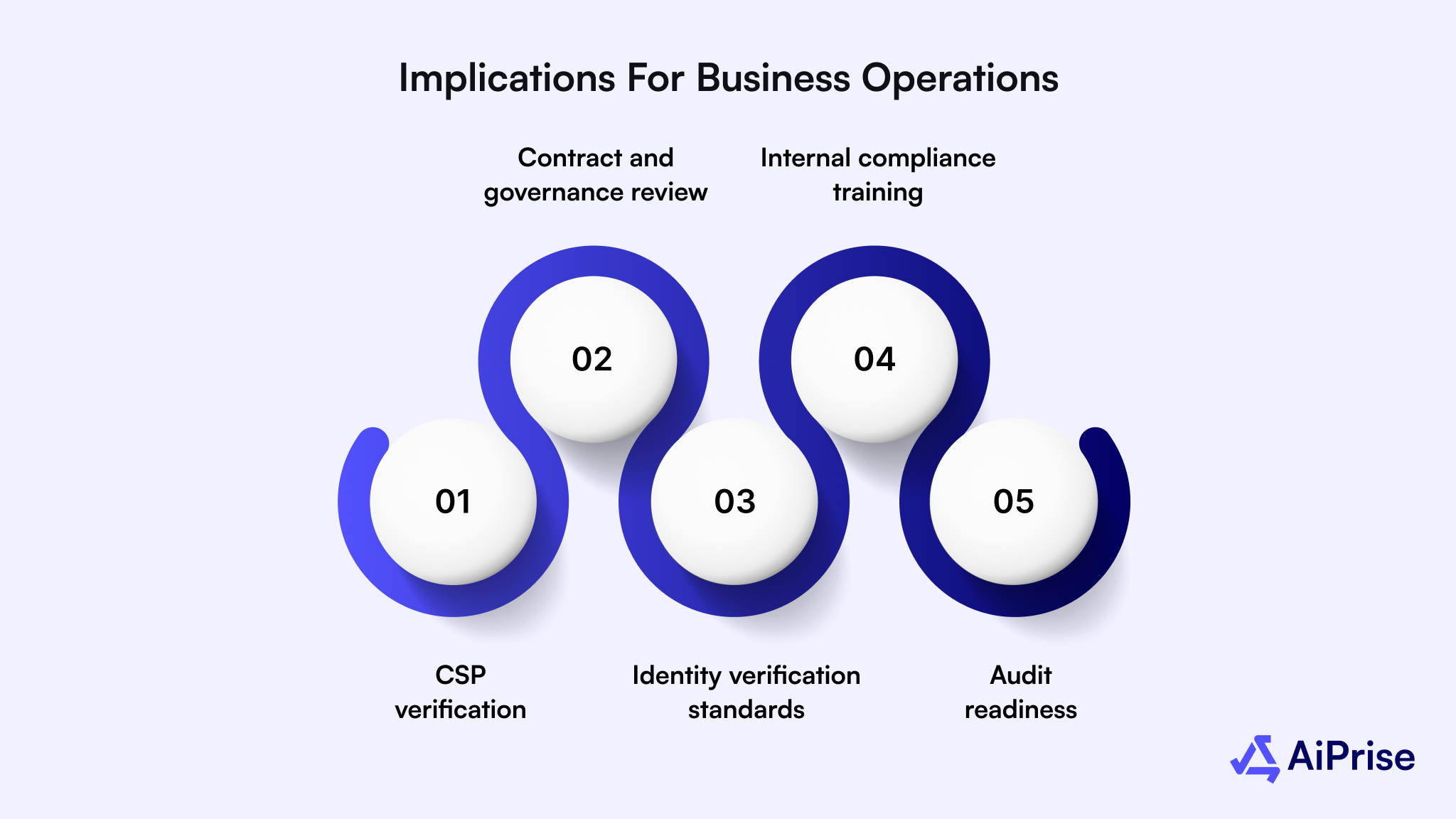
Here are the operational areas that deserve immediate attention:
- CSP verification: Always confirm that corporate-service partners are officially registered with ACRA and meet the latest eligibility standards.
- Contract and governance review: Update agreements involving nominee directors or shareholders to reflect current regulatory definitions and disclosure obligations.
- Identity verification standards: Ensure all customer and partner records include valid IDs, business registrations, and beneficial-ownership details.
- Internal compliance training: Equip staff to identify suspicious activity, maintain documentation, and respond to regulatory inquiries effectively.
- Audit readiness: Keep a structured archive of KYC/KYB files, verification logs, and policy updates for at least five years, ensuring full traceability if audited.
Also read: Verifying A Registered Company In Singapore Using ACRA's Business Information Services
Preparing your business for the 2025 transition requires more than awareness; it demands structured action and reliable tools to stay on track with compliance deadlines.
How to Prepare for the 2025 Compliance Transition?
The window for adjustment is short, and preparation now determines whether compliance remains a burden or becomes a competitive strength. Building readiness involves tightening processes, upgrading tools, and maintaining real-time visibility into verification workflows.
Here’s a checklist to guide the transition:
- Conduct a gap analysis to identify areas of non-compliance under the CSP Act and related regulations.
- Confirm registration timelines with ACRA to avoid missing critical deadlines such as 9 December 2025.
- Implement digital verification systems that automate ID collection, document validation, and screening.
- Reassess vendor relationships to ensure every CSP partner complies with AML/CFT/PF standards.
- Schedule policy reviews quarterly to align with new guidance and regulatory notices.
- Integrate compliance monitoring dashboards to track upcoming renewals, deadlines, and client verification cycles.
With the groundwork laid, it’s worth seeing how a compliance platform built for speed, accuracy, and trust can simplify these steps while keeping your business future-ready.
AiPrise Solutions for Compliance in Singapore
Managing compliance while growing a business in Singapore can be complex, especially with the CSP Act and AML/CFT rules evolving fast. AiPrise simplifies this process by automating verification and compliance tasks so that teams stay efficient and audit-ready. Here are the features designed to make compliance seamless and scalable:
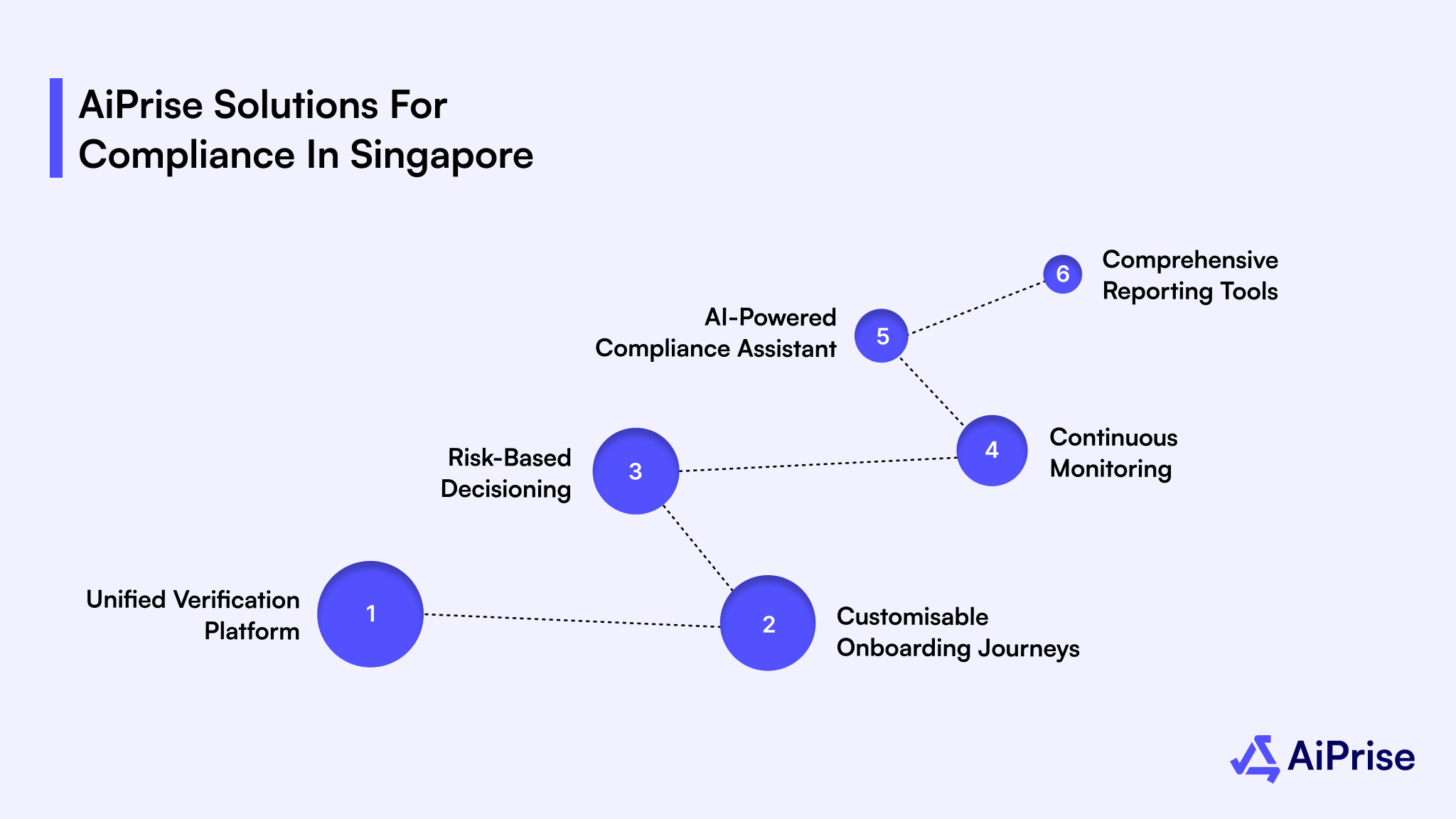
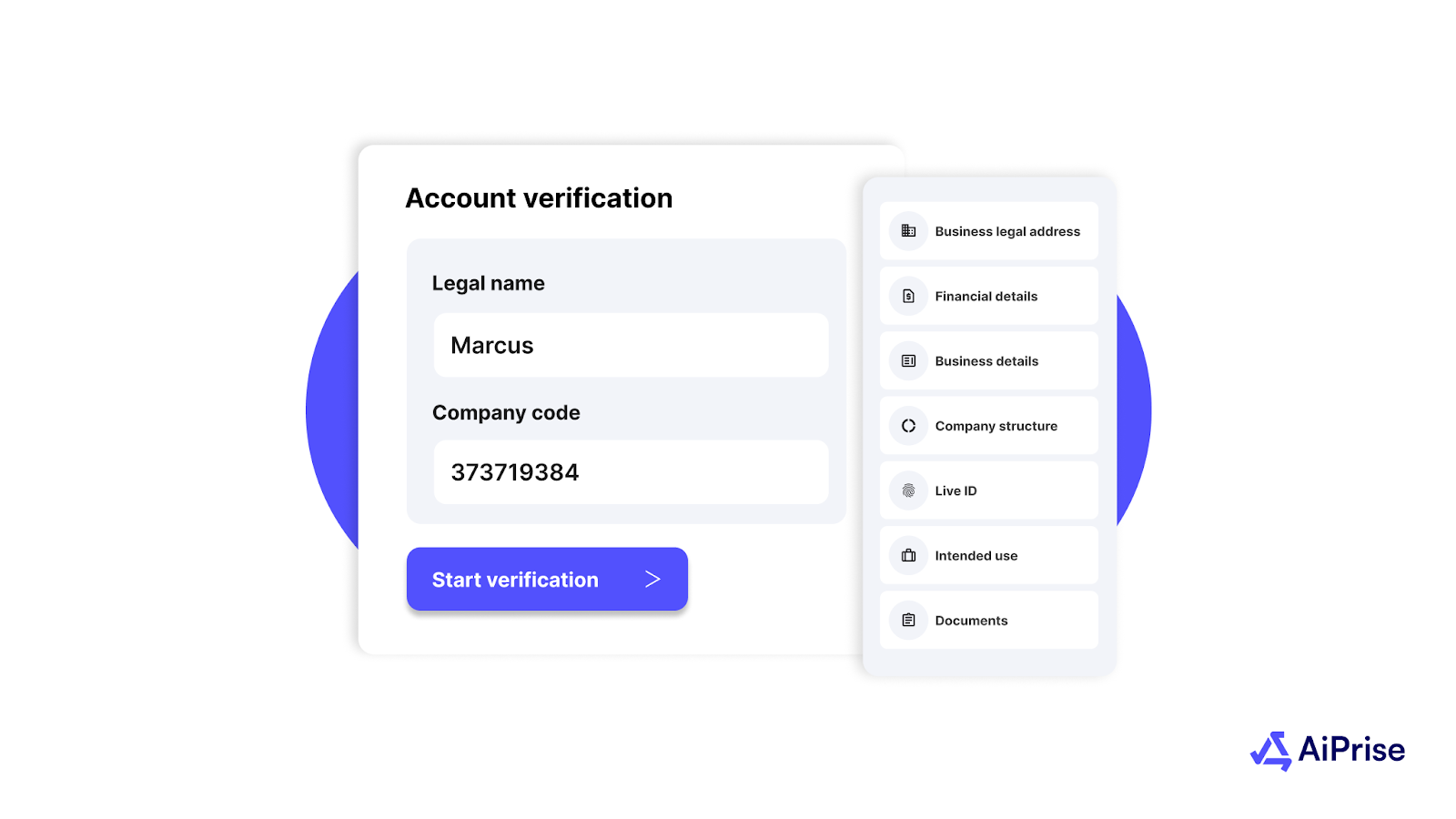
- Unified verification platform: Connect to trusted local and global identity sources through one API to stay aligned with ACRA’s KYC and KYB mandates.
- Customisable onboarding journeys: Design branded onboarding flows that adapt to customer risk profiles while keeping the process frictionless and compliant.
- Risk-based decisioning: Detect high-risk entities through dynamic scoring and AI-driven rules that balance security and speed during onboarding.
- Continuous monitoring: Maintain ongoing compliance with automated checks against sanctions, PEP, and adverse media lists in real time.
- AI-powered compliance assistant: Cut review times dramatically with Compliance Co-Pilot, which analyses documents, creates EDD reports, and highlights key risks instantly.
- Comprehensive reporting tools: Generate audit-ready reports and access real-time dashboards to demonstrate compliance under ACRA and CSP Act regulations.
Each of these tools helps maintain trust, prevent fraud, and future-proof operations, turning regulatory compliance in Singapore into a growth advantage.
Conclusion
Staying compliant has become a defining factor for running a successful business in Singapore, especially with the CSP Act and stricter ACRA oversight now in force. Preparing the right documents, verifying partners, and maintaining continuous monitoring help protect your operations from penalties and reputation risks. AiPrise makes this easier by bringing every compliance workflow, KYC, KYB, and AML into one intelligent, automated platform.
Book A Demo to see how AiPrise can streamline verification, reduce manual effort, and future-proof your compliance process in Singapore.
FAQ
1. What types of companies must register under the CSP Act in Singapore?
Only entities that carry on business in Singapore in providing corporate services, such as setting up companies, acting or arranging someone to act as a director or nominee shareholder, or providing a registered office address, must register with the Accounting and Corporate Regulatory Authority (ACRA) as a CSP.
2. Are firms that only lease office space for others required to register as a CSP?
No, if the arrangement is fundamentally tenanted space rather than a service of providing corporate services (such as registered address services), registration isn’t required under the CSP Act.
3. What kind of ongoing AML/CFT obligations apply after CSP registration?
Once registered, a CSP must carry out due diligence before providing corporate services, implement internal policies, monitor for money laundering or terror financing, and keep records for at least five years.
4. What are the penalties for failing to meet CSP Act requirements?
Failure to register or breach key obligations can lead to fines up to S$100,000 per offence and, in some cases, criminal liability for senior management.
5. Does the CSP Act apply if the corporate service is provided from overseas but impacts a Singapore business?
Yes, the Act covers business entities that carry on the business of providing corporate services from or in Singapore, meaning overseas-based operations may fall within scope if they act for Singapore entities.
You might want to read these...








AiPrise
6 min read
KYB Compliance: 2026 Regulations You Should Know About
As organizations expand globally and face tighter regulations, adherence to Know Your Business (KYB) standards has become one of the most critical compliance layers for fintech, online marketplaces, and other companies that need to verify business customers before letting them perform financial transactions.










.png)

.jpg)

















.png)







.png)
.png)
.png)















.png)

.png)

AiPrise’s data coverage and AI agents were the deciding factors for us. They’ve made our onboarding 80% faster. It is also a very intuitive platform.

Head of Operations



See your full compliance picture in one place
Use AI agents and global data to review businesses and users faster and more accurately
