

AiPrise
5 min read
June 17, 2026
KYB Onboarding: Requirements and Step-by-Step Process for Digital Merchants
Key Takeaways

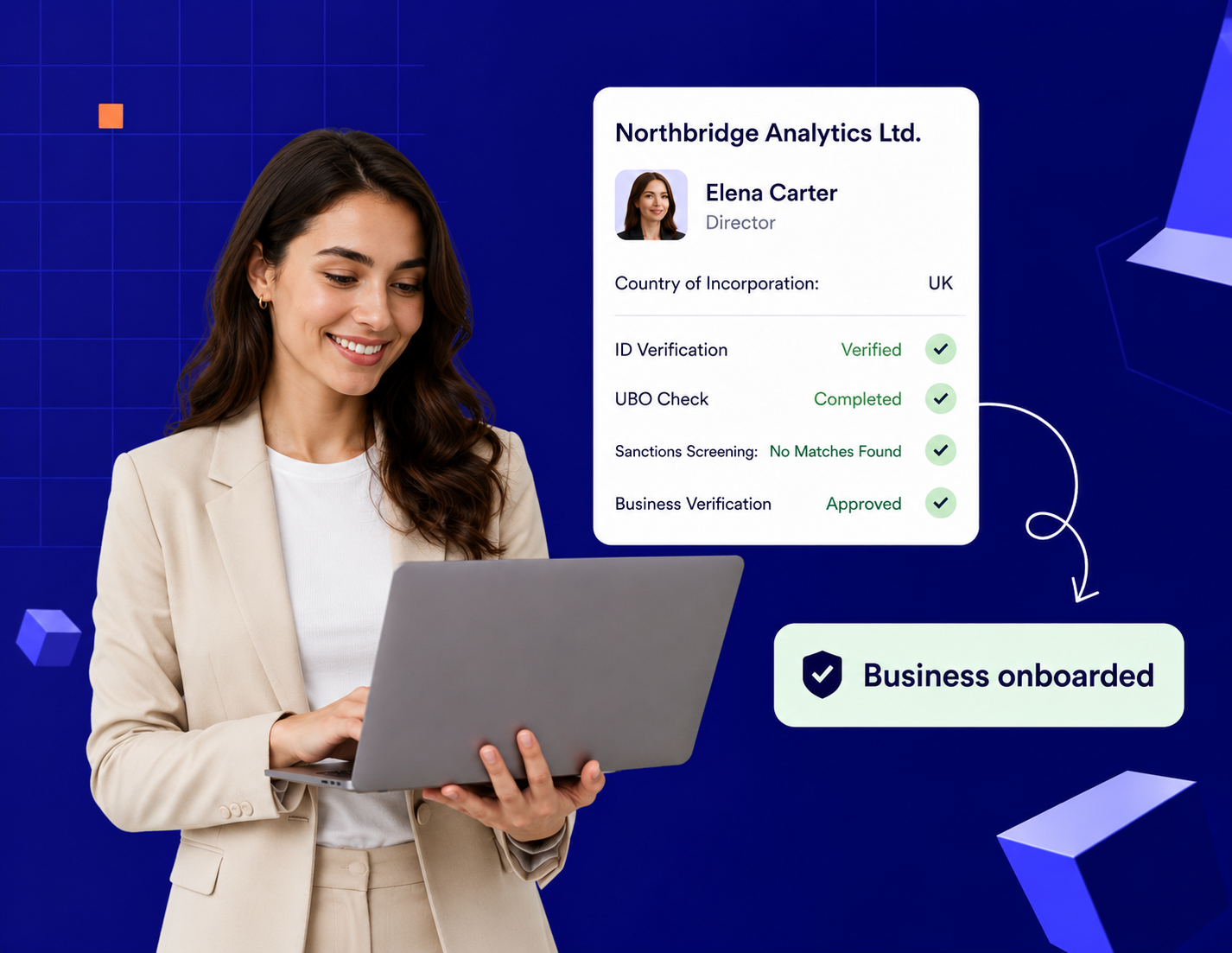
Verifying the legitimacy of your business customers can be a huge drain on resources when the verification process relies on manual document checks, fragmented data sources, and slow compliance reviews. But thorough verification has never been more critical for reducing fraud and staying compliant. Companies worldwide lost 7.7% of their annual revenue to fraud in 2024, representing an estimated $534 billion in total losses, and global regulatory laws are getting tighter.
KYB onboarding reduces the risk of fraud and helps ensure compliance by verifying a business’s registration, ownership, and risk profile before a relationship begins. However, understanding the onboarding process and what robust KYB looks like is essential to preventing KYB onboarding from becoming a cost sink.
In this post, we explain what KYB onboarding involves, how the process works, key verification steps, and how modern approaches make onboarding faster and more reliable.
Key Takeaways
- Building a clear, structured KYB onboarding process can reduce onboarding delays and help your business scale efficiently across markets.
- Key KYB steps include collecting and validating documents, applying risk-based checks, and continuously monitoring and improving the process.
- AI-powered compliance platforms like AiPrise can automate verification, unify workflows, and enable faster, more consistent onboarding.
KYB Onboarding Benefits
So, why is a solid KYB onboarding process so important? A good onboarding workflow offers several key advantages, including improved business transparency and stronger regulatory alignment.
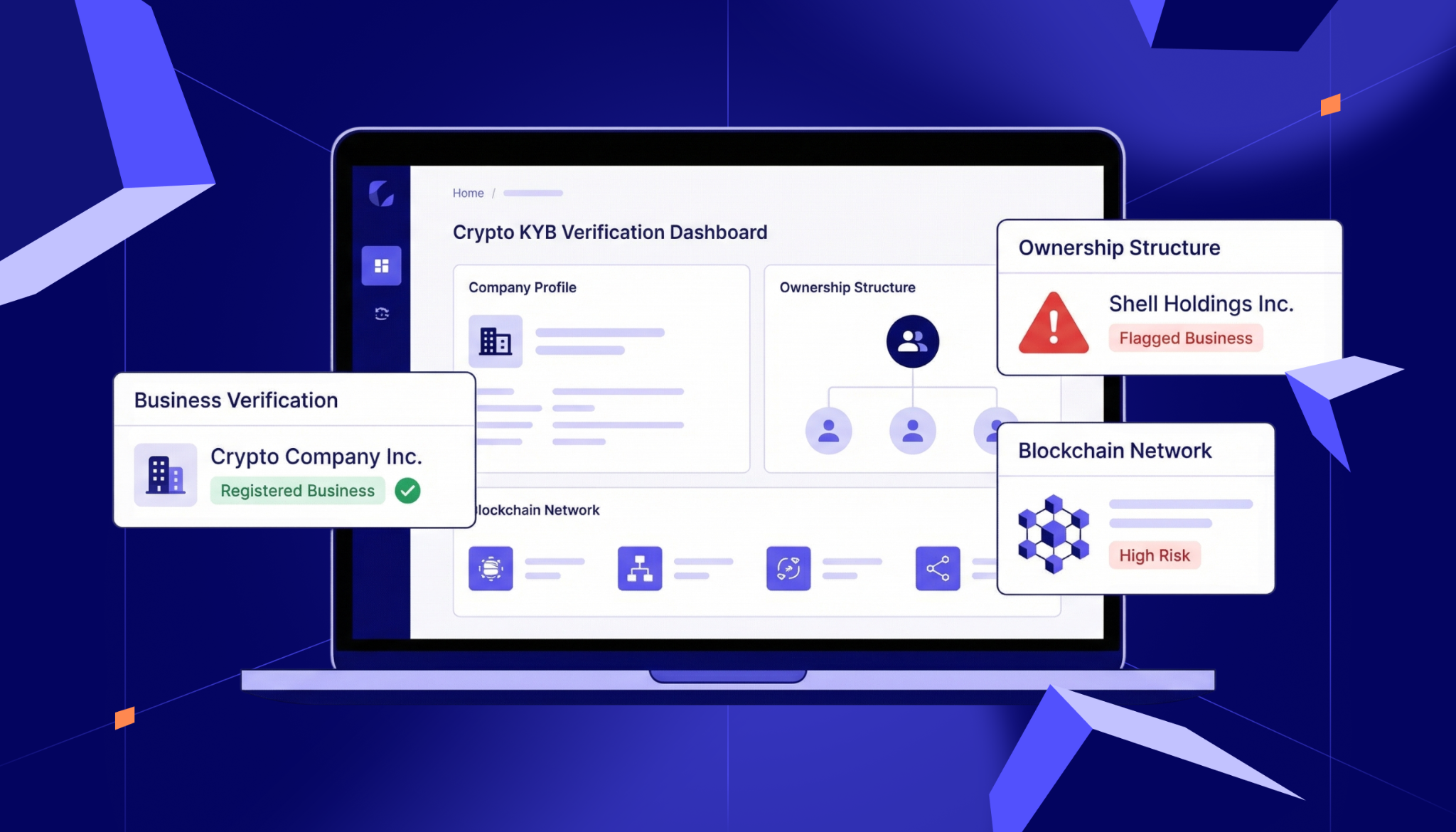
- Prevents fraud: Helps identify shell companies, fake entities, and hidden ownership structures before engagement.
- Ensures regulatory compliance: Helps your business meet anti-money laundering (AML), Know Your Customer (KYC), and local jurisdiction requirements, reducing the risk of legal and financial penalties.
- Builds trust and credibility: Demonstrates due diligence, reassuring stakeholders, partners, and regulators.
- Enables risk assessment of potential customers: Evaluates business stability, ownership transparency, and exposure levels to guide safer partnerships.
- Supports scalable growth: Establishes standardized processes that adapt as business networks expand.
KYB Onboarding: A Step-by-Step Guide
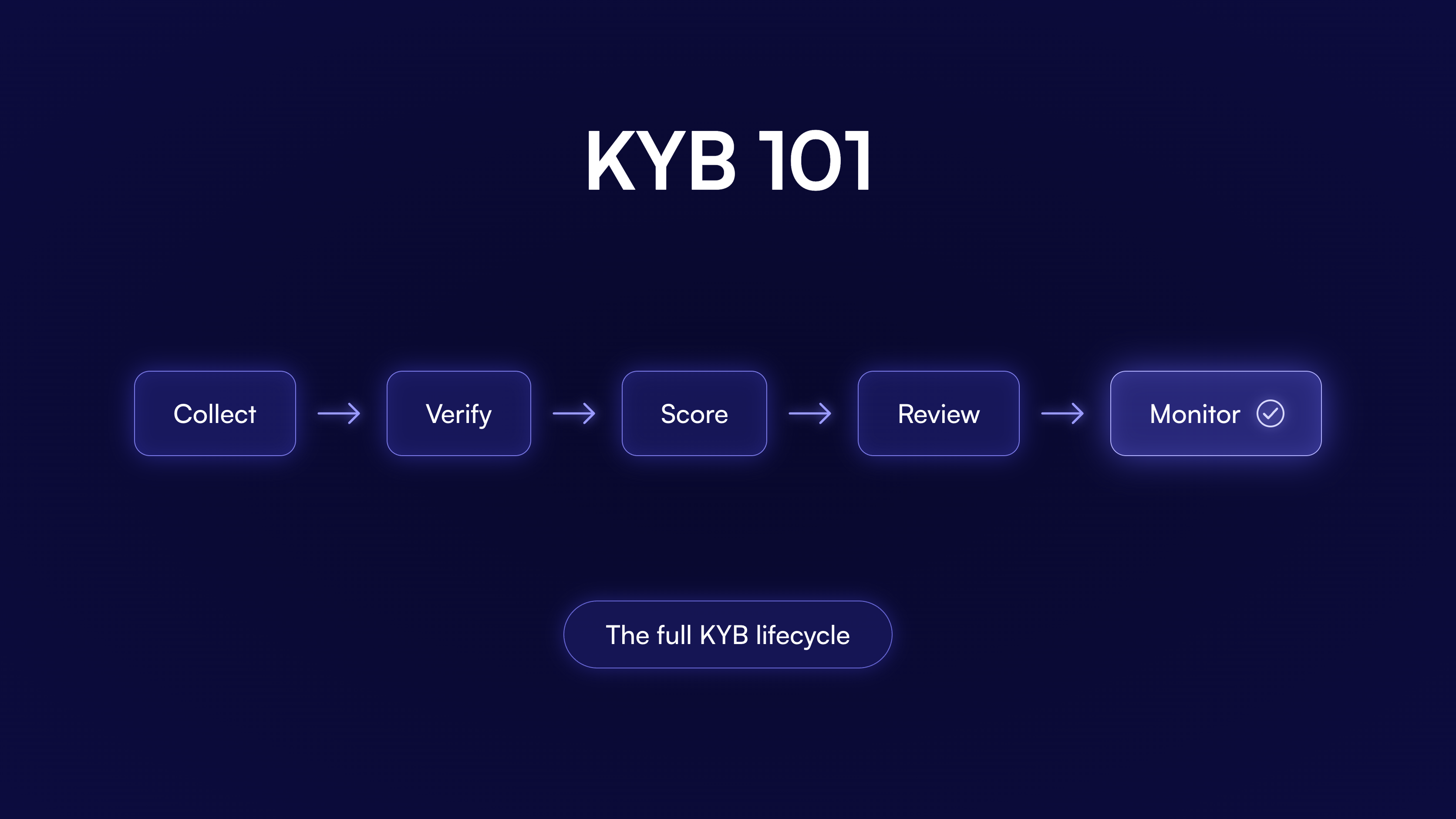
Here’s a step-by-step KYB onboarding guide to help you get started.
Step 1: Decide What You Need to Verify
Before onboarding any business, decide what information you need to collect and validate to approve a company safely and compliantly. Without clear KYB verification criteria, onboarding teams often request documents multiple times, slowing approvals.
Start by answering these questions:
- Which types of businesses are you onboarding? Different risk levels require different checks. For example, you might decide to use standard checks for domestic companies and enhanced due diligence for cross-border entities.
- What do you need to verify? Check company registration and legal status through official records such as certificates of incorporation, business registration numbers, or tax IDs.
- Who are the beneficial owners and directors? Identify and verify UBOs and key executives to ensure ownership transparency and accountability.
- What is the business address, and what type of operations? Validate the registered address and confirm the nature of business activities.
- What’s the industry risk level? Decide which checks are mandatory vs. risk-based. For example, a marketplace onboarding small retail businesses would have different needs than a crypto platform onboarding fintechs.
- What does success look like? Define approval criteria so teams know when onboarding is complete.
Step 2: Choose a Reliable KYB Provider
Look for a provider with a proven track record in performing thorough and accurate verifications. A reliable KYB provider will not only help you meet compliance requirements but also enhance the overall accuracy and efficiency of your onboarding process.
Your KYB onboarding provider should offer the following:
- Automation: Supports AI-powered document verification, automated data extraction, and real-time risk scoring to streamline checks.
- Quality and breadth of data sources: Accesses multiple trusted registries, global databases, and sanctions lists to ensure comprehensive and up-to-date verification.
- Regulatory coverage: Aligns with AML across jurisdictions, helping you stay compliant in different markets.
- Workflow flexibility: Allows you to customize verification flows based on risk levels, geographies, or business types.
- APIs: Offers easy integration with your existing systems for seamless data exchange and automated onboarding.
- Quick KYC checks of UBOs: Enables rapid identity verification of beneficial owners. AiPrise can complete checks in under 30 seconds.
- Customer support: Provides responsive assistance and onboarding guidance to resolve issues quickly and maintain continuity.
Partnering with a trusted KYB provider is a strategic investment that can significantly impact the success and security of your digital merchant business.
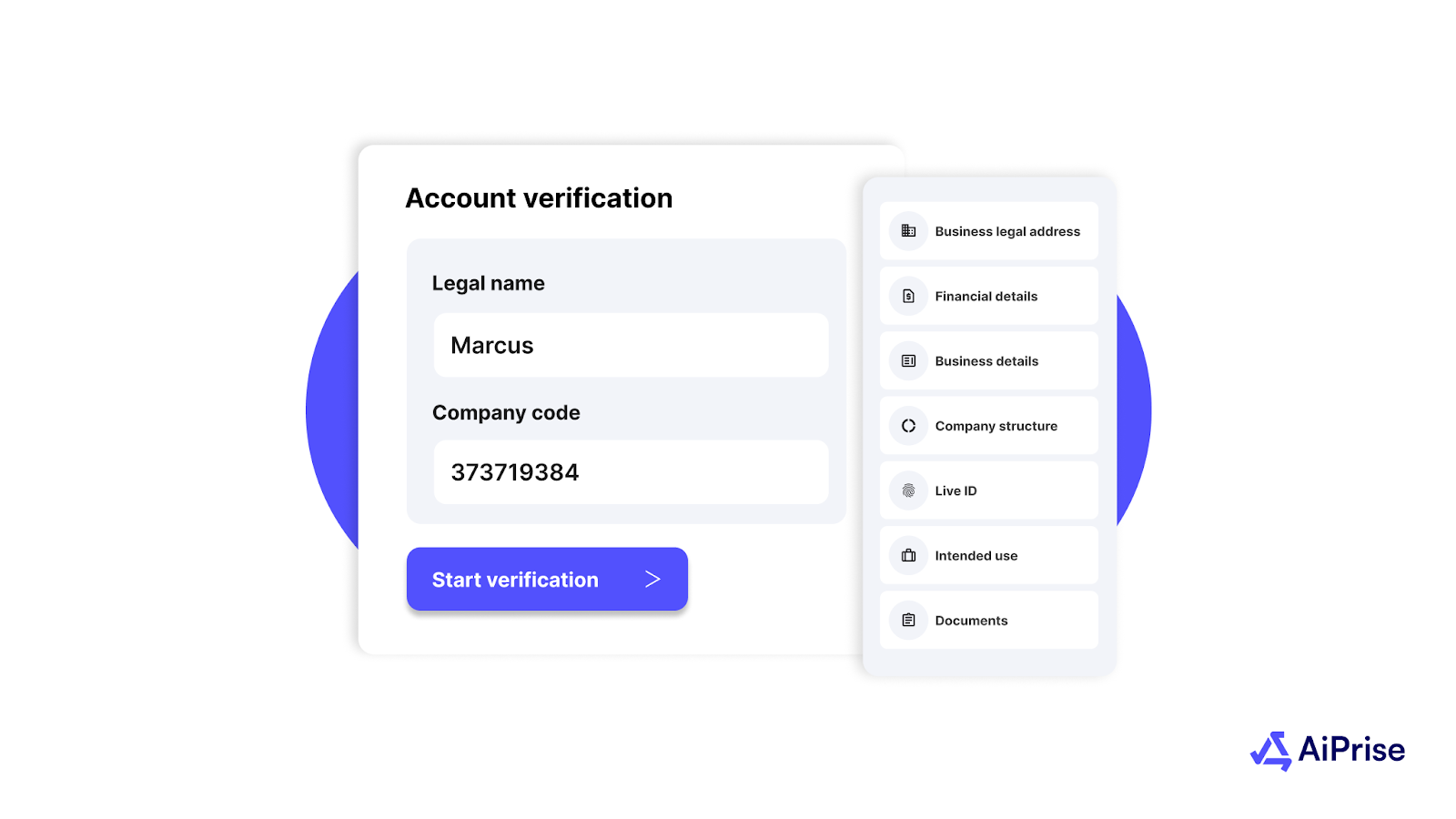
Step 3: Collect Necessary Documentation
Gather all required documents, such as business registration certificates, proof of address, and identification documents for key stakeholders. Ensure that the information provided is accurate and up-to-date.
Requirements differ by industry and region. Marketplaces onboarding international sellers may need cross-border registry checks. Organizing the necessary documentation beforehand will help streamline the verification process with your chosen KYB provider.
Modern onboarding KYB workflows enable:
- Guided digital collection: The system prompts users to submit the right documents based on business type, geography, and risk level.
- Automated data extraction: OCR and AI extract key details directly from submitted documents, eliminating manual entry.
- Instant authenticity checks: The system validates document data against government registries, business databases, and trusted sources.
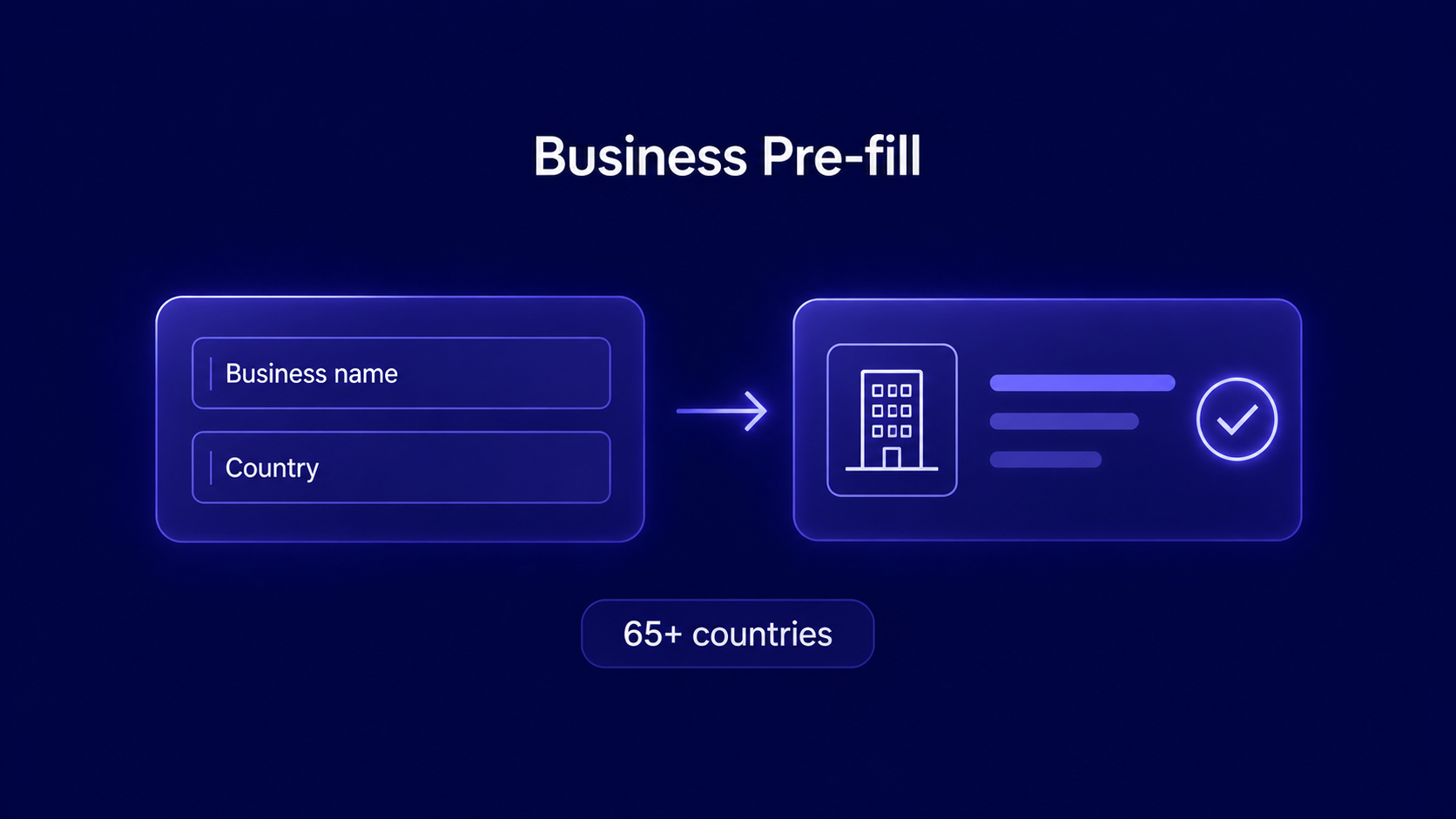
- Global registry connections: Platforms verify entities across jurisdictions using official and private data sources.
- Discrepancy detection: The system flags mismatches in names, ownership, or registration details for review.
Step 4: Implement Robust Security Measures
KYB onboarding involves handling sensitive business and personal data, making strong security controls essential to prevent breaches and fraud.
Key measures include:
- Access controls: Use multi-factor authentication (MFA) and role-based access to restrict who can view or edit data.
- Data encryption: Protect data in transit and at rest to prevent unauthorized access.
- Audit trails: Track every action within the onboarding process for accountability and compliance.
- Secure data handling practices: Follow frameworks like GDPR to manage and store data responsibly.
- Reverification mechanisms: Periodically re-check businesses using tools like liveness detection.
Step 5: Conduct Thorough Risk Assessments
Performing comprehensive risk assessments is vital in identifying potential vulnerabilities in your KYB onboarding process. Evaluate factors such as transaction volumes, geographical locations, and industry regulations to mitigate risks effectively.
Key areas to assess:
- UBO risk: Screen beneficial owners against sanctions lists (OFAC, SDN) and adverse media.
- Geographic exposure: Evaluate risks linked to high-risk or sanctioned jurisdictions.
- Industry risk profile: Identify sectors with higher exposure, such as crypto or financial services.
- AML exposure: Assess the likelihood of money laundering or financial crime based on business activity.
- Risk scoring: Assign a score based on these factors and apply the appropriate level of due diligence: standard for low risk or enhanced for high risk.
Step 6: Train Your Team on KYB Compliance
Invest in delivering comprehensive training to your team members on KYB compliance.
By providing adequate training, you equip your team with the knowledge and skills necessary to navigate the complexities of KYB onboarding successfully.
KYB compliance training should focus on the following:
- Applying internal policies consistently: Ensure teams follow standardized onboarding criteria and risk thresholds across all cases.
- Using KYB tools effectively: Show how to interpret risk scores, alerts, and verification results instead of relying on them blindly.
- Escalation protocols: Define when to approve, reject, or escalate a case to compliance or legal teams.
- Regulatory awareness: Keep teams updated on AML, KYC, and regional compliance requirements relevant to your operations.
- Scenario-based training: Use real or simulated onboarding cases (cross-border sellers with incomplete data) to build practical judgment.
Step 7: Stay Up-To-Date With Regulatory Changes
KYB requirements evolve constantly. For instance, the European Union’s Anti-Money Laundering framework has undergone multiple revisions. Staying informed ensures your checks remain accurate, relevant, and compliant as regulations change.
Use these compliance best practices to stay current with regulatory changes:
- Monitoring regulatory updates: Track changes in AML, KYC, and data protection laws across the regions you operate in.
- Trusted information sources: Follow regulatory bodies, industry groups, and compliance newsletters, and attend relevant webinars for timely updates.
- Internal communication: Share updates with onboarding, compliance, and legal teams to maintain consistency.
Step 8: Monitor and Continuously Improve Your KYB Process
Once you establish a KYB onboarding process, you need to actively track its performance and refine it over time. For example, if onboarding delays increase or false positives rise, it signals gaps in workflows or risk rules that need adjustment.
Focus on:
- Performance metrics: Track onboarding time, approval rates, drop-off rates, and accuracy.
- Customer experience: Monitor completion rates and feedback to identify points where users face delays or confusion.
- Feedback loops: Gather input from onboarding, compliance, and operations teams to uncover process gaps.
- Process optimization: Refine workflows, document requirements, and risk thresholds based on data insights.
From Fragmented Reviews to Real-Time KYB: Scaling Compliance with AiPrise
An AR company with fewer than five compliance staff handled KYC and KYB through manual reviews and multiple tools, leading to slow onboarding, inconsistent cross-border checks, and difficulty running real-time screenings.
The fragmented setup increased workload and risk of missed fraud signals.
By adopting AiPrise, the company unified identity verification, fraud prevention, and business screening into one automated KYB workflow. With API integration and customizable risk rules, it reduced verification time and improved consistency.
Elevate Your KYB Onboarding For Better Compliance and Stronger Relationships
Successfully navigating the KYB onboarding process is crucial for digital merchants aiming to uphold compliance standards and secure reliable business partnerships. By following the nine essential steps outlined in this guide, you can streamline your onboarding procedures, enhance customer trust, and mitigate risks effectively.
Remember, KYB onboarding success is not a one-time accomplishment but an ongoing commitment to maintaining standards and adapting to evolving regulatory requirements.
FAQs
What is the difference between KYB and KYC?
KYB verifies the legitimacy of a company. KYC, on the other hand, focuses on verifying individual identities. KYB typically includes KYC checks on UBOs, making it a broader process designed for B2B relationships and corporate onboarding.
What is a UBO, and why does it matter in KYB?
A UBO is the individual who ultimately owns or controls a business, even if ownership is held through multiple layers. Regulators require businesses to verify UBOs to improve transparency and accountability.
Which industries benefit most from KYB onboarding?
KYB onboarding is critical for industries that work with other businesses or handle financial transactions. This includes fintech, banking, payments, lending platforms, marketplaces, and crypto companies. It’s also valuable for SaaS platforms and B2B marketplaces that onboard vendors or partners at scale.
How long does KYB onboarding usually take, and what factors affect timelines?
Automated workflows can complete basic checks in minutes, while manual or high-risk cases may take longer. Timelines depend on factors such as business complexity, jurisdiction, availability of reliable registries, completeness of submitted documents, and whether enhanced due diligence is required.
What are the risks of not implementing KYB onboarding?
Without KYB onboarding, businesses risk onboarding fraudulent or non-compliant entities, which can lead to regulatory penalties, financial loss, and reputational damage. It also increases exposure to money laundering, sanctions violations, and operational inefficiencies.
You might want to read these...








AiPrise
6 min read
KYB Compliance: 2026 Regulations You Should Know About
As organizations expand globally and face tighter regulations, adherence to Know Your Business (KYB) standards has become one of the most critical compliance layers for fintech, online marketplaces, and other companies that need to verify business customers before letting them perform financial transactions.










.png)

.jpg)

















.png)








.png)
.png)
.png)















AiPrise’s data coverage and AI agents were the deciding factors for us. They’ve made our onboarding 80% faster. It is also a very intuitive platform.

Head of Operations



See your full compliance picture in one place
Use AI agents and global data to review businesses and users faster and more accurately
