

AiPrise
April 21, 2026
KYB for Crypto: How to Verify Businesses and Reduce Risk
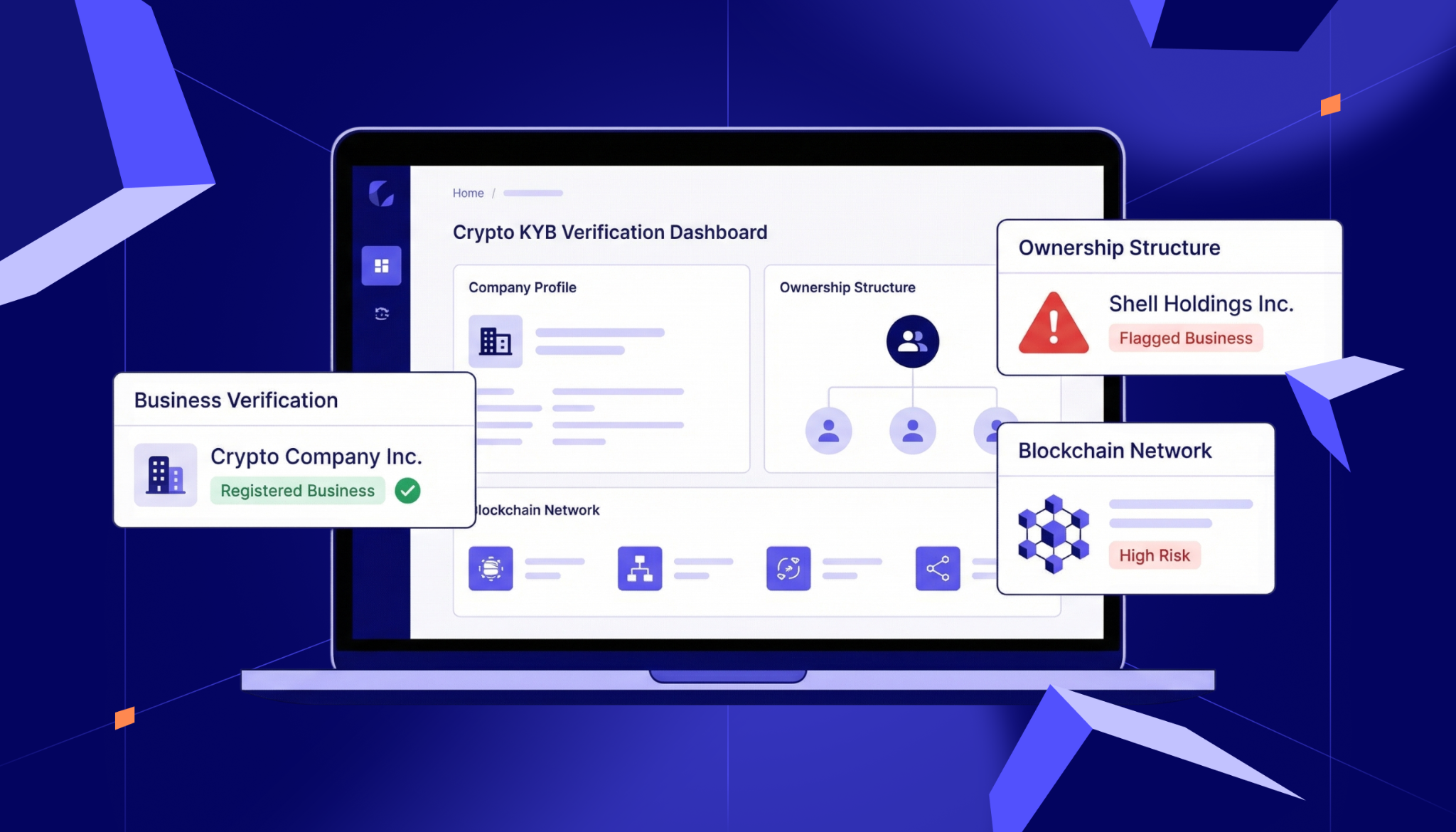
Key Takeaways

Crypto removes traditional intermediaries from financial transactions, but it doesn’t remove risk. If anything, it attracts it. Platforms handling digital currencies can onboard businesses that move funds globally in seconds, often with limited upfront visibility. That makes them a prime target for fraud, money laundering, and other financial crimes.
And the scale of that crime is significant. The FBI’s 2024 Internet Crime Report shows $9.3 billion in crypto fraud losses in 2024 in the US alone. Without strong controls, high-risk businesses can enter your platform unnoticed.
This is where Know Your Business (KYB) becomes critical. It gives you a structured way to verify companies, identify ultimate beneficial owners (UBOs), and assess risk before funds start moving.
Done well, KYB doesn’t just support compliance. It helps you decide which businesses you can trust as you scale.
Key Highlights
- KYB verifies businesses onboarding to crypto platforms, confirming legitimacy and ownership.
- It combines business verification, UBO identification, and AML/sanctions screening.
- Ongoing monitoring tracks changes in ownership, sanctions exposure, and emerging risks.
- Automation helps scale KYB without slowing onboarding or increasing manual work.
What Is KYB in Crypto?
Know Your Business (KYB) is used to confirm that companies onboarding to cryptocurrency exchanges are legitimate, compliant, and safe to transact with.
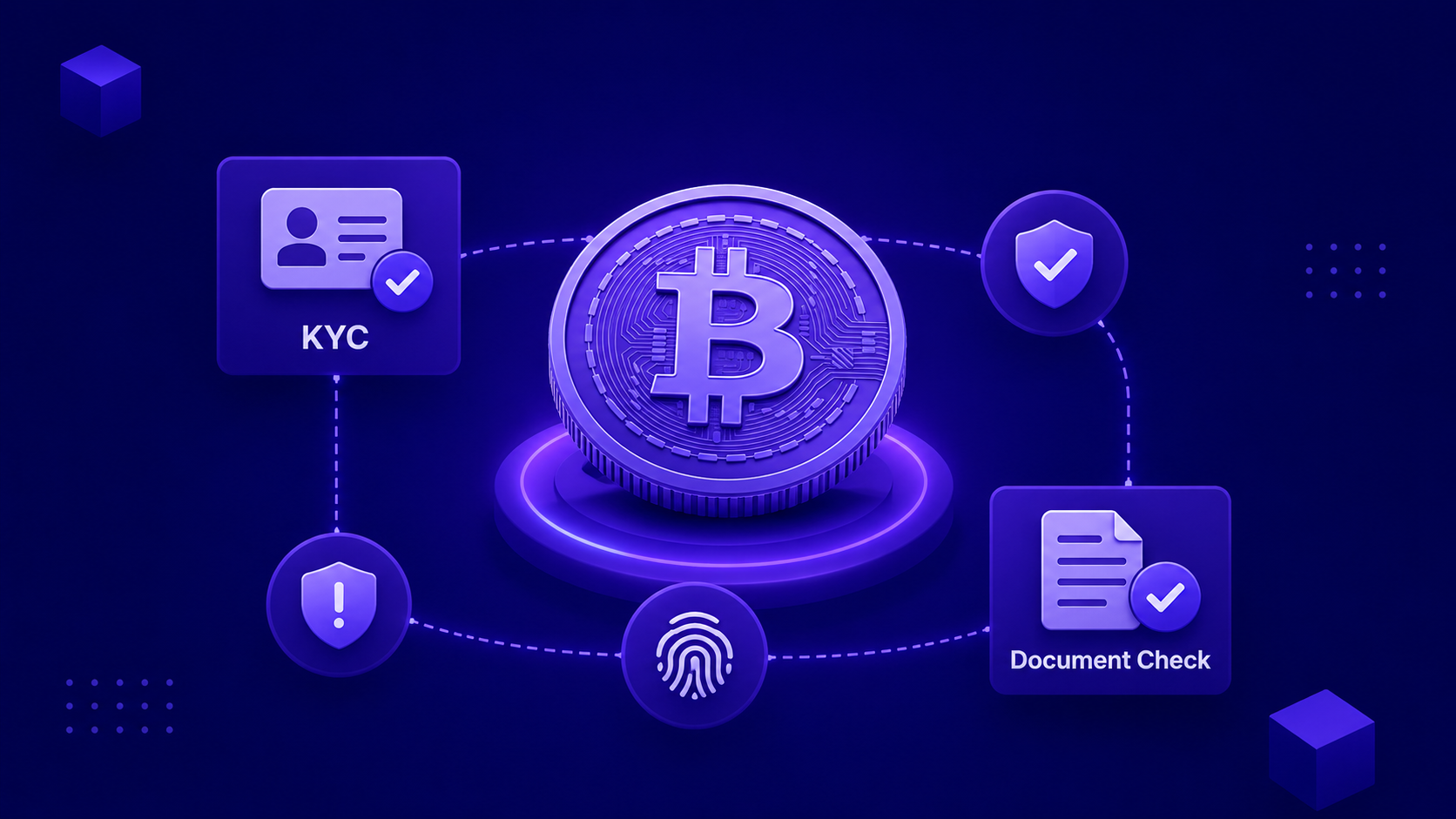
Unlike Know Your Customer (KYC), which focuses on individuals, KYB looks at business users. That means understanding the ownership structure, identifying ultimate beneficial owners (UBOs), and reviewing business registration documents. It also brings in AML screening, sanctions screening, and checks against adverse media and other risk indicators to spot links to money laundering, financial crime, or terrorist financing.
Why KYB Is Critical for Crypto and Digital Asset Platforms
For virtual asset service providers (VASPs), KYB sits at the core of compliance. It helps you meet regulatory requirements while building a clear, ongoing view of risk as businesses operate on your platform.
If you run a platform in the crypto sector, you’re likely onboarding businesses that can move large volumes of digital currencies across borders in seconds. That speed is exactly why AML rules have tightened. Under frameworks like the Financial Action Task Force (FATF) Travel Rule, VASPs are expected to know who they’re doing business with, where funds are coming from, and who ultimately benefits. Without that visibility, you risk enabling financial crimes without even realizing it.
And the scale of the risk is growing. According to Chainalysis’ 2025 Crypto Crime Report, illicit cryptocurrency addresses received $40.9 billion in 2024, with estimates suggesting the total could exceed $51 billion as more activity comes to light.
This is where KYB becomes essential. It gives you a structured verification process to confirm business legitimacy, uncover UBOs, and build accurate risk profiles before money starts moving.
The challenge is that crypto platforms don’t operate neatly within one jurisdiction. An exchange might be registered in one country, run operations in another, and transact globally through blockchain technology. That makes regulatory compliance harder. You’re not just checking registration. You’re checking whether that business can legally operate across multiple regulatory frameworks.
What makes this harder is that crypto regulations don’t apply evenly across markets. Rules vary widely by jurisdiction. According to the Atlantic Council, cryptocurrency is fully legal in 45 countries, partially banned in 20, and generally banned in 10.
That means a business might be legitimate in one region but restricted in another.
Ownership adds another difficulty. Many cryptocurrency companies use complex structures with holding entities and layered shareholders. Without proper UBO verification, it’s easy for bad actors to hide behind legitimate-looking entities.
Then, there’s the blockchain itself. Blockchain transactions are visible, but you don’t know what they mean or if they’re risky. That means platforms need to layer in additional risk indicators.
Wallet histories, exposure to high-risk services, and unusual transaction patterns all signal potential financial crime.
For example, a wallet might have interacted with sanctioned entities, darknet markets, or mixing services designed to hide the source of funds. You might also see patterns like rapid fund splitting, circular transfers, or activity across multiple chains — all of which can indicate attempts to obscure where money is coming from.
This is where KYB extends beyond initial checks. It feeds into transaction monitoring and crypto screening, so you’re not just verifying a business once, but continuously assessing how it behaves over time.
Put simply, KYB helps crypto platforms and VASPs decide which businesses are trustworthy in a decentralized world.
How KYB Works for Crypto Platforms
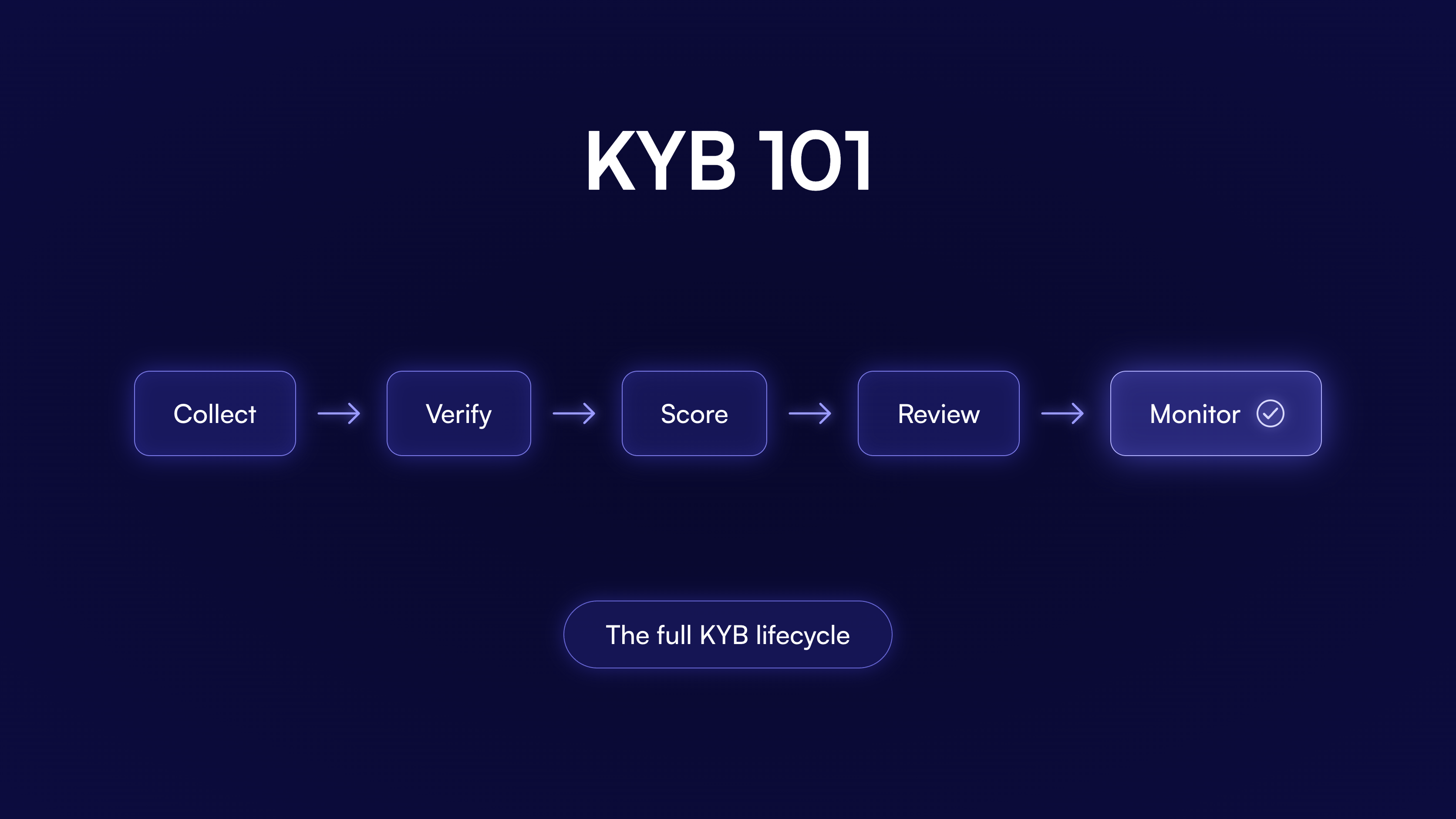
KYB in crypto isn’t a single check. It’s a layered process that helps you understand who a business is, who controls it, and how it behaves once it’s on your platform.
Here’s how the KYB process happens in practice for crypto platforms.
Business Registration and Legitimacy
The process starts with verifying that the company actually exists. You check official registries, registration numbers, and corporate documents, such as certificates of incorporation or business licenses.
At this stage, you’re looking for alignment. Does the stated business activity match what the company actually does? Are there red flags like recent incorporation or inconsistent filings?
Ownership and Ultimate Beneficial Owners (UBOs)
Next, you identify who really controls the business. KYB requires you to map the full ownership structure and uncover UBOs, even when ownership is spread across multiple entities or jurisdictions.
This is where KYB finds what’s hidden. Layered corporate structures can obscure control, so the goal is to move past surface-level ownership and understand who actually benefits.
AML Screening and Risk Signals
Once the entity and its owners are clear, AML screening comes into play. You check businesses and key individuals against sanctions lists, PEP databases, and adverse media.
This helps identify exposure to financial crime, high-risk jurisdictions, or regulatory issues that wouldn’t show up in registration data alone.
Operational and Behavioral Risk Signals
In crypto, verification doesn’t stop with static data. You also assess how the business interacts with the ecosystem.
Following the movement of funds and their connections helps uncover behavior that doesn’t match what’s expected. This adds context to your initial checks and helps build a more accurate risk profile.
Ongoing Monitoring
KYB continues after onboarding because businesses change, ownership shifts, and new risks appear over time. Ongoing monitoring tracks these changes, flags new sanctions or adverse media, and updates risk scores as new information emerges.
That way, you’re not just verifying a business once. You’re continuously assessing whether it should still be on your platform.
How Automated KYB Helps Crypto Companies Scale Compliance
As onboarding volumes grow, manual KYB breaks down quickly. Automated workflows let you keep up with demand without sacrificing regulatory compliance or increasing headcount.
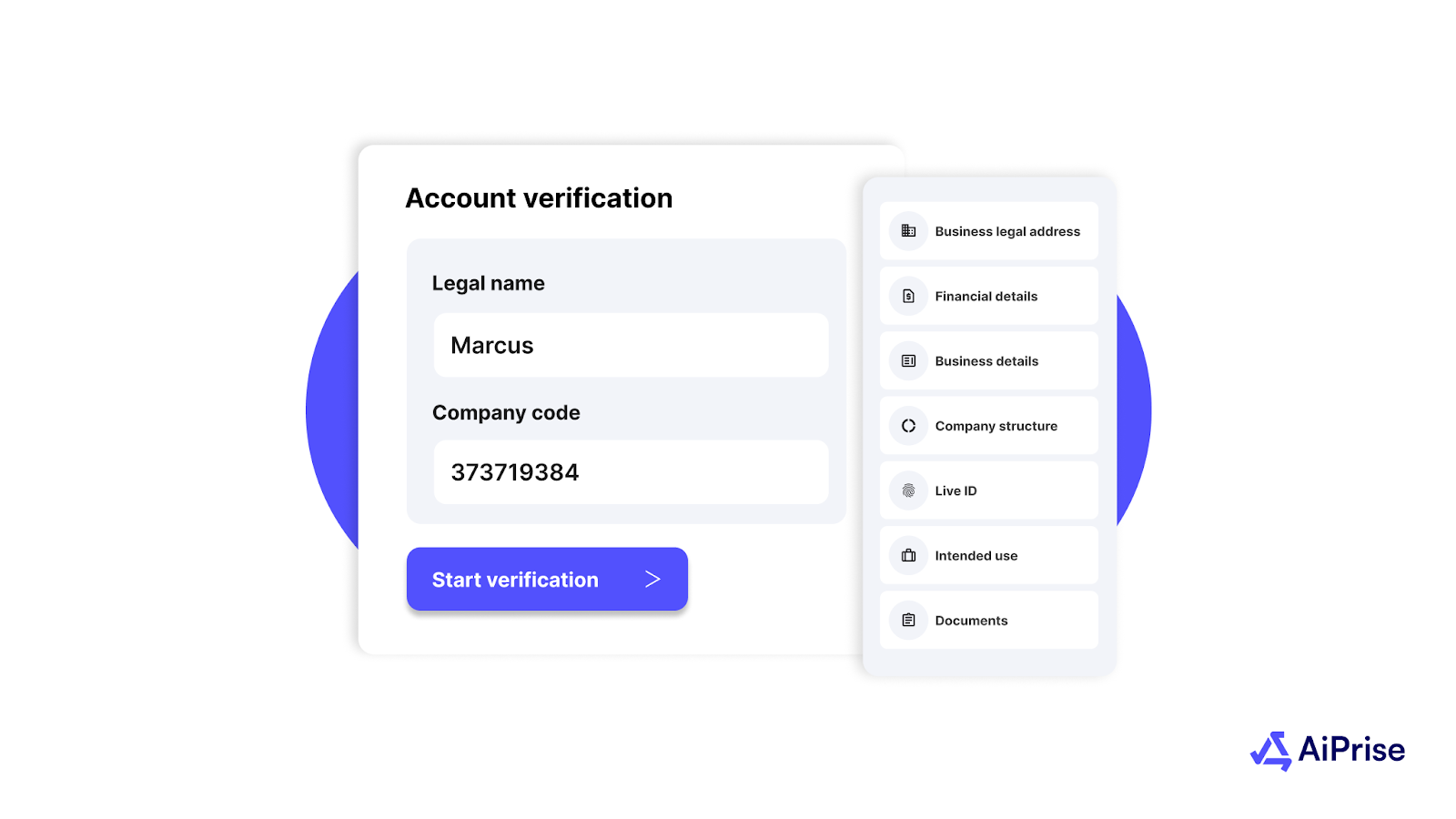
Automated Business Verification
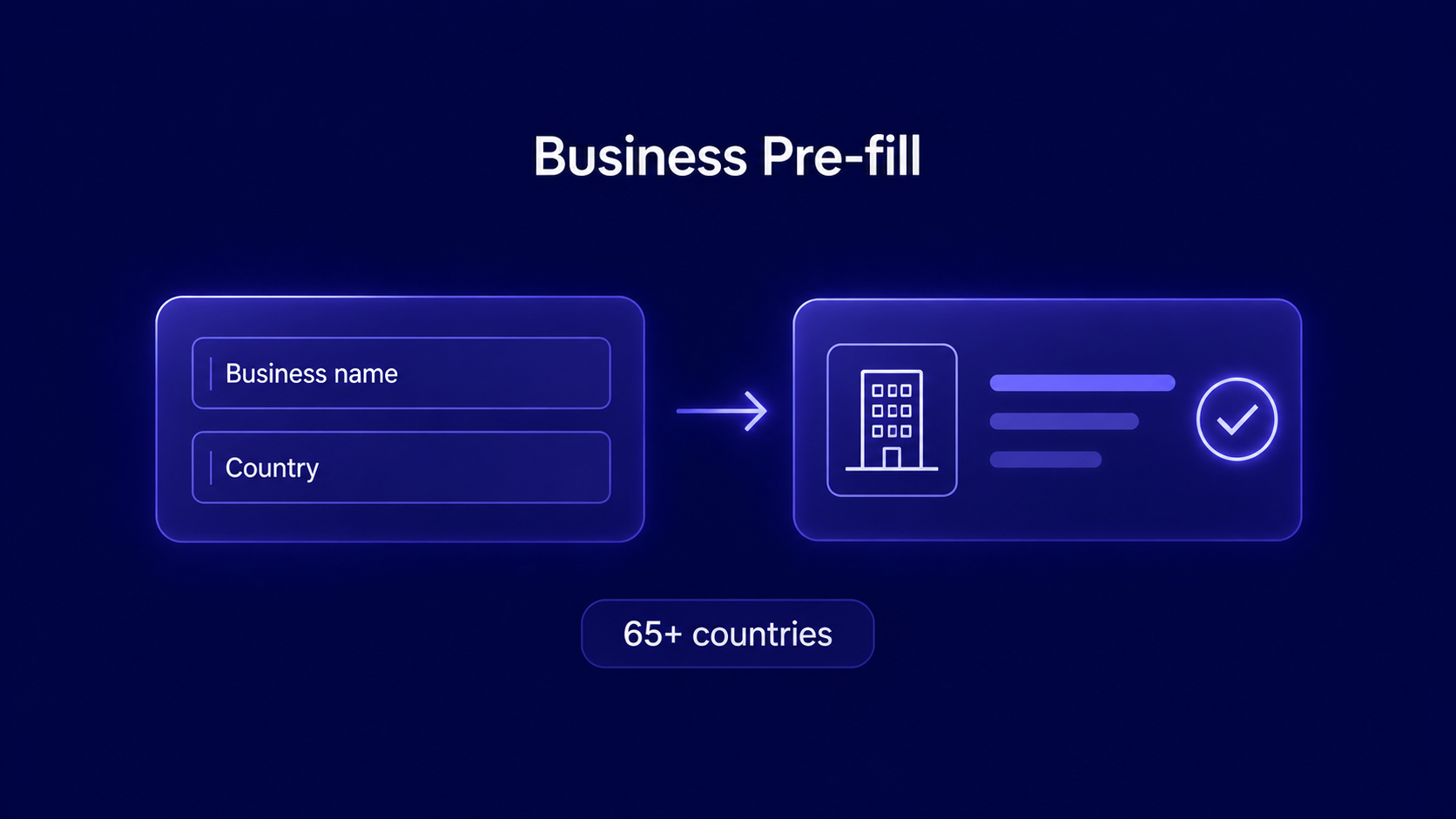
Automation pulls company data directly from global registries and validates legal status in real time. Instead of reviewing corporate documents manually, you get structured, verified data instantly.
With AiPrise, this process runs across jurisdictions. That means faster onboarding, fewer delays, and a thorough verification process applied to every business.
AI Risk Scoring
KYB generates a lot of signals, but not all of them matter equally. AI helps you prioritize.
By combining entity data, ownership information, and AML screening results, AiPrise assigns a dynamic risk score during onboarding. It flags high-risk businesses early, while low-risk cases move through without unnecessary friction.
Ownership Mapping
Complex ownership structures are one of the hardest parts of KYB to assess manually. Automation maps relationships across entities and surfaces UBOs, even when they’re buried within layered structures.
AiPrise visualizes these hierarchies clearly, so you can see who actually controls the business without piecing it together by hand.
Continuous Monitoring
AiPrise continuously monitors businesses and their owners automatically, tracking updates across sanctions lists, adverse media, and other risk indicators. When something changes, the software alerts you immediately.
This shifts KYB from a one-time check to an ongoing process. Rather than reacting to issues after they happen, you can act early and maintain control as your platform scales.
Strengthening KYB for a Safer Crypto Ecosystem
For platforms that facilitate crypto and stablecoin payments, KYB sits at the center of risk control. Businesses onboarding to these platforms often operate globally, use layered corporate structures, and move funds quickly across blockchain networks. Compliance teams must verify legal entities, identify UBOs, screen for sanctions exposure, and monitor risk signals tied to blockchain activity.
At the same time, onboarding volumes are increasing and regulatory scrutiny is tightening. Manual KYB processes struggle to keep pace with this combination of speed, complexity, and compliance pressure. Platforms, therefore, need automated verification and risk intelligence to onboard legitimate businesses efficiently while identifying high-risk entities early.
If you want to strengthen crypto KYB workflows and scale compliance with confidence, explore how AiPrise helps automate business verification and risk intelligence. Book a demo today.
FAQs on KYB for Crypto
Which types of crypto businesses typically require KYB verification?
Any platform onboarding other businesses, like exchanges, stablecoin providers, or Web3 infrastructure, needs KYB to confirm those entities are legitimate before they can transact.
What risks can KYB help detect in crypto platforms?
KYB helps uncover fraudulent companies, hidden ownership structures, and links to sanctioned individuals or high-risk jurisdictions, reducing exposure to financial crime.
How does KYB support AML compliance in crypto?
It verifies the legal entity, identifies UBOs, runs sanctions screening, and supports ongoing monitoring so risks can be identified even after onboarding.
You might want to read these...






AiPrise
KYB Compliance: 2026 Regulations You Should Know About
As organizations expand globally and face tighter regulations, adherence to Know Your Business (KYB) standards has become one of the most critical compliance layers for fintech, online marketplaces, and other companies that need to verify business customers before letting them perform financial transactions.










.png)

.jpg)

















.png)








.png)
.png)
.png)










.png)

.png)



AiPrise’s data coverage and AI agents were the deciding factors for us. They’ve made our onboarding 80% faster. It is also a very intuitive platform.

Head of Operations



See your full compliance picture in one place
Use AI agents and global data to review businesses and users faster and more accurately
