

AiPrise
11 min read
April 16, 2026
8 of the Best KYB Software Providers in 2026

Key Takeaways

Compliance doesn’t just fail when someone skips an ID check. The cracks start to form when a business looks legitimate on the surface but isn’t.
By the time the exposure becomes visible, regulators are asking questions, funds are frozen, and your risk team is reconstructing decisions that should have been caught at onboarding. The problem isn’t that companies ignore compliance. It’s that business verification is often shallow, fragmented, or disconnected from individual identity checks.
As cross-border onboarding increases and enforcement tightens, superficial KYB (Know Your Business) doesn’t hold.
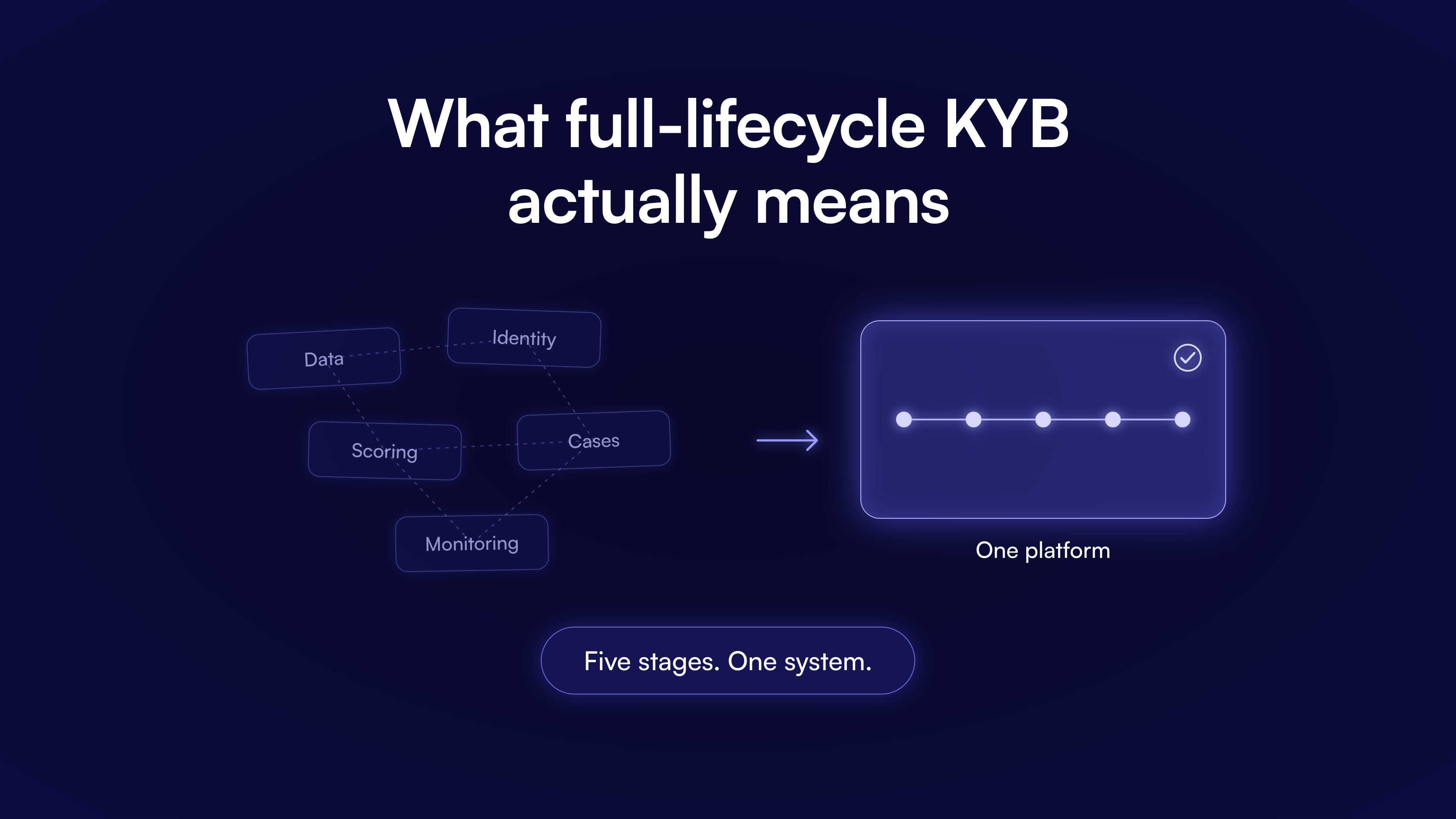
The platforms scaling safely in 2026 treat KYB as infrastructure. They map ownership structures, link businesses to the individuals behind them, apply unified risk scoring, and monitor continuously.
Let’s break down the best KYB and unified verification platforms this year — and what actually separates surface checks from real control.
Key Takeaways
- KYB means verifying a company’s legitimacy, ownership, and compliance, similar to KYC but for businesses.
- It’s essential for preventing fraud, meeting AML/CFT regulations, building trust, and scaling operations efficiently.
- Top KYB providers in 2026, including AiPrise, iDenfy, Vespia, Persona, Ondato, and Veriff.
- When choosing a KYB provider, consider factors like global coverage, risk intelligence, automation, and ongoing monitoring
Quick Comparison of the Best KYB Services in 2026
The table below provides a high-level comparison of the leading KYB providers. It highlights how each platform performs across core capabilities such as business verification, beneficial ownership mapping, risk scoring, workflow customization, and continuous monitoring.
Now, let’s dive into what makes each of the top Know Your Business providers stand out.
The Best KYB Software Solutions in 2026
Here’s a breakdown of the leading business verification/KYB companies this year, with top features, strengths, and considerations.
1. AiPrise
AiPrise is an AI-powered KYB platform built for global business onboarding and customer verification. It brings identity checks, business verification, and risk intelligence into a single compliance platform, so you can verify both individuals and business entities in one place.
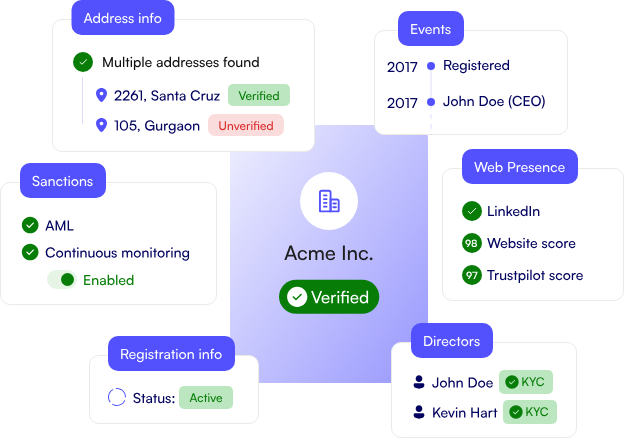
The platform pulls data from official business registries, documents, and external risk sources to map beneficial ownership. It also confirms company registration details and assesses whether a business is legitimate. It’s particularly useful in emerging or harder-to-verify markets where registry data may be incomplete.
AiPrise also applies AI-driven risk scoring that combines identity, document, behavioral, and monitoring signals to build a clearer risk profile. By replacing fragmented KYC, KYB, and AML tools with one integrated solution, it helps fintechs, marketplaces, and regulated platforms manage business relationships across multiple jurisdictions.
Top features:
- Unified API for global KYC and KYB verification
- Business registry search, document collection, and ownership structure capture
- Ultimate beneficial owner (UBO) and shareholder verification workflows
- Sanctions, PEP, and adverse media screening with configurable monitoring
- AI-powered risk scoring engine with risk-tier logic
- Website and online presence analysis for fraud detection
- Customizable onboarding workflows and case routing
- Continuous monitoring with audit trails and compliance reporting
Pros:
- Strong international coverage, including emerging markets and cross-border use cases
- Deep KYB capabilities compared to identity-first competitors
- Highly configurable workflows aligned to risk appetite
- Built for scale and high onboarding volumes
- Robust case management and audit readiness
Considerations:
- Breadth and configurability can create a learning curve for smaller teams
- Advanced setups may require implementation support
2. Trulioo
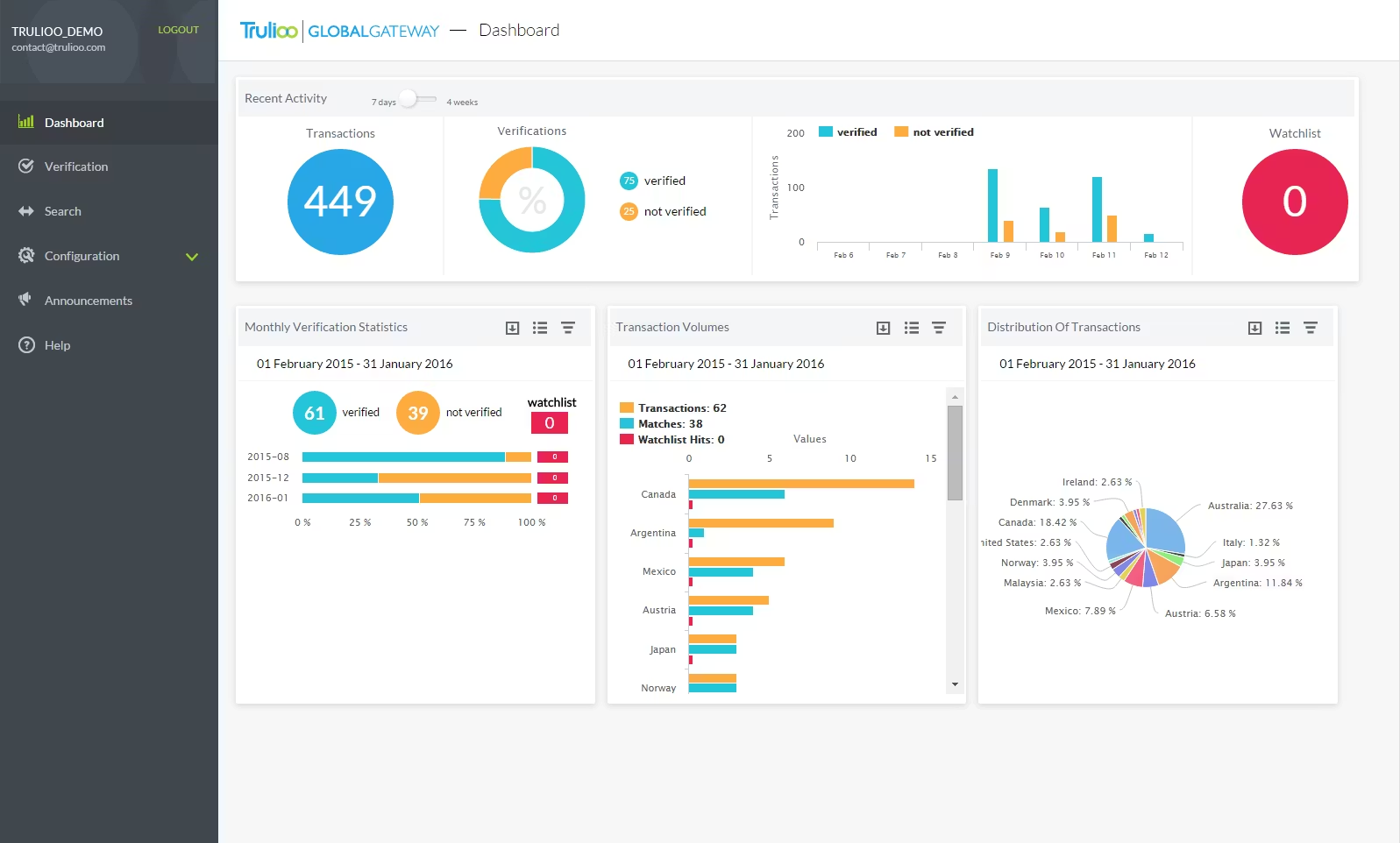
Trulioo is a global verification provider that supports both KYC and KYB through a single API. It pulls data from government, credit, and telecom sources to verify individuals and businesses across many countries. It has mature infrastructure and strong compliance capabilities, which is why it’s popular with large enterprises operating across multiple regions.
Top features:
- Single API accessing global identity and business data sources
- Business verification, including company registration, directors, and UBO checks
- Electronic identity verification using government and credit data
- Real-time sanctions, PEP, and adverse media screening
Strengths:
- Broad international coverage
- Established enterprise reputation
- Strong compliance tooling
Considerations:
- Data match rates vary by jurisdiction
- Workflow UI is not as modern as newer vendors
3. Sumsub
Sumsub is an all-in-one verification platform. It brings KYC, KYB, AML, and fraud prevention into a single onboarding flow. Widely used by fintech, crypto, and other digital platforms, it offers fast, scalable customer onboarding without adding friction to the customer journey.
Businesses can launch verification flows quickly, automate checks, and monitor customer activities for potential suspicious activity or money laundering risks.

Top features:
- Identity document verification with liveness detection
- KYB workflows, including company docs and ownership checks
- AML tools with sanctions and monitoring
- Low-code workflow builder
Strengths:
- User-friendly and accessible interface
- Strong automation rates
- Good balance between fraud control and conversion
Considerations:
- Some users report false positives in higher-risk segments
- Less infrastructure-level customization than orchestration-focused platforms
4. iDenfy
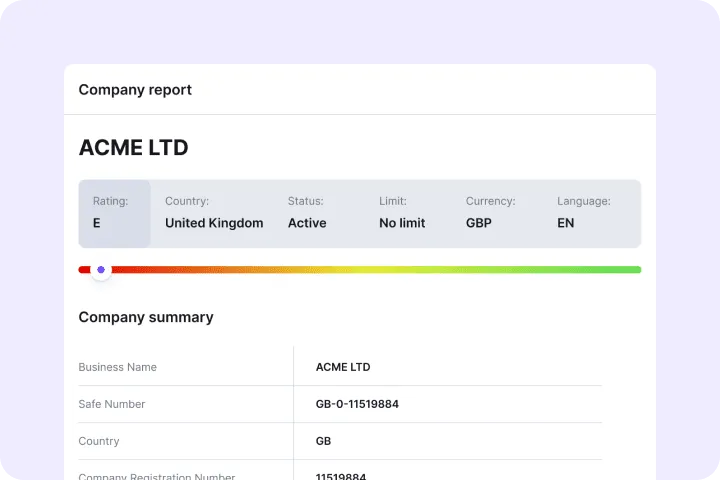
iDenfy excels at providing a flexible KYB + KYC stack. It supports many types of corporate documents and works in many jurisdictions. It lets you adjust levels of verification (for example, how deep ownership needs to be checked). iDenfy offers flexibility and affordability, making it attractive for growing companies.
Top Features:
- Corporate document verification supporting multiple business document types
- Straightforward KYB workflows
- Adjustable verification depth based on risk level or jurisdiction
- Modular compliance tools
Strengths:
- Good global registry access
- Options for manual review when needed (good for edge cases)
- Transparent pricing and distinct modules
Considerations:
- Deep ownership/shareholder tracing in some countries can still be limited
- More customization tends to mean slightly more complexity in setup
5. Vespia
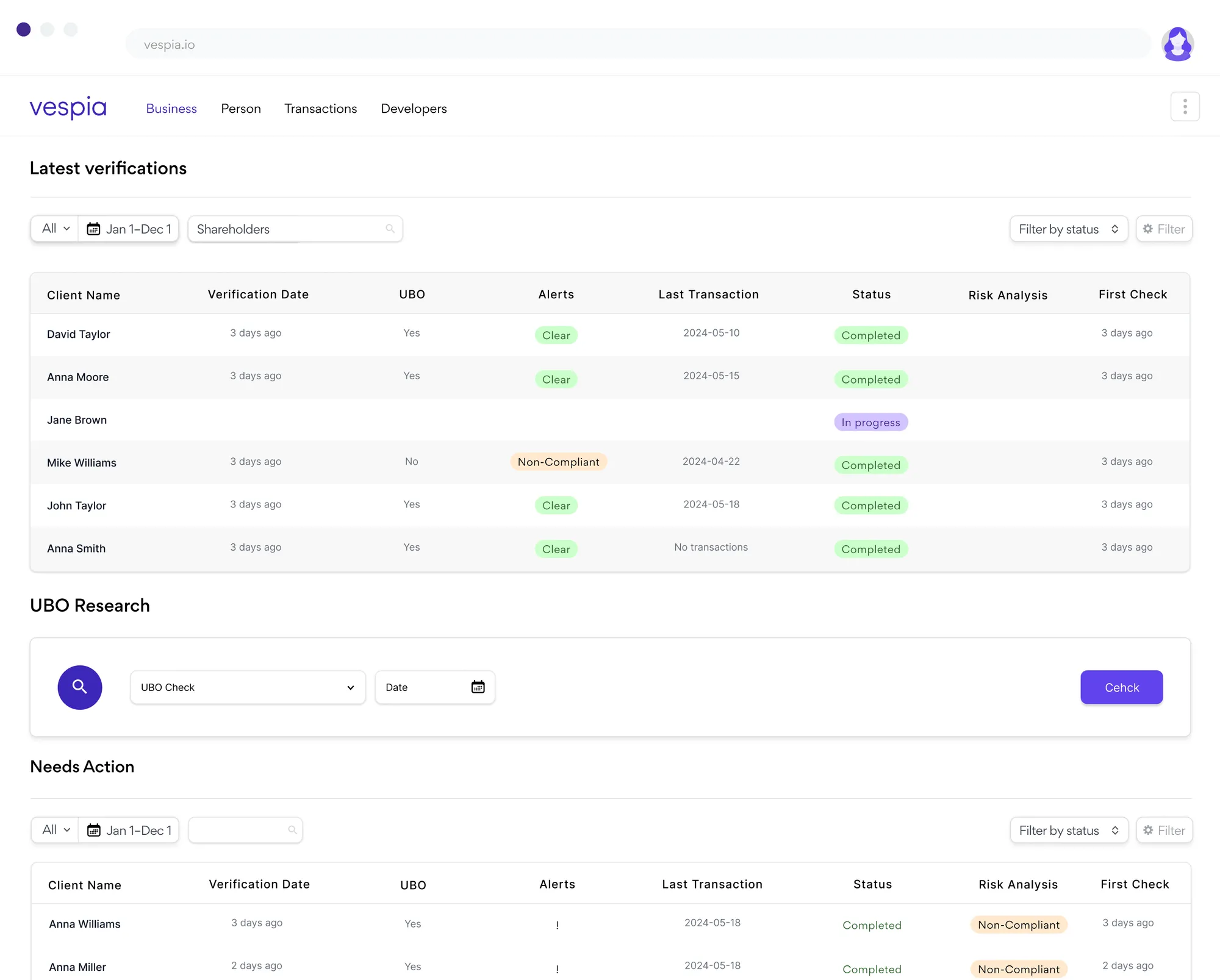
Vespia’s strong point is speed and jurisdictional breadth. The company claims business verification/UBO data from over 300 jurisdictions, fast AML compliance checks, and automated monitoring when things change. With speed and scale at its core, Vespia is great for fast-moving businesses.
Top features:
- Business verification across 300+ jurisdictions
- Automated UBO and ownership structure checks
- Real-time AML screening and risk scoring
- Continuous monitoring for ownership or shareholder changes
Strengths:
- Very fast onboarding
- Continuous monitoring
- Dashboard, API, and SDK integration
Considerations:
- For very tightly regulated sectors (banks, insurance), you may need heavier manual validation
- If data in a jurisdiction is weak or registries are not updated, coverage or accuracy may drop
6. Persona
Persona offers unified KYB/KYC flows. That means businesses and the people behind them can be verified together. They also provide fraud signals that use many data points, dynamic flows, and automation with human backup for special cases. Persona works well for companies wanting smooth workflows and fraud prevention.
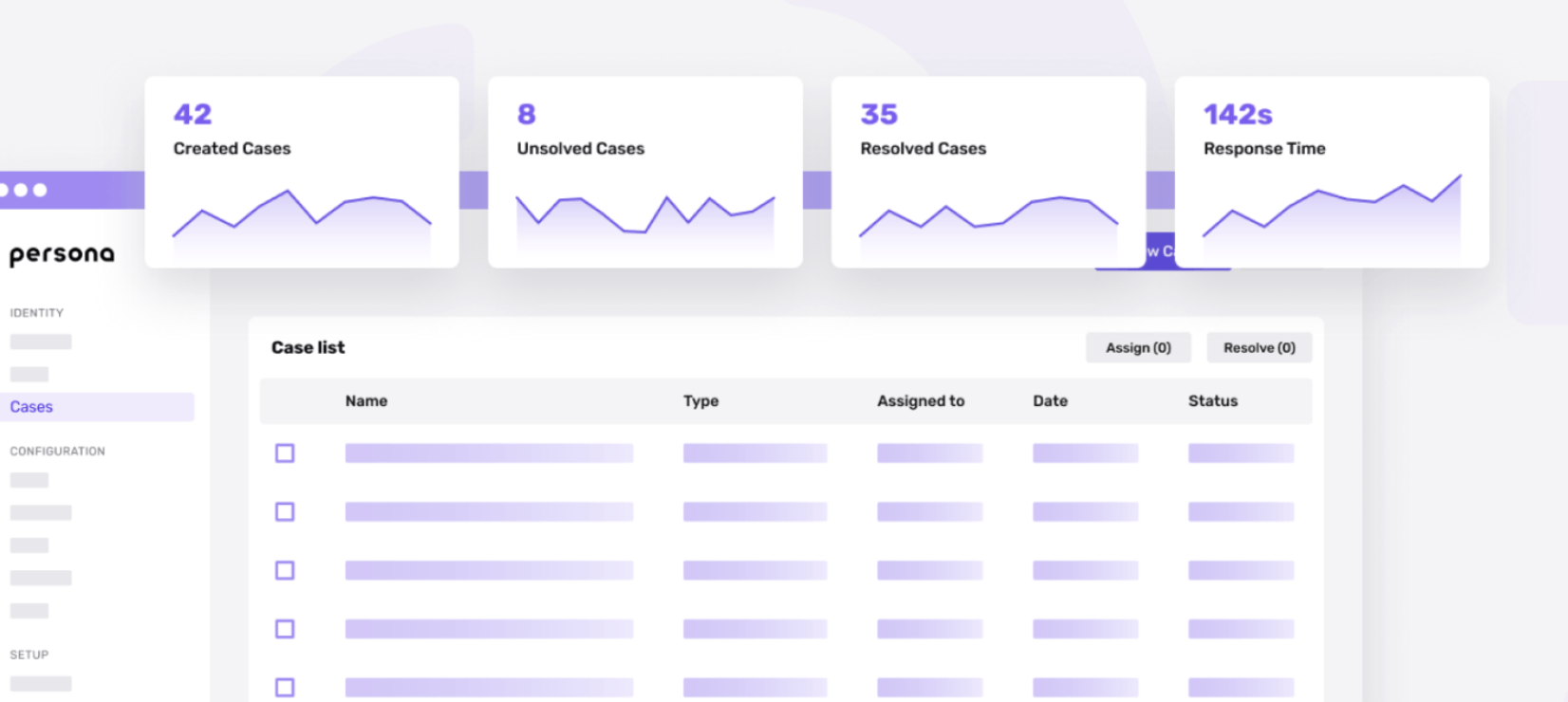
Top features:
- Unified KYC and KYB verification flows for businesses and individuals
- Dynamic onboarding workflows that adjust checks based on risk signals
- Fraud detection using device, behavioral, and network data
- Automated verification with optional human review for edge cases
Strengths:
- Good for minimizing friction for users
- Strong fraud prevention signals
- High customizability and good UI/UX
Considerations:
- Some features may vary by jurisdiction or depending on data sources
- More advanced fraud detection features come at a higher cost
7. Ondato
Ondato focuses on a hybrid verification and strong compliance posture, making it a good choice for regulated sectors. It offers biometric AI verification, document checks, sanctions/PEP/adverse media screening, and manual review when needed.
Ondato is ideal for compliance-heavy industries where strict checks are non-negotiable.

Top features:
- Biometric identity verification with active and passive liveness detection
- KYB workflows for company checks and ownership verification
- Sanctions, PEP, and adverse media screening
- Manual review tools for high-risk or complex cases
Strengths:
- Highly compliant
- Good for edge cases or high-risk jurisdictions
- Strong reputation in regulated markets
Considerations:
- More manual work means possibly slower turnaround in some cases
- Price for premium verification flows is higher
8. Veriff
Veriff is known for robust automation, a large document library, quick workflows, and global coverage. It supports many languages and document types while operating across jurisdictions. Veriff’s automation and global reach are strong, making it a solid choice for larger fintechs.
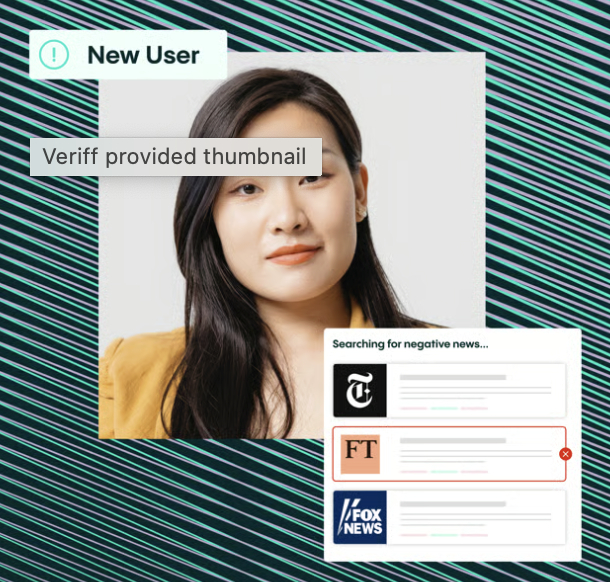
Top features:
- Automated identity verification with high approval rates
- Fast onboarding workflows designed for digital platforms
Strengths:
- Large document/country/language support
- Strong fraud/identity verification features, including device and network signals
Considerations:
- Some users report that support or UI/UX in edge cases could be better
- Deep ownership/registry data might vary by country
How to Choose the Best KYB Software for Your Business
The right KYB provider for your company should reduce risk, support growth, and help your team make faster, more confident decisions as your business expands.
Here’s what to look for to help you do that.
Depth of Global Coverage
You’ll want a provider that can verify businesses in the places where you do business (or plan to). If you plan to expand, verify that they support not just country registration but also ownership data, UBOs, etc.
Many verification platforms claim global coverage, but the real question is how deep that coverage goes. Basic registry checks might confirm that a company exists, but they often fail to reveal who actually controls it.
Look for:
- Direct connections to official company registries
- Clear beneficial ownership visibility
- Coverage in harder-to-verify jurisdictions
- Alternative verification when registry data is limited
- Automated mapping of complex ownership structures.
Unified KYC and KYB Infrastructure
Many providers treat KYC and KYB as separate modules. That often creates fragmented workflows and disconnected risk scoring. A better approach links businesses and individuals together so compliance teams can assess the full business relationship in context.
Look for a shared risk engine across entities, linked relationships between companies, directors, and UBOs, a single onboarding flow, and unified case management.
Risk Intelligence and Fraud Signal Depth
Verification alone doesn’t equal risk assessment. Confirming that a company exists doesn’t reveal whether it presents fraud, sanctions, or money-laundering risks.
Effective KYB platforms combine identity, business, and behavioral signals to produce a more accurate risk profile.
Risk intelligence features to look for include:
- Sanctions, PEP, and adverse media screening
- Device, IP, behavioral, and network signals
- Document authenticity checks
- Website and digital presence analysis
- AI-assisted risk classification that prioritizes alerts
Automation Without Losing Control
The longer your verification takes, the more drop-offs, delays, and costs. This is why you need strong automation.
However, while automation improves onboarding speed, full automation without oversight can introduce compliance risk. The best platforms automate low-risk cases while escalating higher-risk entities for review.
Here’s what this looks like in action:
- Risk-tiered onboarding workflows
- Conditional document requests based on geography or risk level
- Escalation triggers for high-risk cases
- Manual review tools with full context visibility
- Case management dashboards that centralize decision-making
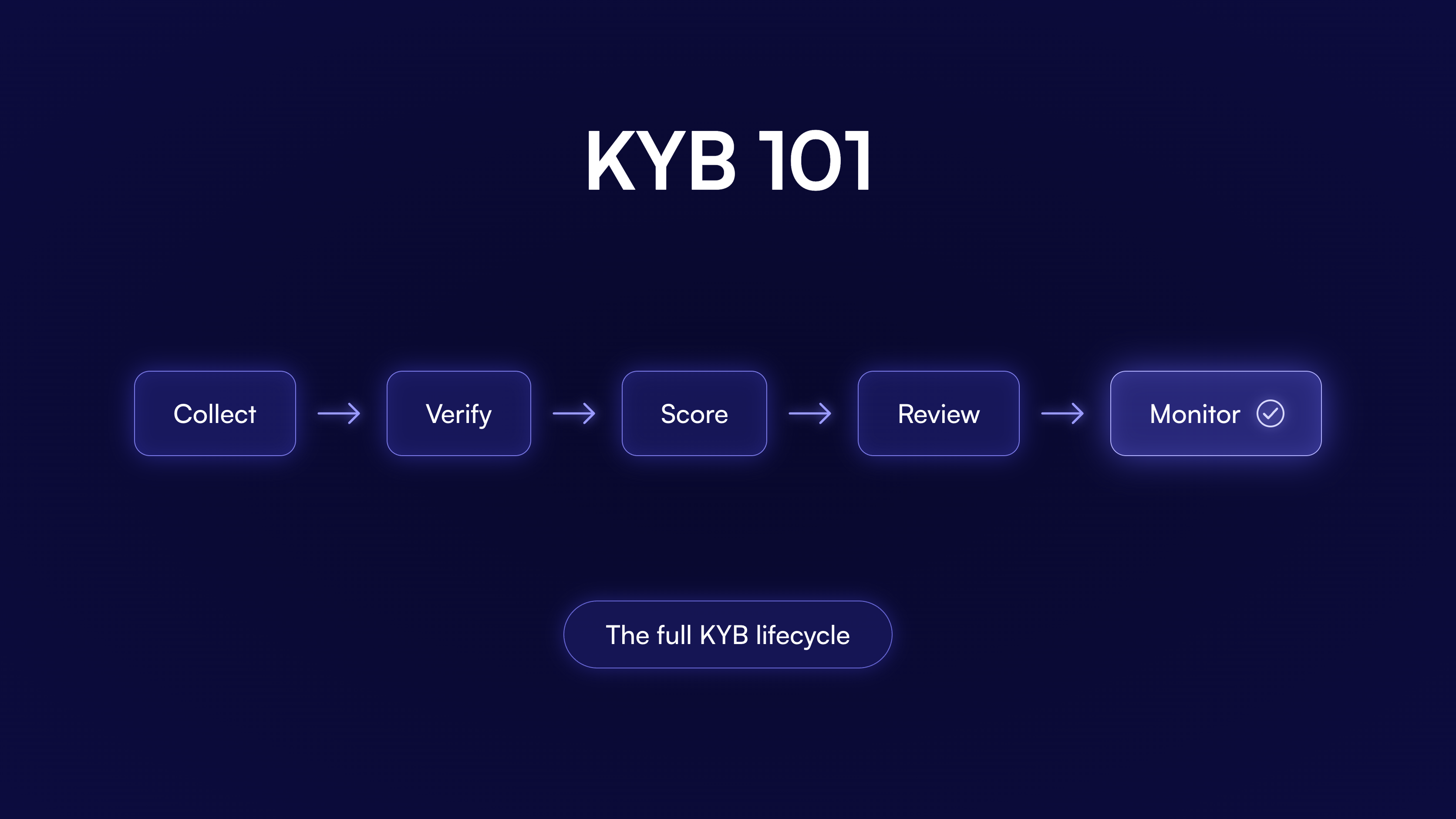
Ongoing Monitoring and Lifecycle Compliance
Business information can change — UBOs change, registries update, and sanctions lists get updated. That’s why compliance shouldn’t stop once a business is onboarded. A good KYB provider gives you continuous monitoring and alerts, so that risk profiles shift over time.
If monitoring is an expensive add-on rather than a core feature, that’s often a warning sign.
Instead, look for KYB solutions that include:
- Continuous sanctions and watchlist screening
- UBO and ownership change alerts
- Automated periodic refresh workflows
- Audit trails and regulator-ready logs
How AiPrise Delivers a Unified KYB Infrastructure Built for Scaling
As your onboarding volumes grow and your business expands across borders, fragmented compliance tools quickly become a bottleneck. AiPrise addresses this with a unified KYC and KYB infrastructure that connects identity, business, and risk intelligence into a single platform.
Here’s what that looks like for your KYB workflow.
Unified Onboarding for Individuals and Businesses
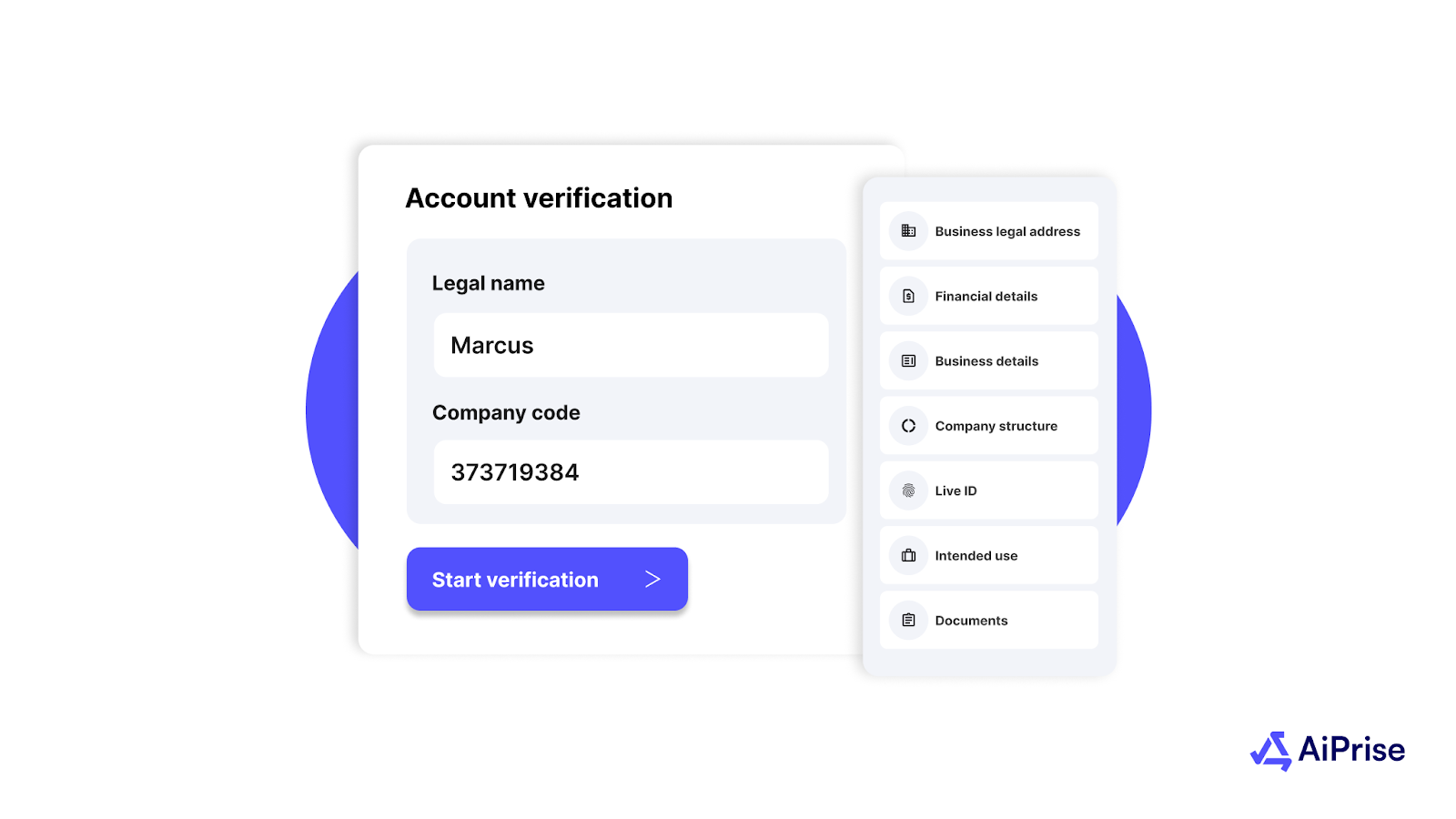
AiPrise brings identity verification and business verification into one connected workflow. Instead of running separate systems for individuals and companies, compliance teams can assess the full relationship between a business and the people behind it.
This reduces blind spots and speeds up onboarding while keeping full visibility across all entities involved.
AiPrise includes a unified API for KYC and KYB and automated mapping of company, director, and UBO relationships. It also offers shared risk scoring that creates one consolidated risk profile, with a single onboarding flow with centralized case management.
Deep Business Verification with Ownership Clarity
Many platforms confirm that a company exists, but they won’t show who actually controls it. Incomplete ownership data can expose organizations to shell companies, money laundering, and hidden control structures.
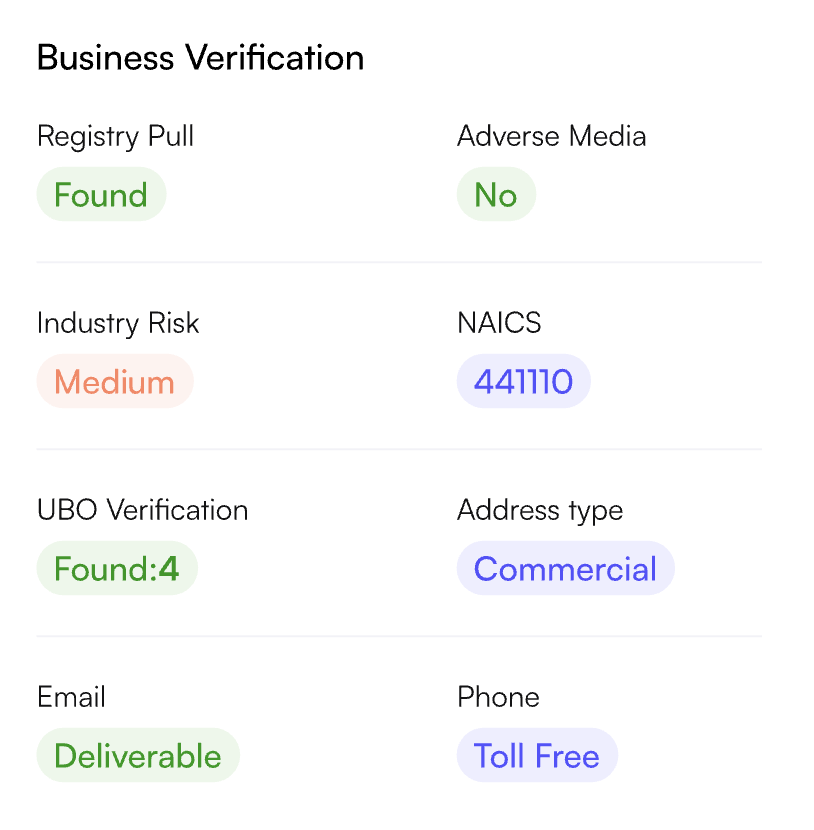
AiPrise helps reduce regulatory exposure by making beneficial ownership transparent and traceable. It delivers structured business verification that goes beyond simple registry checks.
Intelligent Risk Scoring Across the Entire Entity
It’s not enough to check whether a business is registered. You need to know who owns it, whether they are on sanctions lists, and whether documents are valid and up-to-date. Ownership connections, behavioral signals, and reputation indicators all shape the true risk profile of a business relationship.
AiPrise builds that context by applying risk intelligence across both the business and the people behind it. The platform runs sanctions, PEP, and adverse media screening, then combines identity, document, behavioral, and registry signals into a single AI-driven risk score.
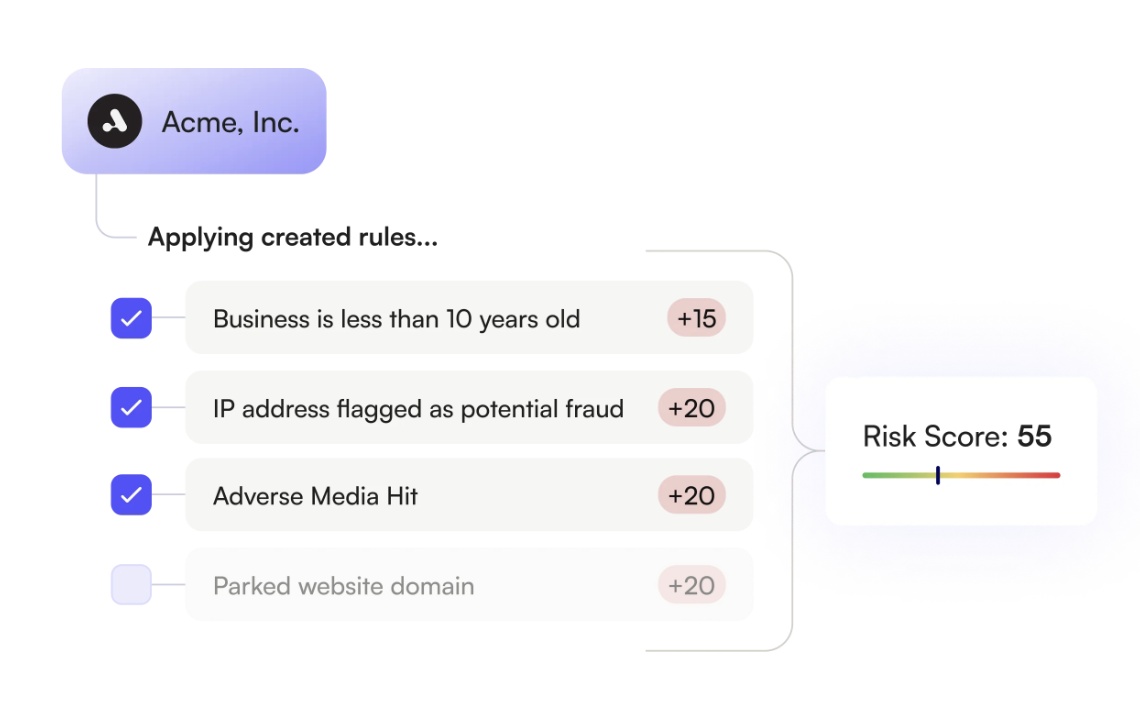
It also reviews a company’s website and online presence to detect suspicious digital footprints. Compliance teams can then apply configurable risk thresholds and approval logic that align with their risk appetite and regulatory obligations.
Structured Workflow Orchestration and Case Management
AiPrise lets you create risk-tiered onboarding workflows that balance automation with oversight.
Low-risk cases move through automatically, while higher-risk businesses are flagged for human review. Rules can be set by geography, industry, or risk level, and additional documents are only requested when needed.
You can track everything in one case management system, keeping decisions, documents, and notes organized for clear audit trails.
Continuous Compliance Beyond Onboarding
AiPrise supports lifecycle monitoring with continuous sanctions and watchlist screening, automatically re-checking approved customers when new data appears. The platform also provides UBO and ownership change alerts when control structures shift.
Scheduled refresh workflows re-check businesses when needed, while audit-ready reports and stored evidence keep a clear record of verification decisions for regulators and internal reviews.
Build Compliance That Grows With You
Growth doesn’t break compliance. It reveals where it was already thin.
If your business verification is shallow or disconnected from ownership and risk monitoring, exposure compounds as volume increases. The strongest KYB infrastructure links companies to their ultimate beneficial owners, applies shared risk intelligence, and scales without adding friction.
See how AiPrise delivers unified, scalable KYB in practice. Book a demo with AiPrise.
FAQs
What is a KYB solution?
A KYB solution is a tool or platform that helps you automatically verify the identity, ownership, and legitimacy of businesses you work with. Instead of manually checking documents or digging through registries, a KYB solution collects data from trusted sources, screens for risks like sanctions or fraud, and keeps monitoring for changes over time. This saves you effort while ensuring your business stays compliant and secure.
What does KYB stand for, and how is it different from KYC?
KYB means Know Your Business; it’s about verifying entities (companies, organizations), ownership structure, registration, etc. KYC (Know Your Customer) is about verifying individuals. Both are important, but focus on different subjects.
Which industries most need strong KYB?
Fintech, payments, banking, crypto, marketplaces, supply chain, B2B platforms. Essentially, anywhere you are trusting or making financial commitments to other businesses.
Can I have different levels of KYB depending on risk or geography?
Yes. Most strong providers (including AiPrise) allow you to customize verification flows: more documents or checks in high-risk countries or industries; lighter flow in low-risk cases. That helps balance cost vs assurance.
You might want to read these...





AiPrise
KYB Compliance: 2026 Regulations You Should Know About
As organizations expand globally and face tighter regulations, adherence to Know Your Business (KYB) standards has become one of the most critical compliance layers for fintech, online marketplaces, and other companies that need to verify business customers before letting them perform financial transactions.










.png)

.jpg)


















.png)








.png)
.png)
.png)












.png)

.png)




AiPrise’s data coverage and AI agents were the deciding factors for us. They’ve made our onboarding 80% faster. It is also a very intuitive platform.

Head of Operations



See your full compliance picture in one place
Use AI agents and global data to review businesses and users faster and more accurately
