


AiPrise
11 read time
January 20, 2026
Top 7 Compliance Tools For Online Marketplaces In 2026 With Automation
.png)
Key Takeaways

Compliance rarely breaks overnight. It slips through delayed checks, manual reviews, and sellers you cannot fully see. For online marketplaces, that gap is expensive. Last year alone, synthetic identity fraud drained $6 billion from platforms. With 2026 bringing CPSC eFiling mandates and INFORM Act seller checks, non-compliance risks 4% revenue fines. You need automation that works. This blog breaks down the top 7 compliance tools for online marketplaces in 2026 with automation, helping you understand what matters, why it matters, and how to choose tools that protect growth without slowing operations.
Key Takeaways
- Compliance tools for online marketplaces in 2026 operate in real time, replacing periodic audits with continuous monitoring and automated enforcement.
- Seller onboarding alone is no longer sufficient; ongoing behaviour monitoring is critical to reduce evolving regulatory risk.
- Automation is essential to manage cross-border regulations without slowing transaction velocity or platform growth.
- Generic compliance platforms struggle with marketplace complexity, while purpose-built tools handle seller scale and dynamic risk.
- AiPrise stands out by combining identity verification, AML screening, and continuous compliance in a single marketplace-focused system.
What “Compliance Tools for Online Marketplaces” Really Mean in 2026
In 2026, compliance tools for online marketplaces are not just checklists or manual regulatory trackers. These compliance tools automate verification, monitoring, and reporting across your entire seller and buyer journey.
.png)
You get platforms that handle KYC/AML for sellers, product safety scans, and privacy consent at scale, tailored for high-volume, multi-party marketplaces like yours.
Compliance tools for online marketplaces in 2026 include:
Automated Regulatory Intelligence
These tools continuously monitor regulatory changes across regions and product categories relevant to your marketplace. They convert legal updates into actionable rules, helping you respond quickly without relying on manual legal reviews.
Real-Time Seller And Transaction Risk Detection
Compliance systems analyze seller activity and transaction data as it happens. This allows you to identify unusual patterns, flag high-risk behavior, and intervene before violations escalate into enforcement issues.
Continuous Compliance Monitoring
Instead of relying on periodic audits, compliance controls run continuously in the background. Evidence is automatically logged, making reporting and regulatory reviews faster and more reliable.
Integrated Identity And Verification Workflows
Identity checks are embedded directly into onboarding and ongoing seller management. Verification is automatically refreshed when risk levels change, closing gaps that often appear after onboarding.
Policy Enforcement And Rule Execution Engines
Compliance rules are translated into automated actions across the marketplace. This ensures policies are enforced consistently, without delays or manual intervention, even as the platform scales.
Also Read: How AI Powered Compliance is Revolutionizing Risk Management for Businesses
Once you understand what modern compliance tools do, the next question becomes clear: what specific problems are they actually solving for online marketplaces?
Key Compliance Challenges for Online Marketplaces
Online marketplaces face compliance risks that are structurally different from traditional businesses. You do not control every seller, product, or transaction directly, yet you remain accountable for what happens on the platform.
Here are the top marketplace-specific challenges in 2026:
1. Fragmented Seller Ecosystems
Online marketplaces scale quickly, but seller diversity creates uneven compliance risk. You manage many independent sellers, yet remain responsible for how they operate on your platform.
Key challenges include:
- Sellers spread across regions with different regulatory requirements.
- Mixed product categories with varying risk levels.
- Inconsistent compliance maturity across sellers.
Cross-Border Regulatory Complexity
Marketplaces often operate across multiple regions, each with distinct legal requirements. You may need to meet KYC, AML, tax, consumer protection, and data privacy obligations at the same time. Manual tracking slows response times and increases the risk of regulatory penalties.
High Transaction Velocity
Transactions happen in real time and at scale, leaving little room for delayed compliance checks. Risky activity must be identified and addressed instantly to prevent violations and financial exposure.
Limited Visibility Into Ongoing Seller Behavior
Many marketplaces focus on compliance at onboarding but lack continuous oversight. As seller behavior, inventory, or transaction patterns change, risk can increase without timely detection.
Audit And Evidence Readiness
Regulators expect clear, time-stamped proof of compliance actions. When data is spread across systems, gathering evidence after the fact becomes slow, inconsistent, and error-prone.
When compliance challenges become structural rather than occasional, the effectiveness of your tools depends on the features built into them.
Core Features to Look for in Compliance Tools
Not all compliance platforms are designed for marketplace complexity. In 2026, the right tools must move beyond basic checklists and support real-time, scalable enforcement across sellers, transactions, and regions.
.png)
These features turn manual chaos into seamless ops, real-time decisions, evidence trails, and scalable integrations.
1. Real-Time KYC/KYB Screening
You upload seller ID or business docs once, and the tool instantly pulls government databases, runs face scans, and checks sanction lists. It decides "approve" or "review" in seconds, blocking high-risk countries right at signup. Plugs straight into Stripe or Shopify, so sellers finish on their phone without leaving your platform.
2. Automated Evidence Collection
Instead of chasing emails for tax forms or safety certs, the tool grabs everything automatically from seller uploads, APIs, or linked storage. It organizes files into audit-ready folders, SOC2 control X gets this doc, GDPR request gets that log. No more manual sorting before inspector calls.
3. Risk Scoring & Alerts
The tool assigns every seller a simple score based on their behavior. Sudden listing spikes or weird payout patterns trigger instant holds. You set rules like "pause toy sellers without safety papers." Alerts hit Slack/email/cases with one-click actions, catching fraud before payouts clear.
4. Workflow Automation
Build approval flows visually, no coders needed. Tool pulls buyer data (CCPA-safe) and seller defense files automatically. Routes everything correctly without email chains or spreadsheet errors.
5. Multi-Framework Reporting
One dashboard pulls together all your compliance needs, GDPR checks in one spot, PCI rules next to it, and AML screening right there. Click export, and it spits out ready-to-send PDF reports organized exactly how auditors want them. Updates happen live as sellers join, so you spot gaps instantly and fix them before they become problems.
Now that you know what features matter most, let’s look at the leading compliance tools shaping marketplace compliance in 2026.
Top 7 Compliance Tools For Online Marketplaces in 2026
Here’s a concise yet detailed breakdown of the top tools. These tools automate seller vetting, fraud blocks, and audits for platforms handling thousands of vendors:
1. AiPrise
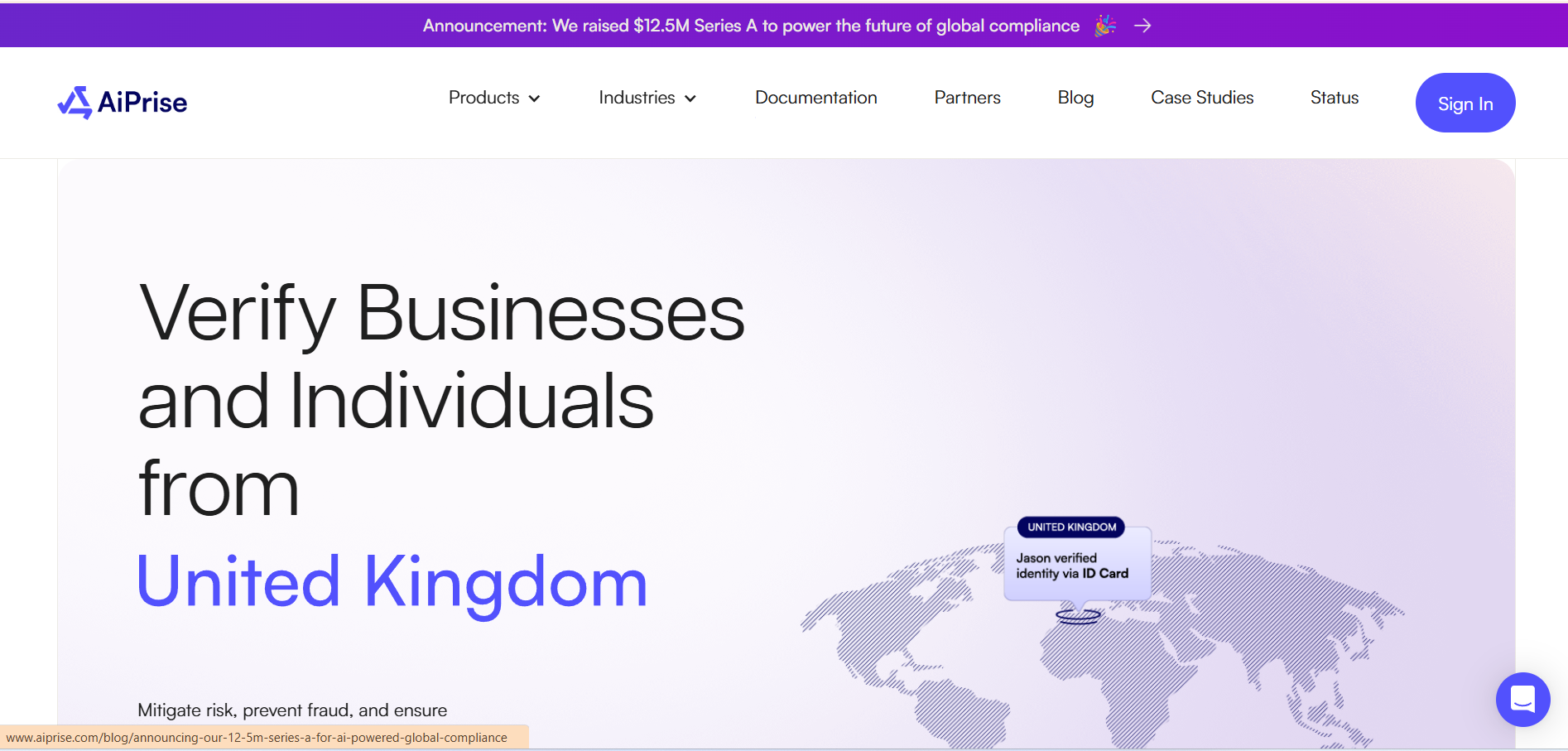
AiPrise is a global compliance and identity verification platform that streamlines KYC (Know Your Customer), KYB (Know Your Business), fraud detection, and ongoing risk monitoring from a single API across 200+ countries and data sources. It helps marketplaces and fintechs onboard users and businesses quickly while maintaining regulatory compliance at scale.
Core features for online marketplaces:
- Unified global verification: One API connects to 100+ identity and business data providers, eliminating the need to manage multiple vendors.
- AI-driven risk & fraud scoring: Combines biometric checks, device intelligence, email/phone insights, and fraud signals to identify risky profiles early.
- Dynamic AML & watchlist screening: Real-time sanctions, PEP, and adverse media checks help detect and block high-risk entities.
- Customisable workflows & case management: Tailor compliance flows by risk level and review cases with a consolidated audit trail on one dashboard.

Primary use case: AiPrise excels at automating marketplace onboarding, risk evaluation, and AML compliance so you can reduce manual reviews, improve onboarding times, and scale global operations with fewer compliance gaps.
G2 Ratings: 4.7
With these capabilities, AiPrise ensures your business remains secure and fully compliant.
Protect your marketplace with AiPrise today!
2. Drata
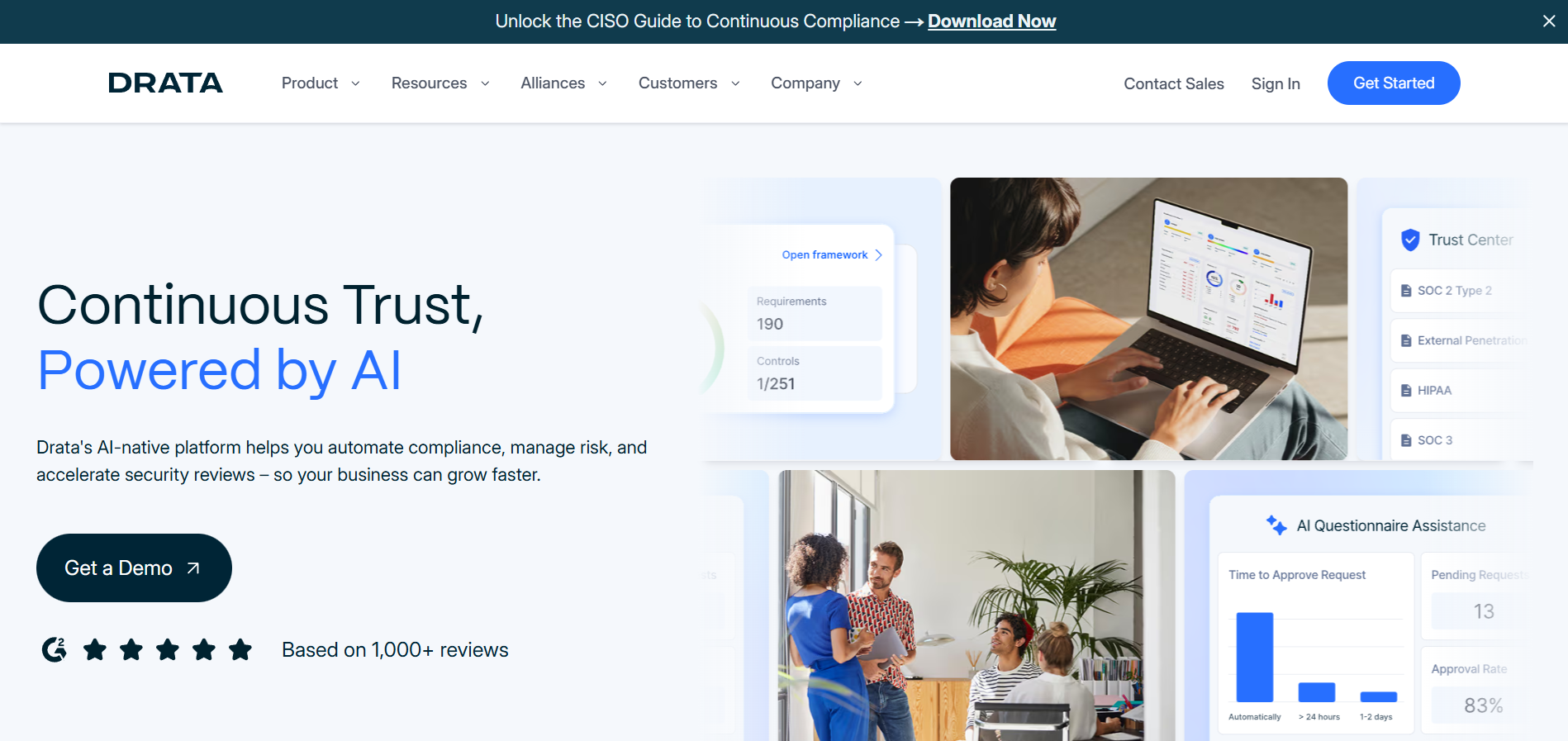
Drata is a continuous compliance automation platform that helps organisations automate evidence collection, monitor security controls, and stay audit-ready across multiple frameworks such as SOC 2, ISO 27001, GDPR, HIPAA, and PCI DSS, all from a single dashboard. It connects to hundreds of systems and reduces manual work by centralising compliance, risk, and governance workflows.
Core features for online marketplaces:
- Automated evidence collection: Automatically gathers evidence from integrated systems, eliminating manual uploads and fragmented tracking.
- Continuous control monitoring: Tests controls in real time and flags drift or issues before they become audit problems.
- Pre-mapped frameworks: Supports 20+ compliance standards with reusable controls to simplify cross-framework management.
- Real-time compliance visibility: Dashboards show ongoing compliance posture, alignment across teams, and audit readiness.
Primary use case: Drata serves platforms that need continuous, multi-framework compliance automation, helping you reduce preparatory workload, centralise risk, and support audit evidence needs without manual overhead.
G2 Ratings: 4.8
3. Vanta
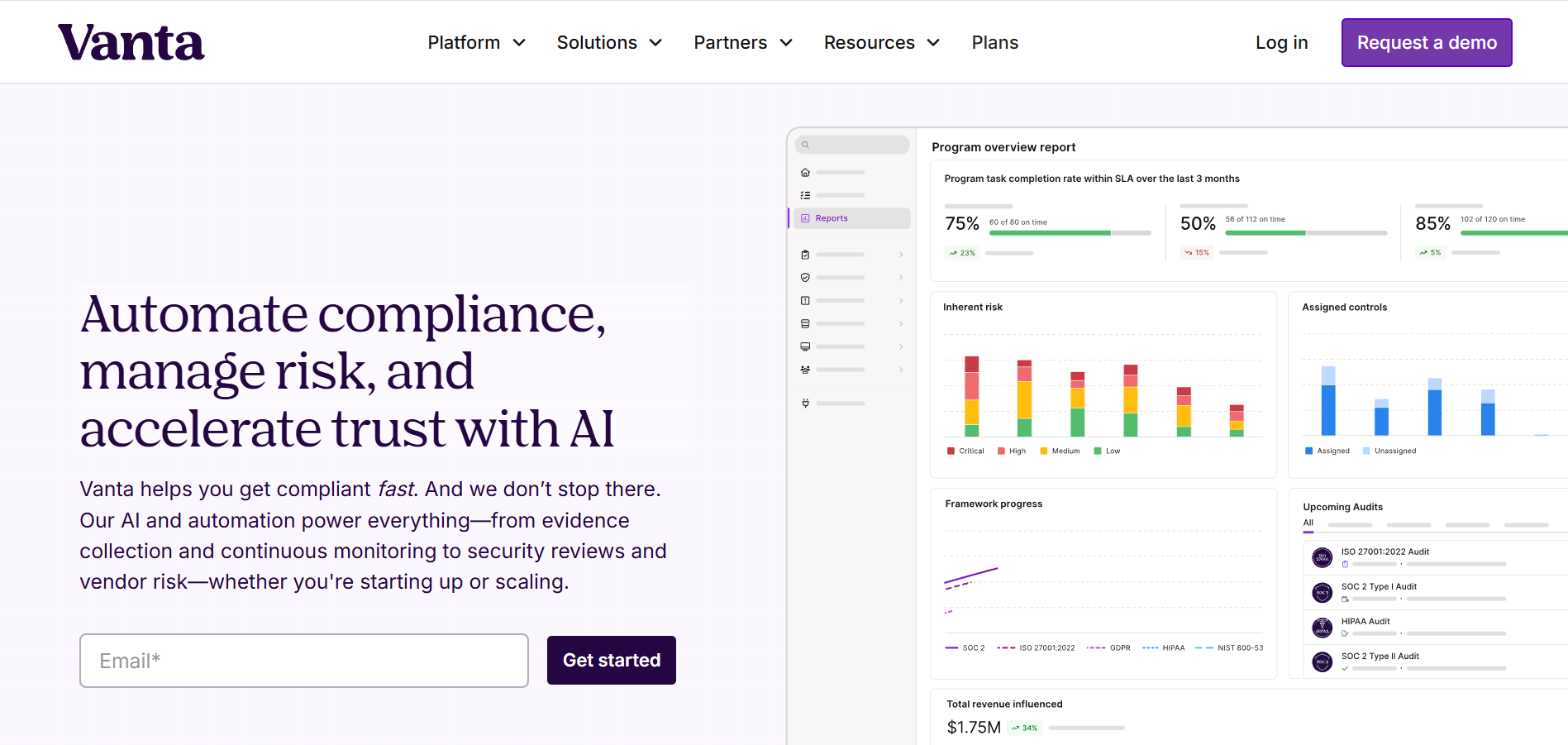
Vanta is a compliance automation platform that helps organisations continuously monitor security controls, collect audit evidence, and maintain compliance across frameworks such as SOC 2, ISO 27001, HIPAA, and GDPR. It integrates with cloud providers, identity systems, and infrastructure tools to give real-time visibility into compliance posture.
Core features for online marketplaces:
- Automated evidence collection: Pulls control results from connected systems to build audit-ready evidence.
- Continuous risk monitoring: Tracks system changes and control status in real time to surface risks early.
- Policy templates and remediation guidance: Provides pre-built compliance templates and actionable steps for gaps.
- Integration ecosystem: Connects with platforms like AWS, GCP, Azure, Okta, GitHub, and others to centralise compliance data.
Primary use case: Marketplaces with complex tech stacks looking to simplify compliance operations, maintain ongoing evidence collection, and reduce manual auditing work.
G2 Ratings: 4.6
4. Sprinto
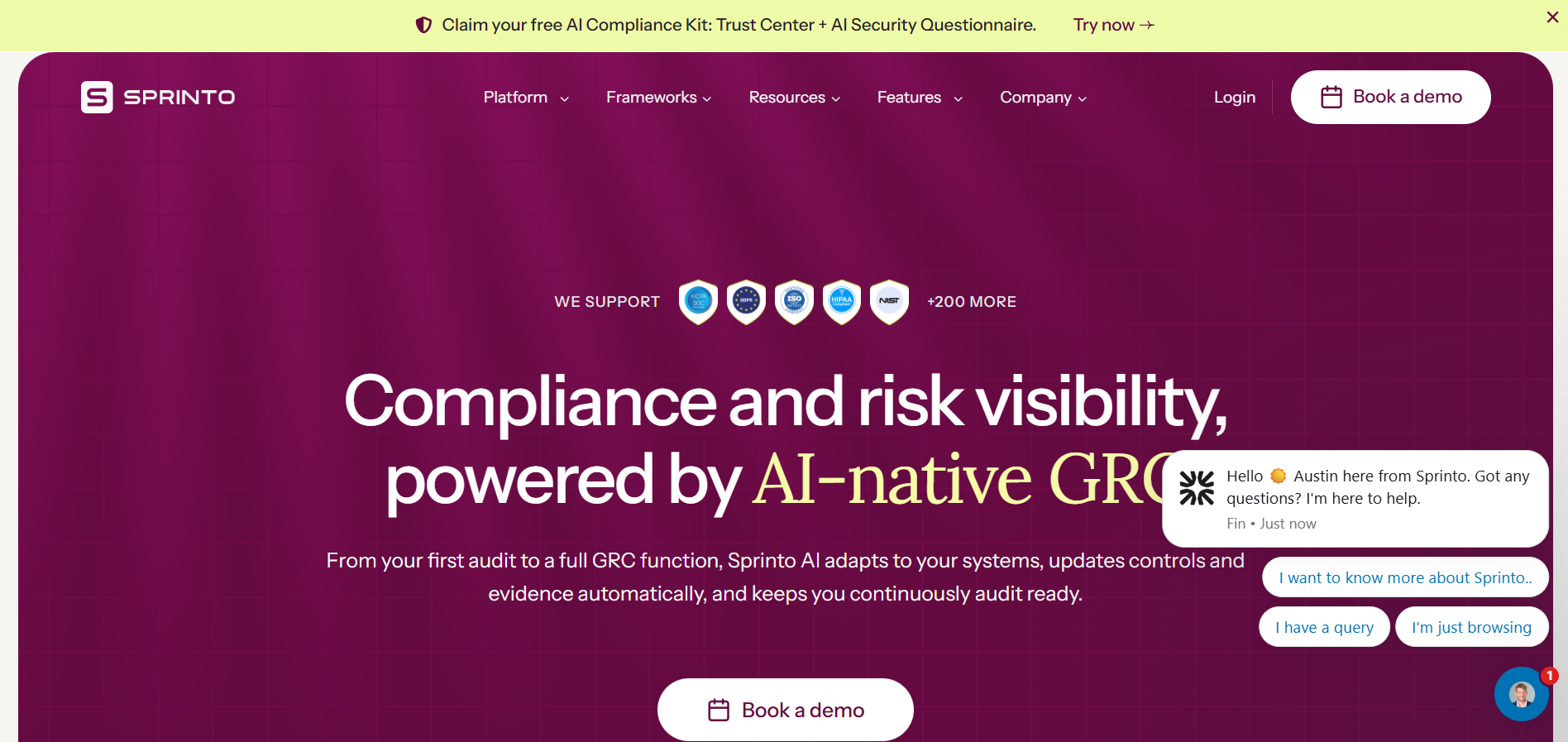
Sprinto is an automated compliance platform built to help companies manage cybersecurity frameworks such as SOC 2, ISO 27001, and GDPR. It centralises evidence collection, control monitoring, and audit preparation while reducing manual effort through automation.
Core features for online marketplaces:
- Automated compliance reminders & dashboards: Provides a central view of compliance progress and upcoming tasks.
- Evidence collection and framework mapping: Gathers control evidence automatically and maps it to frameworks to support audits.
- Multi-standard support: Handles simultaneous compliance standards without siloed processes.
- Task assignment & collaboration: Helps teams coordinate compliance tasks with built-in roles and workflows.
Primary use case: Teams that prioritise automated audit readiness and ongoing compliance tracking across multiple frameworks while reducing internal coordination overhead.
G2 Ratings: 4.8
5. OneTrust (formerly Tugboat Logic)
OneTrust is a comprehensive privacy, security, and compliance platform that helps organisations manage regulatory requirements, automate controls, and govern data responsibly across multiple frameworks. It is widely used by enterprises handling complex privacy and security obligations across regions.
Core features for online marketplaces:
- InfoSec policy generation and control automation: Builds and manages security policies aligned with regulatory frameworks.
- Continuous privacy and security monitoring: Tracks control performance and compliance posture across systems.
- Extensive regulatory content library: Covers global privacy, security, and governance regulations in one platform.
Primary use case: Marketplaces operating under complex privacy laws and multi-framework compliance requirements, especially across jurisdictions.
G2 Ratings: 4.4
6. Hyperproof
Hyperproof is an enterprise-grade governance, risk, and compliance (GRC) platform focused on automating compliance workflows, managing risk, and maintaining audit-ready evidence across teams and departments.
Core features for online marketplaces:
- Workflow automation: Streamlines risk assessments, compliance reviews, and approval processes.
- Centralised evidence repository: Stores all compliance evidence in one system with clear ownership and traceability.
- Framework mapping with risk prioritisation: Links controls to multiple frameworks while highlighting high-risk areas.
Primary use case: Larger marketplaces that require cross-team governance, structured workflows, and strong audit traceability.
G2 Ratings: 4.5
7. Secureframe
Secureframe is a compliance automation platform that helps organisations achieve and maintain compliance through automated monitoring, control mapping, and integrations with cloud and security systems. It is designed for fast implementation and reduced manual effort.
Core features for online marketplaces:
- Continuous compliance monitoring: Tracks control status in real time with alerts for issues or gaps.
- Automated control mapping and reporting: Aligns evidence to frameworks and generates audit-ready reports.
- Broad system integrations: Connects with over 100 cloud, infrastructure, and security tools.
Primary use case: Organisations seeking a quick compliance setup and broad framework coverage without heavy internal resources.
G2 Ratings: 4.7
Also Read: Defining Marketplace Risk And How To Prevent It
With each tool offering different strengths, the real clarity comes from seeing how they compare where it matters most for online marketplaces.
Compliance Tools Compared: What Actually Matters for Marketplaces in 2026
Choosing a compliance tool is not about who supports the most frameworks. It is about how well the platform handles marketplace-specific risk, automation depth, and ongoing enforcement at scale. The table below compares the seven tools across the criteria that directly impact online marketplace operations.
When you step back from feature checklists and look at how compliance actually works inside a live marketplace, one difference becomes clear.
How AiPrise Outperforms Generic Compliance Tools for Online Marketplaces
Most compliance tools are designed to help you pass audits. AiPrise is designed to help you run a marketplace safely every day. It focuses on seller onboarding, transaction risk, and ongoing monitoring areas where generic compliance platforms fall short.
What sets AiPrise apart in practice:
- Marketplace KYC and KYB verification: Verify sellers and businesses at onboarding using AI-based identity checks, business registry validation, and ownership verification at scale.
- Continuous AML and sanctions screening: Screen sellers against global sanctions, PEPs, and watchlists, with automatic re-screening when profiles or risk factors change.
- Real-time seller risk scoring: Continuously update seller risk scores using behaviour, geography, transaction velocity, and product category signals.
- Automated regulatory updates: Monitor regulatory changes across regions and trigger compliance workflow updates and alerts automatically.
- Case management and investigations: Centralise alerts, reviews, and decisions with complete audit trails for regulatory reporting.
- Audit-ready reporting: Generate time-stamped compliance evidence and reports continuously, reducing audit preparation effort.
- API-first integration: Embed compliance directly into onboarding, listings, and payment flows using flexible APIs.
If your marketplace relies on third-party sellers and cross-border transactions, it may be time to rethink how compliance fits into your operations.
Explore how AiPrise and its compliance co-pilot support real-time marketplace compliance and request a custom walkthrough.
Final Thoughts
Compliance for online marketplaces in 2026 is no longer a back-office function. It directly affects seller trust, platform scalability, and regulatory resilience. As regulations grow more dynamic and enforcement becomes real-time, relying on manual checks or fragmented tools increases both cost and risk.
The right compliance platform helps you move faster without compromising control. AiPrise is built specifically for marketplace environments, combining automated verification, continuous monitoring, and audit-ready reporting in one system.
If you are evaluating compliance tools for online marketplaces, focus on solutions that adapt as your platform grows.
Book a Demo with AiPrise to see how marketplace compliance can be automated end-to-end.
FAQs
1. How do compliance tools handle high-risk product categories in marketplaces?
Advanced compliance tools apply category-level risk rules to flag restricted or regulated products. You receive real-time alerts when listings violate regional laws or platform policies.
2. Can compliance tools scale with sudden marketplace growth or seasonal spikes?
Modern platforms are built on automated workflows that adjust to transaction volume. This allows you to maintain consistent compliance even during rapid seller or order growth.
3. Do compliance tools support multi-entity or multi-brand marketplaces?
Yes, leading tools allow you to manage compliance separately for each entity, brand, or region. Controls and reporting can be customised without duplicating processes.
4. How long does it take to deploy a compliance tool for an online marketplace?
Deployment timelines vary, but API-first tools can be integrated within days. Full automation typically depends on data sources, seller volume, and regulatory scope.
5. What role does AI play in marketplace compliance tools in 2026?
AI helps identify hidden risk patterns, reduce false positives, and prioritise high-impact alerts. This enables faster decisions without increasing compliance overhead.
You might want to read these...









AiPrise’s data coverage and AI agents were the deciding factors for us. They’ve made our onboarding 80% faster. It is also a very intuitive platform.

Head of Operations



Speed Up Your Compliance by 10x
Automate your compliance processes with AiPrise and focus on growing your business.


