Trusted by 200+ compliance teams












Every check passes, and the customer is still a fraud
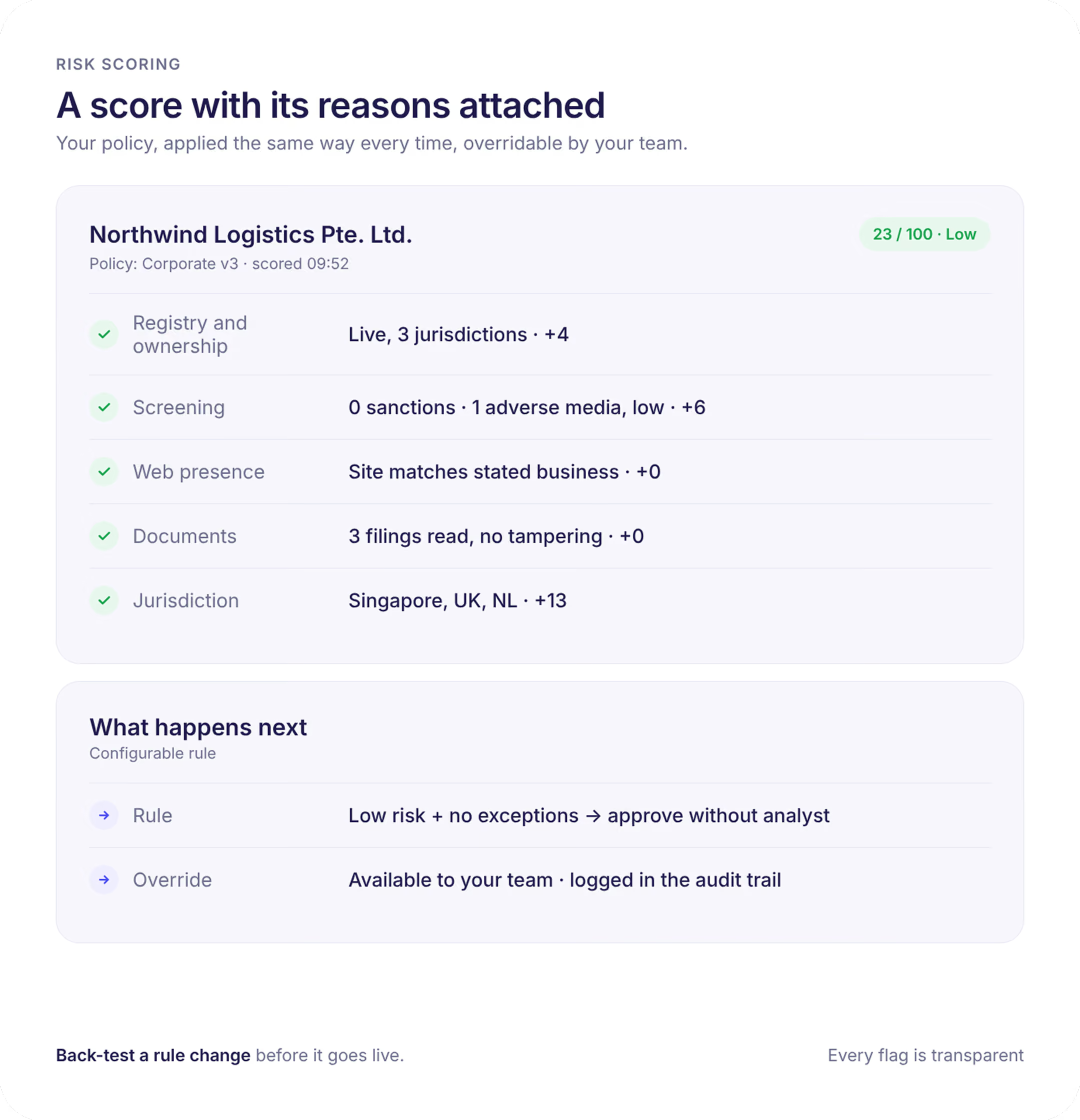
AiPrise combines every signal it already collects during verification into one transparent score, using rules you can read, change, and defend.

Pass or fail hides the signal
Pass or fail hides the signal
Individual checks return pass or fail. Risk lives in the combination: a real ID on a device that has onboarded twelve other accounts.
Reviews outpace the team
Reviews outpace the team
Teams review far more customers than they need to because they have no consistent way to rank them.
Black-box scores can't be defended
Black-box scores can't be defended
Scores from a black-box vendor cannot be explained to a regulator or tuned when fraud patterns shift.
What goes intohe score
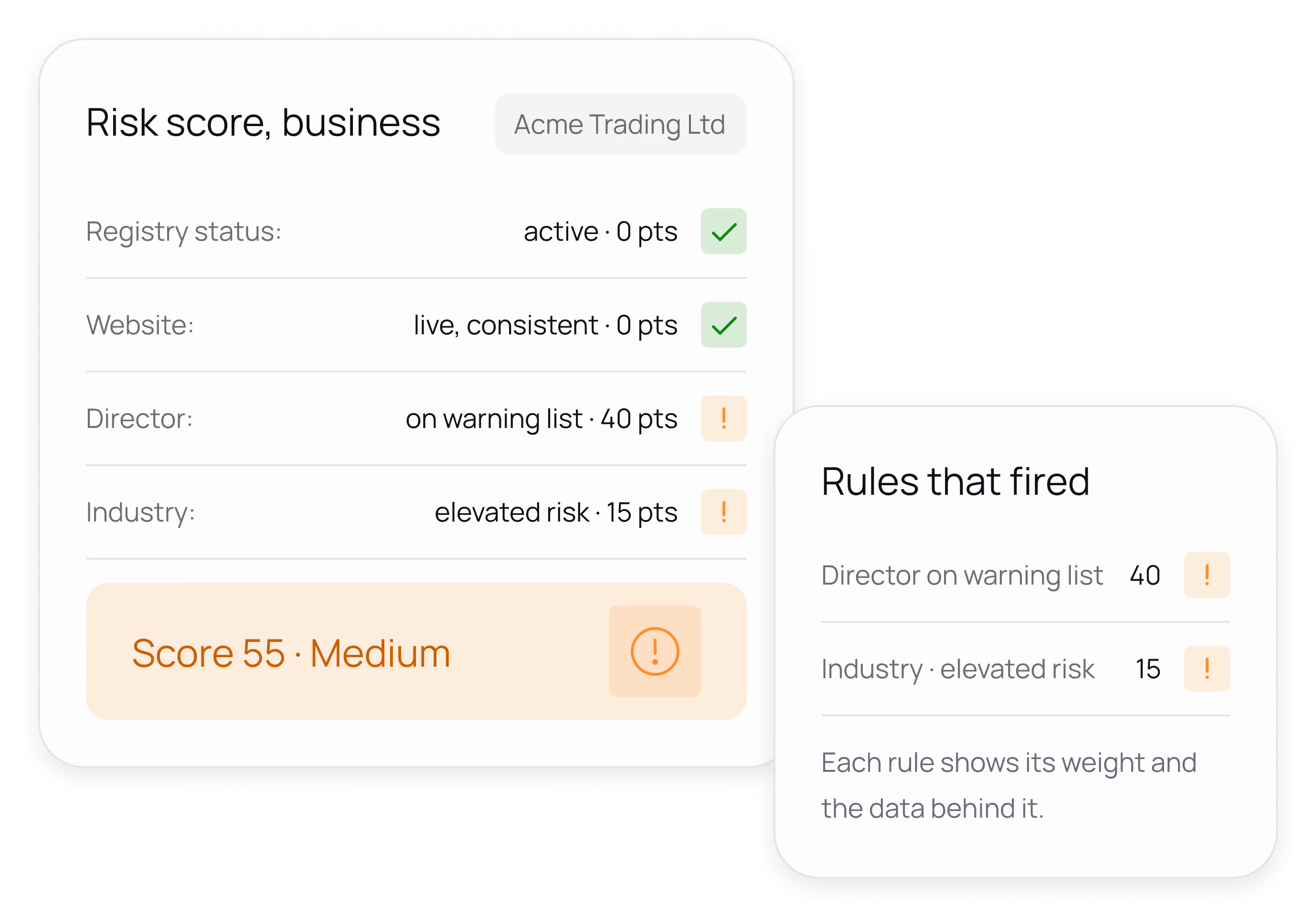
The same engine scores a person and a company. For a business, the score also draws on registry data, website findings from the Website Agent, industry category, and the scores of its directors and UBOs.
Verification results
Verification results
ID, liveness, proof of address, government checks, business registration, UBO verification, and document integrity findings.
Email and phone insights
Email and phone insights
Email age, deliverability, social presence, phone activity and carrier type, and whether the email or phone owner matches the applicant.
IP and device insights
IP and device insights
Location versus stated address, VPN and proxy use, bot detection, and devices seen on other applications.
Screening and network
Screening and network
Sanctions, PEP, and adverse media hits, plus Sherlock's links between sessions by face, ID, device, and network.
How it works
After onboarding, the score is recalculated when something material changes, and a change in tier raises an alert.
Collect
Signals are gathered automatically as the customer moves through onboarding. No extra API calls or vendor integrations to wire up.
Score
AiPrise resolves the IP, inspects the device, matches the fingerprint against previous sessions, and compares location against the address and ID the applicant provided.
Act
Workflows use the tier to approve, step up verification, or route to Case Management. Reviewers see the score, every rule that fired, and the data behind each one.
Your risk appetite, in rules you can read
Rule-ready
Rule-ready
Start with pre-built rules covering common fraud and compliance scenarios, then switch them on, off, or reweight them.
Custom rules
Custom rules
Write your own conditions on any signal AiPrise collects, per market, product, or customer segment, without code.
Explainable scores
Explainable scores
Every score shows the rules that fired, their weights, and the underlying data. Nothing is hidden inside a model.
Test before you ship
Test before you ship
Back-test a rule change against past applications to see how many decisions would move before it goes live.
One scorefor every market
Payments
Rank merchants by risk at signup so underwriting time goes where it matters.
Neobanks
Approve low-risk applicants instantly and step up verification only for the rest.
Financial institutions
Apply one risk-rating methodology across jurisdictions with a defensible audit trail.
Stablecoins and crypto
Catch synthetic identities and repeat actors before the first deposit.
Lending
Flag identity and application fraud before disbursement, separate from credit decisioning.
Marketplaces
Spot seller accounts linked by device or identity to previously banned sellers.

Live in days,not quarters
Built into verification
Signals are collected during KYC and KYB. Turn scoring on and the score appears on every profile.
API
Read the score, tier, and fired rules on any verification result, or receive them by webhook when they change.
Dashboard
Edit rules and weights, review score distributions, and see which rules drive the most reviews.