

Chaitanya Sarda
6 min read
August 20, 2026
I Did KYB 27 Times Before My KYB Company Turned One
Key Takeaways

I run a business verification company. AiPrise helps platforms verify the businesses that sign up for them, a process the compliance world calls KYB, or Know Your Business.
So you'd think I would have seen it coming. But when I formed AiPrise, what surprised me wasn't that we had to prove we were a real company. It was how many times we had to prove it. Every new bank, vendor, platform, and customer asked for the same things: articles of incorporation, EIN letter, proof of address, and the perennial favorite, "please list every individual who owns 25% or more of the company."
By month three I could recite our formation details from memory. By month six I had a folder on my desktop just for verification documents, and I'd stopped being annoyed and started being curious. So I went back and counted.
The answer was 27. In our first six months, AiPrise, a company that does business verification for a living, was itself verified 27 times.
Key Highlights
- A typical US startup goes through some form of business verification 25 to 30 times in its first six months, usually without ever calling it KYB.
- The checks are invisible because they're fragmented across formation, banking, insurance, platforms, and customers. No single one feels like "verification." Together they're a part-time job.
- Founders submit the same documents and answer the same ownership questions over and over, because verification results don't travel with the business.
- The fix isn't fewer checks. Fraud is real and the checks exist for good reasons. The fix is verification that's fast, accurate, and reusable.
The Receipts: Everywhere Your Startup Gets Verified
Here's the count, and I'd bet most founders reading this did nearly all of these without ever thinking "I'm going through KYB right now."
Formation and Government
You get verified before you've written a line of code:
- Incorporation itself, whether through Stripe Atlas, Clerky, or a registered agent who verifies you first
- The EIN application with the IRS
- Foreign qualification in California, because of course you incorporated in Delaware but you actually operate somewhere else
- City and county business license registration, like San Francisco's business registration
- State payroll and unemployment tax registrations, one per state where you hire
- A DUNS number from Dun & Bradstreet, which you don't think you need until three other verifications demand it
Money and Insurance
Anyone who touches your money verifies you first:
- Your first business bank account
- Business insurance: general liability, D&O, cyber, workers' comp, each a separate underwriting review of your entity
- Carta, or whichever cap table platform you use
- Your 401(k) provider
- Health insurance and benefits carrier enrollment
- The second bank account you open for redundancy, and the corporate card that comes with its own review
- Wise or other international payment rails
- And the one nobody expects: your own investors. During fundraising, the fund's back office runs KYB and AML checks on your entity before they can wire the money you just spent months raising
Platforms and Vendors
This is where the horror stories live:
- Twilio's A2P 10DLC business verification, required before your app can send a text message, and notorious among founders for opaque rejections
- The Apple Developer Program and Google Play, both of which require a DUNS number and full entity verification before you can ship
- Meta Business Manager verification, without which you cannot run ads
- LinkedIn Ads account verification
- Google Business Profile verification
- Email sending verification with SendGrid or Postmark, which check your domain and your entity before your welcome emails go anywhere
- Deel or Remote, if you hired international contractors
Your Own Customers
The checks don't stop when you start selling. They multiply:
- Every enterprise customer's procurement and vendor onboarding: W-9s, banking verification, sometimes a certificate of good standing pulled fresh from Delaware
- Certificate of insurance requests from landlords and customers, each one a mini-verification of your coverage and your entity
Add it up and a typical early-stage US startup clears 25 to 30 distinct verifications in its first six months. Ours came to 27. That's roughly one per week, during the exact stretch of a company's life when every founder-hour matters most.
Why the Painful Ones Are Painful
Most of the 27 were fine. Annoying, duplicative, but fine. A form, a document upload, a day or two of waiting.
Three of them were not fine, and if you ask any group of founders for their verification horror story, the same names come up: Twilio's 10DLC registration, app store entity verification, and Meta Business Manager.
They share a common shape. The process is opaque, so you don't know what the reviewer is actually checking. There's no human to call when something goes wrong. Rejections arrive without explanation, so you fix things by guessing. And the review takes weeks, not days.
What makes that combination brutal is what's on the other side of the gate. Twilio verification blocks your product from sending texts. App store verification blocks your launch. Meta verification blocks your ads. These aren't back-office formalities; each one is a revenue-critical capability held hostage by a review you can't see into and can't speed up. We passed all three eventually. I still couldn't tell you what we changed that made the difference.
Same Company, Same Documents, 27 Different Answers
Here's the part that turned my annoyance into a company thesis.
Nothing about AiPrise changed between verification #1 and verification #27. Same Delaware entity. Same EIN. Same founders, same ownership table, same address. Yet all 27 verifiers started from zero, as if the previous 26 had never happened.
I want to be clear about what the problem is not. The problem is not that verification exists. Business identity fraud is real and growing, and every platform that skips KYB eventually learns why it shouldn't. Each individual check on my list exists for a defensible reason.
The problem is that verification doesn't travel. An individual's creditworthiness follows them around as a credit score. A business's verified identity follows it nowhere. Every bank, insurer, platform, and procurement team rebuilds the same picture from the same documents, at their own expense and yours. Multiply that waste across every company formed this year and it's staggering, and completely hidden, because no single check is painful enough to make anyone fix it.
What This Should Look Like Instead
A business should be verified thoroughly once, and then that verification should be fast everywhere else. The tenth platform to onboard a company shouldn't take longer than the first. Founders shouldn't dread onboarding, and the platforms running these checks shouldn't have to choose between rigorous compliance and a signup flow that doesn't leak customers.
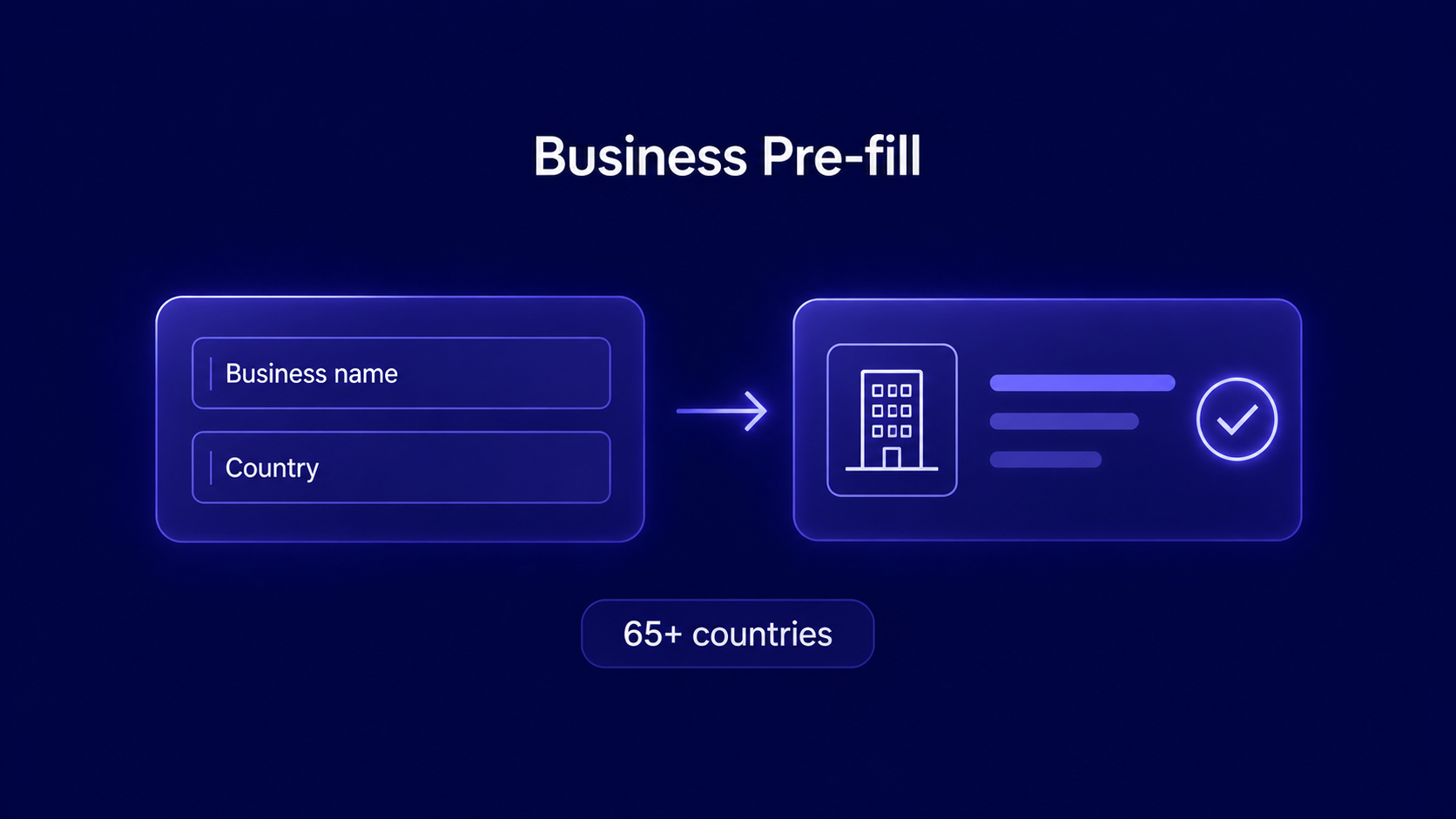
That's the product we ended up building at AiPrise, verifying businesses across 100+ countries for the platforms they sign up for, and it started with that folder of documents on my desktop. If your company puts businesses through onboarding and you suspect your verification step is quietly costing you customers, we should talk. Book a demo today.
FAQs on Business Verification
What is KYB and why does every platform do it?
KYB (Know Your Business) is the process of verifying that a business is legitimate: confirming its registration, its ownership, and that it isn't sanctioned or fraudulent. Regulated companies like banks are legally required to do it, and many other platforms run KYB to protect themselves from fraud and platform abuse.
Why do businesses have to verify repeatedly instead of just once?
Each verifier carries its own regulatory obligations and risk exposure, and there's no shared infrastructure for passing a verification result from one institution to another. So every bank, insurer, and platform runs its own check from scratch, even when the business was verified elsewhere last week.
How long does business verification usually take?
It ranges from minutes to weeks. Automated checks against government registries can clear in seconds. Manual reviews, like Twilio's A2P 10DLC registration or app store entity verification, routinely take days to weeks, especially if a submission is rejected and resubmitted.
How can platforms make KYB faster for their customers?
Automate the checks against primary sources like government registries instead of asking businesses to upload documents, verify globally through a single provider rather than stitching together per-country vendors, and reserve manual review for genuinely risky cases instead of applying it to everyone.
You might want to read these...




AiPrise
KYB Compliance: 2026 Regulations You Should Know About
As organizations expand globally and face tighter regulations, adherence to Know Your Business (KYB) standards has become one of the most critical compliance layers for fintech, online marketplaces, and other companies that need to verify business customers before letting them perform financial transactions.








.png)

.jpg)















.png)








.png)
.png)
.png)








.png)
.png)



AiPrise’s data coverage and AI agents were the deciding factors for us. They’ve made our onboarding 80% faster. It is also a very intuitive platform.

Head of Operations



See your full compliance picture in one place
Use AI agents and global data to review businesses and users faster and more accurately
